Free QCE Chemistry Exam Prep
QCE Chemistry (Units 3 & 4) External Examination
Prepare for the QCE Chemistry exam without spending hundreds on expensive prep courses. Free study guides, practice questions, flashcards, and related exam resources.
Quick Facts

 Buy on Amazon
Explore More Queensland Certificate of Education (QCE) External Assessments
Continue into nearby exams from the same family. Each card keeps practice questions, study guides, flashcards, videos, and articles in one place.
QCE Queensland Certificate of Education (QCE) External Assessments: Study Roadmap
Follow this path to organize your exam preparation
Phase 1: Chemical Equilibrium, Acids & Titrations (Unit 3 Topic 1)You are here
Master dynamic equilibrium, Le Chatelier's principle, Kc/Q/Ksp calculations, Bronsted-Lowry acid-base equilibria, buffers, indicators, and pH/conductometric titration curves.
Phase 2: Oxidation, Reduction & Electrochemistry (Unit 3 Topic 2)
Practise oxidation numbers, acidic KOHES half-equations, galvanic cell potentials, molten and aqueous electrolysis, copper electrorefining, and Faraday's laws.
Phase 3: Organic Materials, Polymers & Spectral Analysis (Unit 4 Topic 1)
Cover IUPAC nomenclature, structural/geometrical/optical isomers, reaction pathways, polymers, amino acids, carbohydrates, IR, mass spectrometry, TLC, and electrophoresis.
Phase 4: Chemical Synthesis and Fuel Cells (Unit 4 Topic 2)
Review Haber and Contact processes, ethanol pathways, reaction yields and hydrogen fuel cells. The hours shown for each phase are the syllabus teaching allocations.
Can You Take the QCE Chemistry Exam?
Check if you meet the basic eligibility requirements
- •Enrol through a school or provider offering the General Chemistry course; Units 1–2 support the Units 3–4 sequence.
- •Follow the QCAA timetable and school instructions for external assessment and any approved access arrangements.
QCE Chemistry Quick Facts
Retake Policy
Free QCE Chemistry Prep Tools
Reported exam pass rate: not-published. These figures describe exam candidates, not OpenExamPrep user outcomes. Check the exam sponsor’s website for published statistics.
Original practice questions
Independent multiple-choice practice supports the syllabus; the real external assessment also requires written calculations and interpretation.
Exam Topic Review
Reflects the Chemistry 2025 General senior syllabus and the multiple-choice style of the QCAA external examination Paper 1.
Free practice
Built for extra exam-style practice without copying official QCAA examination questions.
What You'll Study
11 chapters covering the exam topics in this guide
Chapter 1: QCE Chemistry External Assessment & Data Book Orientation
3 sections
Chapter 2: Dynamic Equilibrium, Le Châtelier's Principle & Solubility Product
4 sections
Chapter 3: Brønsted–Lowry Acids, Bases, Kw & Buffer Solutions
4 sections
Chapter 4: Indicators, Volumetric Analysis & Titration Curves
3 sections
Chapter 5: Redox Fundamentals, Half-Equations & Galvanic Cells
4 sections
Chapter 6: Electrolytic Cells, Electrorefining & Faraday's Laws
3 sections
Chapter 7: Organic Functional Groups, IUPAC Naming & Stereoisomerism
3 sections
Chapter 8: Intermolecular Forces, Organic Reactions & Pathways
4 sections
Chapter 9: Polymers, Amino Acids, Proteins & Carbohydrates
3 sections
Chapter 10: Mass Spectrometry, IR Spectroscopy, TLC & Electrophoresis
3 sections
Chapter 11: Chemical Synthesis, Yield, Industrial Design & Fuel Cells
4 sections
QCE Chemistry Exam Details
QCE Chemistry (Units 3 & 4) External Examination
Administered by Queensland Curriculum and Assessment Authority (QCAA)
Exam Content Breakdown
Based on the official Queensland Curriculum and Assessment Authority (QCAA) content outline
Equilibria, Kc/Q/Ksp, acids and bases, pH, indicators, acid-base and conductometric titrations.
Oxidation states, acidic half-equations, galvanic and electrolytic cells, electrode potentials and quantitative electrolysis.
Organic structures, optical/geometrical isomers, reactions, polymer properties, amino acids, IR/MS, TLC and electrophoresis.
Haber/contact processes, ethanol, hydrogen fuel cells, yield, polymer synthesis, tripeptides and disaccharides.
What's Included
11 Chapters
Complete exam coverage
Practice Quizzes
With detailed explanations
Free to Start
No credit card required
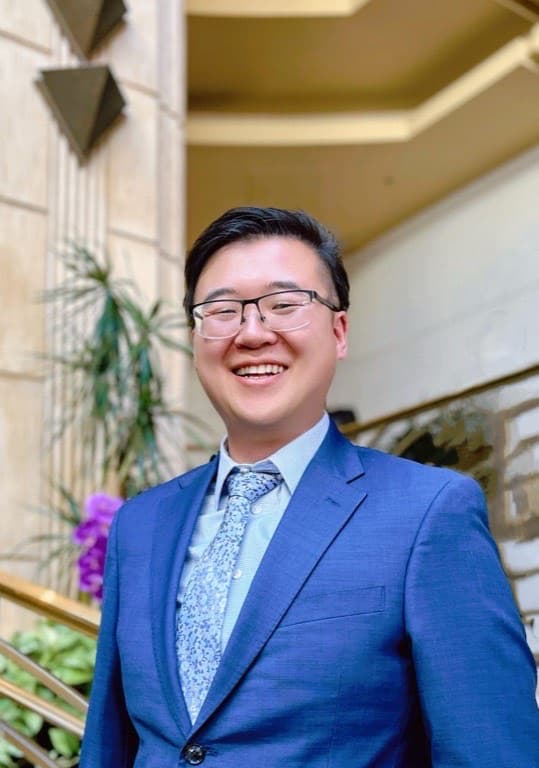
Quality Exam Prep Shouldn't Cost Hundreds
I'm Ran Chen, an engineer with 20+ years of coding experience. I passed my Life Insurance license, EA exam, SIE, Series 6, 63, 65, and finally the CFP® exam.
Through all these exams, one thing became clear: exam prep is expensive. But with AI, we can change that. Quality preparation can now be free for everyone.
What's Next After the QCE Chemistry?
After passing the QCE Chemistry, you can pursue these career paths
QCE Mathematical Methods
Pair quantitative chemistry with Year 12 calculus, exponentials, logarithms, and statistics for Queensland engineering, science, and health-science university prerequisites.
QCAA Physics
Combine chemical thermodynamics and spectroscopy with Year 12 physics for chemical engineering, materials science, and physical sciences degrees.
QCAA Biology
Connect QCE organic macromolecules, enzymes, buffers, and electrophoresis to Year 12 biology for medicine, pharmacy, biotechnology, and allied health pathways.
QCE Chemistry Exam FAQ
Official Queensland Curriculum and Assessment Authority (QCAA) Resources
Verify information with these official sources
More Free Resources
Ready to Start Your Free QCE Chemistry Prep?
Review the study guide, practice key concepts, and use the free tools at your own pace.