Free PED-BC Exam Prep
Pediatric Nursing Certification
Prepare for the PED-BC exam without spending hundreds on expensive prep courses. Free study guides, practice questions, flashcards, and related exam resources.
Quick Facts
 Free CE
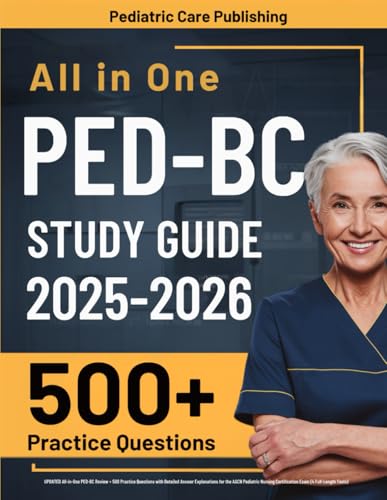
 Buy on Amazon
Explore More ANCC Nursing Certifications
Continue into nearby exams from the same family. Each card keeps practice questions, study guides, flashcards, videos, and articles in one place.
More From This Family
Videos and articles for deeper review.
PED-BC ANCC Nursing Certifications: Study Roadmap
Follow this path to organize your exam preparation
Growth, Development & Assessment Foundations
Master pediatric vital signs, milestones from infancy through adolescence, and developmental theories before tackling system pathologies.
Acute and Chronic Pediatric Pathophysiology
Deepen clinical knowledge of pediatric respiratory emergencies, congenital heart defects, neurology, GI disorders, and oncologic conditions.
Pediatric Pharmacology & Safe Care Delivery
Review weight-based dosage calculations, IV therapy safety, CDC immunization schedules, and family-centered communication.
Professional Practice & Timed Clinical Simulation
Complete practice scenario sets covering minor consent/assent, mandatory abuse reporting, and full-length timed assessments.
Can You Take the PED-BC Exam?
Check if you meet the basic eligibility requirements
- •2 years of full-time RN experience
- •2,000 hours in pediatric nursing within the last 3 years
- •30 hours of pediatric continuing education within the last 3 years
PED-BC Quick Facts
Time to Get Licensed
Set an individual study schedule within the ANCC authorization window; new applications close December 31, 2026 and testing ends December 31, 2027.
From start to license in hand
Retake Policy
Retest after 60 calendar days; no more than three attempts in any 12-month period. Confirm individual eligibility and the PED-BC program closing deadlines with ANCC.
Total Cost Breakdown
Free PED-BC Prep Tools
Reported exam pass rate: 75% (2025 first-time candidates). These figures describe exam candidates, not OpenExamPrep user outcomes. Check the exam sponsor’s website for published statistics.
145+ Practice Questions
Practice by topic with detailed answer explanations
AI Tutor Explains Mistakes
Understand why answers are wrong, not just which ones
Independent Study Resources
Check the exam sponsor for current requirements
$0 Forever
Start without a credit card or trial
What You'll Study
19 chapters covering the exam topics in this guide
Chapter 1: Exam Overview, Blueprint & Clinical Decision-Making
3 sections
Chapter 2: Pediatric Growth, Development & Milestones
3 sections
Chapter 3: Pediatric Physical Assessment, Vital Signs & Diagnostic Screening
3 sections
Chapter 4: Pediatric Fluid, Electrolyte & Nutritional Management
3 sections
Chapter 5: Pediatric Respiratory Emergencies & Chronic Pulmonary Conditions
3 sections
Chapter 6: Pediatric Congenital & Acquired Cardiovascular Disorders
3 sections
Chapter 7: Pediatric Neurological & Neuromuscular Disorders
3 sections
Chapter 8: Pediatric Gastrointestinal & Hepatic Conditions
3 sections
Chapter 9: Pediatric Renal & Genitourinary Conditions
3 sections
Chapter 10: Pediatric Hematologic & Oncologic Conditions
3 sections
Chapter 11: Pediatric Endocrine & Inborn Metabolic Disorders
3 sections
Chapter 12: Pediatric Musculoskeletal, Integumentary & Infectious Disorders
3 sections
Chapter 13: Pediatric Pharmacology, Safe Dosage & Immunizations
3 sections
Chapter 14: Family-Centered Care, Psychosocial Health & Injury Prevention
3 sections
Chapter 15: Professional Role, Ethics, Legal Standards & Advocacy
3 sections
Chapter 16: Medication Reconciliation, Complementary Care & Interactions
2 sections
Chapter 17: Individualized Assessment, Diversity & Psychosocial Safety
2 sections
Chapter 18: Individualized Planning, Coordination & Family Teaching
2 sections
Chapter 19: Patient Safety, Chronic Care & Outcome Evaluation
2 sections
PED-BC Exam Details
Pediatric Nursing Certification
Administered by ANCC
Exam Content Breakdown
Based on the official ANCC content outline
Pediatric assessment tools, development, pathophysiology, medications, diagnostics, diverse health practices, psychosocial assessment, reconciliation, and specimen collection.
Individualized coordination, measurable outcomes, safe interventions and medication administration, quality measures, interactions, ethics, trends, prioritization, and delegation.
Family adaptation, chronic disease management, health promotion, expected treatment response, therapeutic communication, teaching, and learning evaluation.
What's Included
19 Chapters
Complete exam coverage
Practice Quizzes
With detailed explanations
Free to Start
No credit card required

Quality Exam Prep Shouldn't Cost Hundreds
I'm Ran Chen, an engineer with 20+ years of coding experience. I passed my Life Insurance license, EA exam, SIE, Series 6, 63, 65, and finally the CFP® exam.
Through all these exams, one thing became clear: exam prep is expensive. But with AI, we can change that. Quality preparation can now be free for everyone.
What's Next After the PED-BC?
After passing the PED-BC, you can pursue these career paths
CPEN
Expand emergency clinical skills for pediatric trauma, triage, and resuscitation in dedicated emergency departments.
CCRN Pediatric
Advance into pediatric intensive care units managing critically ill infants, children, and postoperative cardiac patients.
Family Nurse Practitioner (FNP-BC)
Transition to advanced practice primary care serving pediatric and lifespan populations in outpatient clinics.
PED-BC Exam FAQ
Official ANCC Resources
Verify information with these official sources
More Free Resources
Ready to Start Your Free PED-BC Prep?
Review the study guide, practice key concepts, and use the free tools at your own pace.