Assessment and Diagnosis
22%of exam
Planning
21%of exam
Implementation
46%of exam
Evaluation
10%of exam
Quick Facts
- Exam
- PMH-BC
- Credential Body
- ANCC
- Level
- RN (not NP)
- Questions
- 150 (125 scored + 25 pretest)
- Time
- 3 hours
- Pass
- Scaled 350/500
- Validity
- 5 years
- Eligibility
- 2yrs RN, 2000hrs psych, 30hrs CE
- Fee
- $395 (non-member)
SIG E CAPS (Depression Symptoms)
Sleep, Interest, Guilt, Energy, Concentration, Appetite, Psychomotor, Suicidality
Delirium vs Dementia
Delirium
- Acute onset, hours to days
- Fluctuating attention/awareness
- Often reversible medical cause
Dementia
- Gradual onset, months to years
- Stable attention, progressive memory loss
- Usually irreversible/degenerative
Sudden-fluctuating vs slow-progressive
Suicide Risk -> Intervention Level
- Vague ideation, no plan-or-means, protective factors→Outpatient safety plan + close follow-up
- Plan, no access to means; ambivalent→Raise care level, remove means, safety-contract
- Specific plan, access to means, clear-intent→1:1 observation + immediate psychiatric evaluation
- Attempt in progress or just occurred→Emergency medical stabilization first(Then psychiatric evaluation)
- Command hallucinations to harm self→Treat as high risk(Regardless of stated intent)
- Chronic risk factors, no acute ideation→Ongoing risk monitoring + safety planning
- Meets danger criteria, refuses voluntary care→Initiate involuntary commitment(Per state law)
DSM-5-TR Mood Disorders
- MDD
- ≥5 Sx, ≥2wks, mood-or-anhedonia
- Bipolar I
- Full manic episode, 7+ days
- Bipolar II
- Hypomania + MDE, no full mania
- Cyclothymic D/O
- 2+ yrs subthreshold highs/lows
- Persistent Depressive D/O
- Depressed mood most days, 2+ yrsDysthymia
- PMDD
- Mood symptoms tied to luteal phase
DIGFAST (Mania Symptoms)
Distractibility, Indiscretion, Grandiosity, Flight-of-ideas, Activity increase, Sleep deficit, Talkativeness
Bipolar I vs Bipolar II
Bipolar I
- Full manic episode, 7+ days
- Hospitalization can define episode
- Depressive episode not required for diagnosis
Bipolar II
- Hypomanic episode, 4+ days
- Requires 1+ major depressive episode
- No history of full mania
Mania present vs mania absent
DSM-5-TR Anxiety and Trauma Disorders
- GAD
- Excessive worry, 6+ months, multi-domain
- Panic Disorder
- Recurrent unexpected attacks + 1mo worry
- Social Anxiety D/O
- Fear of social-performance situations, ≥6mo
- Specific Phobia
- Marked fear of object-situation, ≥6mo
- PTSD
- Symptoms 1+ month after trauma exposure
- Acute Stress D/O
- Symptoms 3 days-1 month post-trauma
- OCD
- Obsessions-compulsions, ≥1hr-day or distress
CAGE (Alcohol Use Screening)
Cut-down, Annoyed, Guilty, Eye-opener; 2+ yes screens positive
Positive vs Negative Symptoms
Positive
- Hallucinations
- Delusions
- Disorganized speech/behavior
Negative
- Flat affect
- Avolition/anhedonia
- Alogia, social withdrawal
Added experiences vs lost functions
Personality Disorders
- Cluster A
- Odd/eccentricParanoid, Schizoid, Schizotypal
- Cluster B
- Dramatic/erraticAntisocial, Borderline, Histrionic, Narcissistic
- Cluster C
- Anxious/fearfulAvoidant, Dependent, OCPD
- Borderline PD
- Unstable relationships/self-image, splitting, self-harm
- Antisocial PD
- Disregard, deceit, no remorse, conduct-before-15
- Narcissistic PD
- Grandiosity, need for admiration, low empathy
- Histrionic PD
- Excessive emotionality, attention-seeking
- Avoidant PD
- Social inhibition, inadequacy, criticism-sensitive
Substance Use and Withdrawal
- Alcohol Withdrawal
- Onset 6-24h: tremor, anxiety, tachycardia
- CIWA-Ar
- Standardized alcohol withdrawal severity scale
- Delirium Tremens
- Peaks 48-96h, autonomic instability, hallucinations, emergency
- Opioid Withdrawal
- Flu-like, not life-threatening
- Benzo Withdrawal
- Seizure risk; taper, don't stop abruptly
- Wernicke-Korsakoff
- Confusion-ataxia-ophthalmoplegia triad; give thiamine first
Defense Mechanisms
- Denial
- Refusing to acknowledge reality
- Projection
- Attributing own feelings to others
- Rationalization
- Logical excuse for unacceptable behavior
- Displacement
- Redirecting feelings to a safer target
- Regression
- Reverting to earlier developmental behavior
- Reaction Formation
- Opposite behavior to unacceptable impulse
- Sublimation
- Channeling impulse into productive activity
- Splitting
- All-good or all-bad thinking, no gray
Therapeutic Communication Techniques
- Active Listening
- Full attention, verbal + nonverbal cues
- Open-Ended Questions
- Encourage elaboration, not yes/no
- Reflection
- Mirror feeling back to client
- Restating
- Repeat main idea in own words
- Clarification
- Check understanding of a vague statement
- Broad Openings
- Invite client to choose topic
- Silence
- Allow processing time, show patience
- Summarizing
- Review key points near session end
NMS vs Serotonin Syndrome
NMS
- Antipsychotic (D2 blockade) cause
- Slow onset over days
- Lead-pipe rigidity + hyporeflexia
Serotonin Syndrome
- Serotonergic drug combo cause
- Rapid onset, under 24h
- Hyperreflexia + clonus
Rigid-and-slow vs hyperreflexic-and-fast
Adverse Reaction -> Drug Class / Syndrome
- Rapid onset, hyperreflexia, clonus, agitation, diarrhea→Serotonin syndrome(Stop serotonergic agents; supportive care)
- Slow onset, lead-pipe rigidity, hyperthermia, dysautonomia→Neuroleptic malignant syndrome (NMS)(Stop antipsychotic; check CK)
- Tremor, ataxia, confusion, GI-upset on lithium→Lithium toxicity(Check level, hold dose, hydrate)
- Subjective restlessness, pacing, can't sit still→Akathisia(May mimic worsening anxiety)
- Sudden muscle spasm, torticollis, oculogyric crisis→Acute dystonia(IM benztropine or diphenhydramine)
- Shuffling gait, tremor, rigidity, mask-like face→Pseudoparkinsonism(Anticholinergic or dose reduction)
- Fever, sore throat, low WBC on-clozapine→Agranulocytosis(Stop drug; hematology consult)
- Repetitive lip-smacking-tongue movement, long-term antipsychotic→Tardive dyskinesia(May be irreversible; consider switch)
Antidepressants: SSRIs and SNRIs
- SSRIs
- First-line; 4-6 wk onsetfluoxetine, sertraline, escitalopram
- SNRIs
- Dual reuptake; may raise BPvenlafaxine, duloxetine
- Common Side Effects
- GI upset, sexual dysfunction, insomnia
- Black Box Warning
- Increased suicidality risk under age 25
- Discontinuation Syndrome
- Flu-like, dizzy, 'brain zaps' if abrupt-stop
- Serotonin Syndrome Risk
- Danger combining w/ MAOIs, triptans, tramadol
Typical vs Atypical Antipsychotics
Typical
- D2 blockade only
- High EPS/TD risk
- e.g. haloperidol, chlorpromazine
Atypical
- D2 + 5-HT2A blockade
- Lower EPS, higher metabolic risk
- e.g. risperidone, olanzapine, clozapine
EPS risk vs metabolic risk
Antipsychotics: Typical and Atypical
- Typical (1st-gen)
- D2 blockade, high EPS/TD riskhaloperidol, chlorpromazine
- Atypical (2nd-gen)
- D2 + 5-HT2A, lower EPS, metabolic riskrisperidone, olanzapine, quetiapine, aripiprazole
- Clozapine
- Treatment-resistant; requires ANC monitoring
- Metabolic Syndrome
- Weight gain, dyslipidemia, hyperglycemia risk
- LAI/Depot
- Long-acting injectable improves adherence
- EPS Risk Hierarchy
- High-potency-typicals highest, atypicals lowest except-risperidone
- Prolactin Elevation
- Risperidone notably raises prolactin
Mood Stabilizers
- Lithium Therapeutic
- 0.6-1.2 mEq/L (maintenance ~0.6-1.0)
- Lithium Toxic
- >1.5; severe >2.0 mEq/L
- Lithium Monitoring
- Trough 12h post-dose; renal + thyroid function
- Valproic Acid
- 50-125 mcg/mL; hepatotoxic, teratogenic
- Carbamazepine
- Agranulocytosis/aplastic anemia risk; monitor CBC
- Lamotrigine
- Slow titration; Stevens-Johnson syndrome risk
Benzodiazepines and Anxiolytics
- Benzodiazepines
- Short-term anxiety/agitation, dependence risklorazepam, diazepam, alprazolam
- Buspirone
- Non-benzo; onset 2-4wks, no PRN
- Flumazenil
- Benzodiazepine antagonist/reversal agent
- Respiratory Depression Risk
- Danger combining benzos w/ opioids/alcohol
- Long-Term Use
- Tolerance-withdrawal risk; taper, don't stop-abruptly
Psychiatric Emergency Syndromes
- Serotonin Syndrome
- Rapid onset, hyperreflexia/clonus, hyperthermia
- NMS
- Slow onset, lead-pipe rigidity, autonomic instability
- Acute Dystonia
- Sudden spasm, torticollis; give IM anticholinergic
- Akathisia
- Subjective/observed motor restlessness
- Tardive Dyskinesia
- Involuntary orofacial movements; may be irreversible
- Anticholinergic Toxicity
- Confusion, dry mucosa, urinary retention
- Clozapine Agranulocytosis
- ANC under 500; fever-sore-throat warns
Therapeutic Modalities
- CBT
- Restructure distorted thoughts, present-focused
- DBT
- Emotion-regulation + distress-tolerance; built for BPD
- Milieu Therapy
- Structured, safe therapeutic environment
- ECT
- Severe-treatment-resistant depression; main effect memory-loss
- TMS
- Noninvasive neurostimulation, no anesthesia
- Motivational Interviewing
- Client-centered, resolves ambivalence
- Trauma-Informed Care
- Recognize trauma, avoid re-traumatization
SAD PERSONS (Suicide Risk Factors)
Checklist of risk factors that raise suicide concern
Legal/Ethical Trigger -> Correct Action
- Patient threatens an identifiable third party→Duty to warn/protect (Tarasoff)(Notify victim or law-enforcement per-state)
- Patient lacks capacity, refuses emergency care→Use emergency-implied consent for imminent danger
- Escalating/aggressive behavior, other options exhausted→Least restrictive intervention first(De-escalate before restraint/seclusion)
- Restraint or seclusion in use→Time-limited order + continuous monitoring(Document per policy)
- Third party requests medical record disclosure→Verify signed release before disclosing(Confidentiality/HIPAA)
- Suspected documentation/safety error observed→Report through incident/quality process(Process improvement)
Legal and Ethical Principles
- Informed Consent
- Voluntary, competent, informed of risks/benefits
- Confidentiality
- HIPAA-protected; exceptions incl. duty to warn
- Duty to Warn
- Notify identifiable victim of credible threatTarasoff
- Involuntary Commitment
- Danger to self-others or grave disability
- Least Restrictive Environment
- Use least restrictive intervention necessary
- Restraint/Seclusion
- Time-limited order, continuous monitoring, last resort
- Capacity vs Competency
- Capacity = clinical/situational; competency = legal
- Advance Psychiatric Directive
- Documents future mental health treatment preferences
Common Traps
Onset speed trap
Serotonin syndrome develops fast, under 24h ≠ NMS develops slowly, over days
Therapeutic level does not mean safe
Normal lithium level still toxic-if-dehydrated ≠ Assess symptoms, not just the number
EPS isn't typical-only
Atypicals cause EPS too, especially-risperidone high-dose ≠ Don't rule out EPS for atypicals
Duty to warn is not blanket disclosure
Applies to specific, identifiable, credible threats ≠ Routine records still need consent-to-release
Pretest questions are invisible
25 of 150 questions are unscored-pretest ≠ Cannot be identified during exam; answer-all
Bipolar II is not 'mild bipolar I'
Bipolar II requires a major-depressive episode ≠ Full mania reclassifies it as Bipolar-I
Capacity vs competency confusion
Capacity is a clinical, situational judgment ≠ Competency is a court's legal determination
Last Minute
- 1.22-21-46-10: Assess-Plan-Implement-Eval weight order
- 2.150 total, 125 scored, 25 pretest
- 3.3-hour limit; passing 350-of-500 scaled-score
- 4.Lithium 0.6-1.2 mEq-L; toxic above 1.5
- 5.Serotonin-syndrome fast-onset-hyperreflexia; NMS slow-onset-rigidity
- 6.Clozapine: ANC monitoring; agranulocytosis under 500
- 7.Bipolar-I needs mania; Bipolar-II needs hypomania-MDE
- 8.Tarasoff: warn identifiable, credible victim threats
- 9.Use least-restrictive intervention before restraint-seclusion
- 10.PMH-BC is RN-level; PMHNP-BC is advanced-practice
- 11.Valid 5yrs; needs 2yrs-RN, 2000hrs-psych, 30CE
 Free CE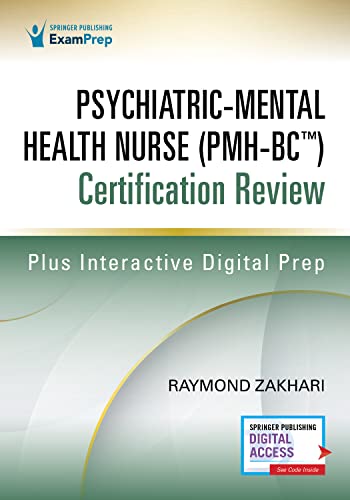
 Buy on Amazon
 Study guide on Mometrix
Explore More ANCC Nursing Certifications
Continue into nearby exams from the same family. Each card keeps practice questions, study guides, flashcards, videos, and articles in one place.
More From This Family
Videos and articles for deeper review.