Periodic Requirements
13%of exam
Safety Management
5%of exam
Periodic Inspection
17%of exam
Periodic Testing
65%of exam
Quick Facts
- Qualification
- City & Guilds 2391-51
- Award
- Level 3 Award
- Scope
- Existing electrical installations
- Mandatory unit
- 2391-501
- Online test
- 2391-051
- Online items
- 40 multiple-choice questions
- Online time
- 90 minutes
- Online condition
- Open book; invigilated
- Online pass
- Approximately 75%
- Pass adjustment
- Reliability adjusted
- Visual task
- 30 minutes
- Practical task
- 150 minutes
- Short-answer task
- 60 minutes
- Guided learning
- 41 hours
- Total time
- 55 hours
- Entry profile
- Experienced electrotechnical candidates
- BS 7671 edition
- Check live assessment materials
Report Pack
Report, inspections, circuits, results, recipient guidance.
2391-51 vs 2391-50
2391-51
- Existing installations
- Periodic condition reporting
- EICR focus
2391-50
- New or altered work
- Initial verification
- EIC focus
Match award to installation stage
Assessment Reference Picker
- Taking online test→Paper references only
- Taking visual Task A→No references
- Performing practical Task B→No reference materials(During testing)
- Confirming Task B results→Permitted references(After testing)
- Taking short-answer Task C→Permitted paper references
- Using calculations→Non-programmable calculator
- Selecting publication edition→Follow assessment instructions
- Adding navigation aids→Use compliant page tabs
Qualification Map
- 2391-51
- Periodic inspection awardExact scope
- 2391-501
- Mandatory unitPass required
- 2391-051
- Online multiple-choice testPass required
- Assessment
- Online test plus assignment
- Qualification level
- Level 3
- GLH
- 41 guided hours
- TQT
- 55 total hours
- Candidate profile
- Experienced electrical practitioner
- Newcomers
- Qualification not suitable
Assignment Tasks
Visual thirty; practical one-fifty; written sixty.
2391-51 vs 2391-52
2391-51
- Periodic pathway only
- Existing installations
2391-52
- Combined pathway
- Initial plus periodic
Do not borrow combined content
Online Blueprint
- Requirements
- 5 questions13%
- Safety management
- 2 questions5%
- Periodic inspection
- 7 questions17%
- Periodic testing
- 26 questions65%
- Online total
- 40 questions
- Online duration
- 90 minutes
- Online format
- Multiple-choice
- Online result
- Pass or fail
- Indicative pass
- Approximately 75%
Extent vs Limitation
Extent
- Planned coverage
- Agreed before work
Limitation
- Restricts planned coverage
- Reason must be recorded
Do not disguise reduced scope
Source Hierarchy
- EAWR
- Workplace electrical safety law
- Health-safety law
- Statutory duties
- BS 7671
- National wiring standard
- Guidance Note 3
- Inspection-testing guidance
- GS38
- Electrical test equipment guidance
- Existing records
- Planning evidence
- Previous certificates
- Installation history
- Manufacturer data
- Equipment-specific criteria
Scope Planning
- Purpose
- Continued-service safety assessment
- Extent
- Agreed inspection coverage
- Limitation
- Recorded excluded access
- Sampling
- Representative inspection selection
- Defects found
- Expand sampling appropriately
- Operational constraints
- Plan disruption controls
- Records review
- Identify installation history
- Client agreement
- Confirm extent beforehand
- Inspector duty
- Record accurate findings
EICR Documents
- EICR
- Condition assessment report
- Inspection schedule
- Inspected-item record
- Circuit details
- Circuit identification schedule
- Test results
- Measured-values schedule
- Recipient guidance
- Report-use instructions
- Extent entry
- Coverage clearly stated
- Limitations entry
- Restrictions clearly justified
- Next inspection
- Recommended interval recorded
Assessment Materials
- Online test
- Paper references permitted
- Online references
- BS7671 OSG GN3
- Electronic references
- Not permitted online
- Visual Task A
- No references
- Practical Task B
- Confirm results only
- Short-answer Task C
- Paper references permitted
- Calculator
- Non-programmable scientific permitted
- Personal notes
- Not permitted
- Highlighting
- Permitted
- Page tabs
- Paper markers permitted
- Short cross-references
- Permitted
- A4:2026
- Published current amendment
- A3:2024
- Valid through 15 October 2026
- Installation transition
- Either edition through 15 Oct 2026
- Assessment edition
- Follow live City & Guilds materials
Isolation Sequence
Identify, inform, isolate, secure, prove, test, reprove.
Dead vs Live Tests
Dead tests
- Supply securely isolated
- Continuity and insulation
- Prove dead first
Live tests
- Supply energised
- Loop and prospective current
- Additional controls required
Never energise dead-test instruments
Safe Isolation Path
- Work area confirmed→Identify every source
- Affected users identified→Inform before isolation
- Correct circuit confirmed→Operate isolation device
- Circuit isolated→Lock against reconnection
- Warning needed→Attach caution notice
- Tester selected→Prove on known source
- Tester proven→Confirm conductors dead
- Dead confirmed→Reprove voltage indicator
- Alternative source possible→Repeat source controls
Safe Isolation
- Identify
- Correct supply and circuit
- Inform
- Notify affected persons
- Isolate
- Disconnect every relevant source
- Secure
- Prevent reconnection
- Prove tester
- Verify before testing
- Test conductors
- Confirm dead safely
- Reprove tester
- Verify after testing
- Stored energy
- Discharge and control
- Alternative supplies
- Identify every source
Calibration vs Before-Use Check
Calibration
- Periodic accuracy assurance
- Traceable maintenance record
Before-use check
- Immediate condition check
- Required each use
One never replaces the other
Instrument Control
- Correct function
- Match intended measurement
- Measurement category
- Match electrical environment
- Voltage rating
- Suit expected system voltage
- GS38 leads
- Protected probes and leads
- Before-use check
- Inspect instrument condition
- Calibration
- Maintain verified accuracy
- Known source
- Prove voltage indicator
- Instrument identifier
- Record traceable details
- Live measurement
- Apply additional controls
Code Order
Danger, potential, improve, investigate—code actual risk.
EICR vs EIC
EICR
- Reports current condition
- Uses classification codes
- Periodic inspection output
EIC
- Certifies installation work
- Initial verification output
- No condition codes
2391-51 centres on EICR
Observation Code Picker
- Danger exists now→C1(Immediate action)
- Potential danger exists→C2(Urgent remediation)
- Safety improvement advised→C3(Recommendation)
- Danger possibly concealed→FI(Investigate promptly)
- Only C3 observations→Satisfactory(No C1 C2 FI)
- Any C1 found→Unsatisfactory(Danger present)
- Any C2 found→Unsatisfactory(Potential danger)
- Any FI found→Unsatisfactory(Risk unresolved)
Inspection Evidence
- Visual inspection
- Observe accessible condition
- Touch
- Check looseness or heat safely
- Hearing
- Detect abnormal operation
- Smell
- Detect overheating evidence
- IP suitability
- Match environmental exposure
- Damage
- Assess safety significance
- Deterioration
- Assess continued service
- Alterations
- Check safety impact
- Accessibility
- Record genuine restrictions
- Inspection first
- Inform test selection
C1 vs C2
C1
- Danger present
- Immediate action required
C2
- Potentially dangerous
- Urgent remedial action
Distinguish present from potential
Sampling and Limitation Picker
- Scope is negotiable→Agree extent first
- Sampling is proposed→Choose representative sample
- Defect appears→Increase sample appropriately
- Access is impossible→Record genuine limitation
- Shutdown is restricted→Record operational limitation
- Test risks damage→Adapt test method
- Test must be omitted→Document exact reason
- Evidence remains insufficient→Consider FI coding
EICR Codes
- C1
- Danger presentImmediate action
- C2
- Potentially dangerousUrgent action
- C3
- Improvement recommendedAdvisory
- FI
- Further investigation requiredWithout delay
- Unsatisfactory
- Any C1 C2 FI
- C3 only
- May remain satisfactory
- Code basis
- Actual safety risk
- Observation
- State defect precisely
- Recommendation
- Match identified risk
C3 vs FI
C3
- Improvement recommended
- Risk already assessable
- Can remain satisfactory
FI
- Risk unresolved
- Investigation required promptly
- Makes report unsatisfactory
Uncertainty about danger means FI
Inspection vs Testing
Inspection
- Uses senses
- Finds visible condition
- Guides test selection
Testing
- Uses instruments
- Produces measured evidence
- Confirms electrical performance
Inspect before choosing periodic tests
Test Evidence
Predict, measure, compare, interpret, record.
Ze vs Zs
Ze
- External loop impedance
- Measured near origin
Zs
- Complete circuit loop
- Includes circuit conductors
Calculated Zs uses Ze plus R1R2
Periodic Test Picker
- Verify protective paths→Continuity test(Dead test)
- Verify ring conductors→End-to-end tests(Dead test)
- Detect insulation damage→Insulation resistance(Protect electronics)
- Verify conductor identity→Polarity checks(Context controls)
- Verify electrode resistance→Earth electrode test
- Measure external loop→Ze test(Live precautions)
- Measure complete loop→Zs test(Live precautions)
- Find prospective current→PFC test(Record highest)
- Verify RCD performance→RCD instrument(Apply current criteria)
- Verify three-phase rotation→Phase sequence tester
- Verify device operation→Functional test
- Assess voltage drop→Measured conductor resistance
Continuity Polarity
- Protective continuity
- Verify protective conductor paths
- Main bonding
- Confirm continuity
- Ring line
- Measure end-to-end continuity
- Ring neutral
- Measure end-to-end continuity
- Ring CPC
- Measure end-to-end continuity
- Cross-connections
- Reveal ring irregularities
- R1 plus R2
- Circuit protective path
- Polarity
- Confirm correct conductor connection
- Dead continuity
- Never test energised
R1+R2 vs r1+r2
R1+R2
- Circuit protective path
- Point-specific value
r1+r2
- Ring end-to-end sum
- Whole ring conductors
Capital and lowercase differ
Insulation Resistance
- Purpose
- Detect insulation deterioration
- Dead test
- Isolate before testing
- Sensitive equipment
- Protect before test
- SPDs
- Disconnect when practicable
- Connected equipment
- Prevent test damage
- Separated circuits
- Verify required separation
- Parallel paths
- Interpret measured resistance carefully
- Test voltage
- Select current standard value
- Result
- Compare current permitted criteria
Earthing Loop Fault
- Earth electrode
- Measure electrode resistance
- Ze
- External loop impedance
- Zs
- Complete circuit loop impedance
- Zs relationship
- Ze plus R1 plus R2
- PEFC
- Prospective earth fault current
- PSCC
- Prospective short-circuit current
- PFC
- Highest relevant prospective current
- Loop test
- Live-test precautions required
- Result comparison
- Use current permitted limits
RCD Functional Phase
- RCD instrument test
- Verify disconnection performance
- RCD test button
- Functional operation only
- RCD type
- Select compatible test method
- Fault protection
- Verify applicable criteria
- Additional protection
- Verify applicable criteria
- Phase sequence
- Confirm correct rotation
- Functional testing
- Operate controls and devices
- Isolation devices
- Confirm effective operation
- Manufacturer instructions
- Apply device-specific guidance
Test Selection
- Fixed sequence
- Not recommended periodically
- Inspection findings
- Drive test choices
- Installation condition
- Adapt testing safely
- Installation use
- Consider operational risk
- Extent
- Apply agreed coverage
- Limitations
- Document constrained testing
- Omitted test
- Record reason clearly
- Temperature
- Correct affected results
- Conductor length
- Interpret resistance proportionally
- Parallel conductors
- Account for parallel paths
- Connected load
- Prevent false readings
- Nulling
- Compensate test leads
Results Interpretation
- Expected result
- Predict before testing
- Measured result
- Record actual value
- Permitted limit
- Use current assessment reference
- Unexpected value
- Investigate before coding
- Temperature correction
- Apply where relevant
- Parallel path
- May lower resistance
- Voltage drop
- Use measured conductor resistance
- Circuit load
- Include design conditions
- Documentation
- Transfer results accurately
Common Traps
Universal Test Sequence
Memorised fixed order ≠ Risk-selected periodic testing
Age-Based Coding
Old installation automatically defective ≠ Code actual safety risk
C3 Outcome
C3 automatically unsatisfactory ≠ C3-only may be satisfactory
RCD Test Button
Button proves disconnection time ≠ Instrument verifies performance
Reference Access
Same rules every task ≠ Task-specific material permissions
Electronic Books
Electronic references online ≠ Paper references online
C1 and C2
Both mean immediate danger ≠ Present versus potential danger
Inspection Timing
Test everything first ≠ Inspect then select tests
Calibration Assurance
Calibration replaces checks ≠ Check condition before use
Prospective Fault Current
Record lowest reading ≠ Record highest relevant value
Limitations
Silent exclusions acceptable ≠ Record and justify restrictions
Award Identity
2391-51 equals wiring exam ≠ 2391-51 assesses periodic work
Last Minute
- 1.Confirm 2391-51 periodic scope
- 2.Testing carries 65% online
- 3.Requirements carry 13% online
- 4.Inspection carries 17% online
- 5.Safety carries 5% online
- 6.Carry permitted paper references
- 7.Check live assessment edition
- 8.Remove prohibited personal notes
- 9.Know task-specific reference rules
- 10.Visual Task A forbids references
- 11.Prove voltage indicator twice
- 12.Lock isolation against reconnection
- 13.Identify every possible supply
- 14.Inspect before selecting tests
- 15.Record agreed extent and limitations
- 16.Increase sampling after defects
- 17.Use suitable instrument category
- 18.Check leads meet GS38
- 19.Record instrument identifiers
- 20.Verify calibration status
- 21.Classify actual safety risk
- 22.C1 means danger present
- 23.C2 means potentially dangerous
- 24.C3 means improvement recommended
- 25.FI requires further investigation
- 26.C1 C2 FI mean unsatisfactory
- 27.No universal periodic test sequence
- 28.Document adapted or omitted tests
- 29.Compare results using current criteria
- 30.Complete every EICR schedule
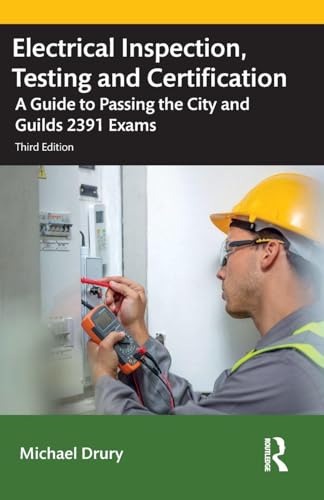
 Buy on Amazon
Explore More City & Guilds UK Trade Qualifications
Continue into nearby exams from the same family. Each card keeps practice questions, study guides, flashcards, videos, and articles in one place.
More From This Family
Videos and articles for deeper review.