Foundational Knowledge
25%of exam
Medication Use Process
25%of exam
Assessment and Treatment
40%of exam
Professional Practice
5%of exam
Management and Leadership
5%of exam
Quick Facts
- Exam
- NAPLEX
- Owner
- NABP
- Delivery
- Pearson VUE
- Time
- 6 hours
- Questions
- 225 total
- Scored
- 200 scored
- Pass
- 75 scaled
- Result
- Pass/fail
- Attempts
- 5 total
- Blueprint
- May 1 2025
PK Triad
Vd, clearance, half-life travel together.
Scored vs Pretest
Scored
- 200 items
- Counts toward pass
Pretest
- 25 items
- Not identified
Treat every item as scored
Calculation Picker
- Renal dosing→Cockcroft-Gault(Use CrCl)
- Weight dose→mg/kg(Convert kg)
- Manual drip→gtt/min(Drop factor)
- Infusion pump→mL/hr(Concentration first)
- Electrolyte amount→mEq(Valence matters)
- Nutrition calories→TPN math(Macros separate)
- Chemo dosing→BSA(Verify caps)
- Mix strengths→Alligation(Percent check)
PK Core
- ADME
- Drug movement
- Vd
- Amount over concentration
- Cl
- Removal efficiency
- t1/2
- Concentration halves
- ke
- Elimination constant
- AUC
- Total exposure
- Css
- Steady state
- F
- Bioavailability fraction
First vs Zero Order
First-order
- Constant fraction
- Stable half-life
Zero-order
- Constant amount
- Capacity saturated
Phenytoin can saturate
Calculations
- lb to kg
- Divide by 2.2
- mg/kg
- Dose times weight
- mL/hr
- Volume over hours
- gtt/min
- mL/hr times factor
- mEq
- mg times valence/MW
- mOsm
- Particles per liter
- CrCl
- Cockcroft-Gault dosing
- BSA
- Mosteller formula
ARR vs RRR
ARR
- Absolute difference
- Needed for NNT
RRR
- Relative reduction
- Can look larger
NNT uses ARR
Evidence
- P value
- Chance under null
- CI
- Estimate precision
- ARR
- Absolute risk difference
- RRR
- Relative risk drop
- NNT
- One benefit count
- NNH
- One harm count
- Bias
- Systematic error
- Power
- Detects true effect
Compounding
- USP 795
- Nonsterile compounding
- USP 797
- Sterile compounding
- USP 800
- Hazardous drugs
- BUD
- Beyond-use date
- Aseptic
- Prevents contamination
- CSP
- Sterile preparation
- Incompatibility
- Physical or chemical
- Stability
- Potency maintained
Five Rights
Patient, drug, dose, route, time.
Contraindication vs Precaution
Contraindication
- Do not give
- Risk unacceptable
Precaution
- Assess first
- May delay
Contraindication blocks therapy
Medication Use Picker
- Unclear order→Clarify(Before dispense)
- Contraindicated drug→Hold(Contact prescriber)
- Formulary issue→Therapeutic alternative
- Shortage exists→Reserve supply(Clinical priority)
- Vaccine adverse event→VAERS
- Temperature breach→Quarantine(Check stability)
Orders
- Indication
- Why drug needed
- Dose
- Amount per administration
- Route
- How administered
- Frequency
- How often
- Duration
- Treatment length
- Allergy
- Avoid trigger
- Contraindication
- Do not use
- Boxed warning
- Serious risk
Medication Use
- Prescribing
- Therapy ordered
- Transcribing
- Order documented
- Dispensing
- Product supplied
- Administering
- Dose given
- Monitoring
- Response checked
- Substitution
- Alternative selected
- Shortage
- Supply limited
- REMS
- Risk program
Immunizations
- Indication
- Vaccine recommended
- Contraindication
- Vaccine avoided
- Precaution
- Assess risk
- Live vaccine
- Avoid immunocompromise
- Cold chain
- Temperature control
- VIS
- Patient handout
- VAERS
- Vaccine event report
- ACIP
- Schedule guidance
Handling
- Storage
- Required conditions
- Excursion
- Temperature breach
- Quarantine
- Hold product
- Hazardous
- Special controls
- Sharps
- Puncture container
- Disposal
- Safe removal
- Recall
- Product removed
- Chain
- Custody trace
Therapy Problems
Need, fit, dose, safety, adherence.
Interaction vs Duplication
Interaction
- Exposure changes
- Toxicity or failure
Duplication
- Same purpose
- Unneeded overlap
Check both every profile
Therapy Picker
- No indication→Stop therapy(Avoid harm)
- Untreated condition→Add therapy
- Goal unmet→Intensify(If adherent)
- ADR likely→Switch therapy
- Renal decline→Adjust dose
- Poor adherence→Simplify regimen
History
- PMH
- Disease history
- Med list
- All therapies
- Allergies
- Reaction details
- Adherence
- Actual use
- Pregnancy
- Fetal risk
- Renal
- Dose adjustment
- Hepatic
- Metabolism risk
- Social
- Care barriers
Efficacy vs Safety
Efficacy
- Goal achieved
- Disease controlled
Safety
- Harms acceptable
- Labs stable
Passing answers balance both
Therapy Fit
- Indication
- Needs therapy
- Efficacy
- Meets goal
- Safety
- Harms acceptable
- Duplication
- Same purpose
- Omission
- Missing therapy
- Interaction
- Exposure altered
- ADR
- Drug harm
- Toxicity
- Excess exposure
Monitoring
- Goal
- Target outcome
- Endpoint
- Measured result
- Baseline
- Starting value
- Follow-up
- Recheck timing
- Lab
- Objective measure
- Vitals
- Clinical signs
- TDM
- Drug concentration
- Deprescribe
- Stop safely
High-Yield Therapy
- HTN
- BP goal therapy
- Diabetes
- A1c plus comorbidities
- HFrEF
- Four pillars
- AFib
- Stroke prevention
- ID
- Site and organism
- Asthma
- Controller plus reliever
- Psych
- Efficacy plus safety
- Pain
- Function and risk
Reporting Split
Vaccines to VAERS; drugs to MedWatch.
MedWatch vs VAERS
MedWatch
- Drugs/devices
- FDA safety
VAERS
- Vaccines
- Adverse events
Vaccine event goes VAERS
Practice Safety
- MedWatch
- Drug event report
- VAERS
- Vaccine event report
- Stewardship
- Optimize antimicrobials
- Naloxone
- Opioid reversal
- Cessation
- Tobacco treatment
- SDOH
- Access barriers
- Autonomy
- Patient choice
- Confidentiality
- Protect privacy
Quality Cycle
Plan, do, study, act.
RCA vs PDSA
RCA
- Find system causes
- After event
PDSA
- Test improvements
- Iterative cycle
Analyze then improve
Safety Picker
- High-alert drug→Double-check
- Name confusion→Tall man
- System error→RCA
- Process trend→CQI(PDSA cycle)
- Serious recall→Class I(Act immediately)
- Inventory mismatch→Cycle count
Operations
- ADC
- Automated dispensing
- BCMA
- Barcode administration
- CPOE
- Electronic ordering
- LASA
- Name confusion
- Tall man
- Name differentiation
- Double-check
- Independent verification
- Just culture
- Systems focus
- High-alert
- Severe harm risk
Inventory + Quality
- Cycle count
- Rotating inventory count
- Perpetual
- Real-time inventory
- Class I
- Serious recall
- Class II
- Reversible risk
- Class III
- Unlikely harm
- MUE
- Medication use review
- RCA
- System cause analysis
- PDSA
- Improvement cycle
Common Traps
75 Scaled
Not 75 percent ≠ Competency threshold
Pass Result
Numeric score hidden ≠ Fail report detailed
No Backtracking
No skipped items ≠ No later review
CrCl Dosing
Cockcroft-Gault ≠ Not eGFR default
Pretest Items
Mixed into exam ≠ Not marked
Live Vaccines
Avoid immunocompromise ≠ Inactivated usually safer
High-Alert Drugs
Not common drugs ≠ Severe harm drugs
Recall Classes
Class I serious ≠ Class III least harmful
Last Minute
- 1.Domain 3 is 40%
- 2.Use 200 scored weights
- 3.225 questions, 6 hours
- 4.Each answer locks
- 5.Treat all items scored
- 6.CrCl for renal dosing
- 7.NNT equals one over ARR
- 8.Five rights before administer
- 9.Quarantine temperature excursions
- 10.VAERS for vaccine events
- 11.MedWatch for drug events
- 12.RCA finds system causes
Third-party resources · We may earn a commission from purchases.
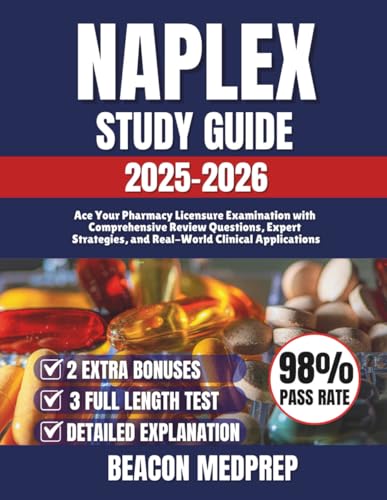
NAPLEX STUDY GUIDE 2025-2026: Ace Your Pharmacy Licensure Examination with Comprehensive Review Questions, Expert Strategies, and Real-World Clinical Applications
By MEDPREP, BEACON
$63.78 · 
 Study guide on Mometrix
 Take courses on Udemy
Explore More NABP Pharmacy Exams
Continue into nearby exams from the same family. Each card keeps practice questions, study guides, flashcards, videos, and articles in one place.
More From This Family
Videos and articles for deeper review.