Science + Engineering
13%of exam
Cells
22%of exam
Genetics + Evolution
26%of exam
Organisms
20%of exam
Ecology
19%of exam
Quick Facts
- Exam
- Praxis 5236
- Owner
- ETS
- Format
- Selected response
- Questions
- 150
- Time
- 2.5 hours
- Fee
- $130
- Delivery
- Computer delivered
- Score
- Varies by state
- SEP
- 40%+ integrated
- Teaching
- About 25%
Experiment Picker
- Need baseline→Control group
- Changed factor→Independent variable
- Measured result→Dependent variable
- Hidden influence→Confounder
- Human treatment→Randomized trial
- Association only→Observational study
- Repeat by others→Reproducibility
Inquiry
- Hypothesis
- Testable explanation
- Theory
- Broad supported explanation
- Law
- Describes consistent pattern
- Model
- Simplified representation
- Control group
- Baseline comparison
- Independent variable
- Changed factor
- Dependent variable
- Measured outcome
- Replication
- Repeatable evidence
Data + Stats
- Mean
- Arithmetic average
- Median
- Middle value
- Mode
- Most frequent
- Range
- Max minus min
- Std dev
- Spread around mean
- p-value
- Chance under null
- Correlation
- Association only
- Sample size
- Power improves
Lab Safety
- SDS
- Chemical hazard source
- Spill
- Notify teacher
- Skin exposure
- Flush with water
- Eye exposure
- Eyewash immediately
- Biohazard
- Contain then disinfect
- Unknown chemical
- Do not mix
- Broken glass
- Use brush
- Heat source
- Treat as hot
Osmosis vs Diffusion
Osmosis
- Water moves
- Membrane required
- Tonicity matters
Diffusion
- Particles move
- Down gradient
- No ATP
Water vs solute
Cell Process Picker
- Hypertonic outside→Water exits
- Hypotonic outside→Water enters
- Low oxygen→Fermentation
- Light reactions→Thylakoid
- Carbon fixation→Calvin cycle
- DNA copied→S phase
- Protein exported→ER/Golgi
Organelles
- Nucleus
- Stores DNA
- Ribosome
- Builds protein
- Rough ER
- Protein processing
- Smooth ER
- Lipids detox
- Golgi
- Sorts ships
- Mitochondria
- ATP respiration
- Chloroplast
- Photosynthesis site
- Lysosome
- Digestive vesicle
Membranes + Metabolism
- Diffusion
- High to low
- Osmosis
- Water diffusion
- Active transport
- ATP moves uphill
- Endocytosis
- Membrane brings in
- Exocytosis
- Vesicles release out
- Enzyme
- Lowers activation energy
- Photosynthesis
- CO2 to glucose
- Respiration
- Glucose to ATP
Central Dogma
DNA to RNA to protein
Mitosis vs Meiosis
Mitosis
- Body cells
- Diploid copies
- One division
Meiosis
- Gametes
- Haploid variation
- Two divisions
Growth vs gametes
Inheritance Picker
- Three-to-one→Single gene
- One-to-one testcross→Heterozygote
- Male X trait→Maternal allele
- Allele frequency shifts→Evolution
- Small population→Drift
- Higher reproduction→Selection
Genetics
- DNA
- Genetic code
- RNA
- Working copy
- Codon
- Three-base word
- Transcription
- DNA to RNA
- Translation
- RNA to protein
- Allele
- Gene variant
- Genotype
- Allele combination
- Phenotype
- Observable trait
Mitosis Memory
Mitosis makes matching body cells
Transcription vs Translation
Transcription
- DNA template
- RNA product
- Nucleus first
Translation
- mRNA read
- Protein product
- Ribosome site
Copy vs build
Heredity + Meiosis
- Mitosis
- Identical body cells
- Meiosis
- Haploid gametes
- Crossing over
- Chromatid exchange
- Independent assortment
- Chromosomes segregate randomly
- Dominant
- Masks recessive
- Recessive
- Hidden when heterozygous
- Carrier
- Has recessive allele
- Testcross
- Unknown with recessive
Homologous vs Analogous
Homologous
- Shared ancestry
- Different functions
- Same origin
Analogous
- Similar function
- Different ancestry
- Convergent evolution
Origin vs function
Evolution
- Fitness
- Reproductive success
- Adaptation
- Heritable advantage
- Selection
- Differential survival
- Drift
- Random allele change
- Gene flow
- Alleles migrate
- Mutation
- New variation
- Speciation
- Reproductive isolation
- Cladogram
- Shared ancestry diagram
Diversity + Systems
- Domain
- Highest taxonomy
- Species
- Interbreeding group
- Virus
- Acellular parasite
- Bacteria
- Prokaryotic cells
- Fungi
- Chitin walls
- Xylem
- Water upward
- Phloem
- Sugar transport
- Homeostasis
- Stable internal state
Energy + Matter
Energy flows; matter cycles
Primary vs Secondary
Primary
- No soil
- Pioneer lichens
- Slow start
Secondary
- Soil remains
- After disturbance
- Faster recovery
Soil absent vs present
Ecology + Cycles
- Population
- Same species area
- Community
- All populations
- Ecosystem
- Biotic plus abiotic
- Producer
- Autotroph
- Consumer
- Heterotroph
- Decomposer
- Recycles nutrients
- Carrying capacity
- Maximum sustainable size
- Phosphorus cycle
- No major gas
Producer vs Consumer
Producer
- Makes food
- Autotroph
- Energy entry
Consumer
- Eats organisms
- Heterotroph
- Energy transfer
Make vs eat
Common Traps
Correlation Is Not Cause
Association observed ≠ Cause unproven
Theory Is Not Guess
Well supported ≠ Broad explanation
Hypertonic Shrinks Cells
Water exits ≠ Cell shrinks
Fitness Means Reproduction
More offspring ≠ Not stronger
Energy Is Lost
Heat loss ≠ Matter cycles
Viruses Are Acellular
Need hosts ≠ Not cells
Last Minute
- 1.Check exact domain weights
- 2.Control equals baseline group
- 3.Correlation never proves cause
- 4.Water follows solute gradient
- 5.DNA RNA protein order
- 6.Meiosis makes varied gametes
- 7.Fitness means reproductive success
- 8.Phosphorus lacks gas phase
- 9.Energy flows through trophic levels
- 10.Teaching tasks need misconceptions
Third-party resources · We may earn a commission from purchases.
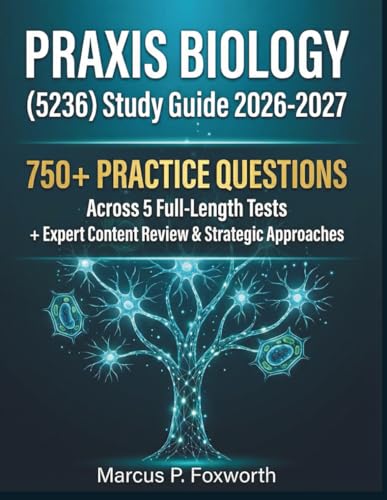
Praxis Biology (5236) Study Guide 2026-2027: Contains 750+ Practice Questions Across 5 Full-Length Tests + Expert Content Review and Strategic Approaches to Ace your Exam
By P. Foxworth, Marcus
$29.99 · 
 Study guide on Mometrix
 Practice exams on ExamEdge
Explore More Praxis Exams
Continue into nearby exams from the same family. Each card keeps practice questions, study guides, flashcards, videos, and articles in one place.
More From This Family
Videos and articles for deeper review.