Agentic Architecture
27%of exam
AgentsRoutingChainingParallelismSubagents
Claude Code
20%of exam
MemorySettingsPermissionsHooksCI
Prompts + Output
20%of exam
SystemExamplesSchemasJSONStops
Tools + MCP
18%of exam
SchemasToolsResourcesPromptsTransport
Context + Reliability
15%of exam
RAGCachingEvalsRetriesGuardrails
Quick Facts
- Credential
- CCAR-F
- Issuer
- Anthropic
- Access
- Partner network
- Focus
- Production architecture
- Users
- Claude architects
- Core
- Claude ecosystem
- Verify
- Exam portal
Simple First
Call, retrieve, chain, route, agent.
CallRetrieveChainRouteAgent
Workflow vs Agent
Workflow
- Predictable sequence
- Easier control
Agent
- Dynamic path
- Higher autonomy
Prefer simplest control
Pattern Picker
- Task is simple→Single call
- Needs facts→RAG call
- Steps known→Prompt chain
- Input classes known→Router
- Subtasks independent→Parallel calls
- Steps unknown→Agent loop
- Quality measurable→Evaluator optimizer
- Risk high→Human review
Architecture Patterns
- Single call
- Best baseline
- RAG call
- Retrieve then answer
- Prompt chain
- Ordered model steps
- Router
- Classify then dispatch
- Parallel
- Independent subtasks
- Orchestrator
- Plan then delegate
- Evaluator
- Judge then improve
Agent Controls
- Loop limit
- Bound tool cycles
- Role scope
- Narrow responsibility
- Tool scope
- Least privilege
- State
- Track decisions
- Handoff
- Define output contract
- Escalation
- Ask human
- Trace
- Log key steps
Claude Code
- CLAUDE.md
- Project memory
- settings.json
- Local configuration
- Permissions
- Gate risky actions
- Slash command
- Reusable workflow
- Hook
- Run workflow action
- Subagent
- Specialized helper
- Headless
- Noninteractive run
Schema vs Prose
Schema
- Machine parsed
- Validated fields
Prose
- Human read
- Flexible wording
Parsing needs schema
Prompt Basics
- System
- Durable constraints
- Task
- Goal and inputs
- Criteria
- Success definition
- Examples
- Show desired shape
- Context
- Relevant facts
- Delimiters
- Separate content
- Refusal
- Handle unsafe asks
Structured Output
- Schema
- Constrain fields
- Enum
- Limit choices
- Required
- Prevent omissions
- Type
- Protect parsing
- Stop sequence
- End generation
- Parser
- Validate output
- Repair
- Retry invalid JSON
Tool Safety
Name, schema, scope, auth, errors.
NameSchemaScopeAuthErrors
Tool vs Resource
Tool
- Performs action
- Needs arguments
Resource
- Provides context
- Read oriented
Action needs tool
MCP Primitives
- Tool
- Callable action
- Resource
- Readable context
- Prompt
- Reusable template
- Server
- Expose capabilities
- stdio
- Local subprocess
- HTTP
- Remote service
- Auth
- Protect access
stdio vs HTTP
stdio
- Local process
- Developer workflow
HTTP
- Remote service
- Network access
Match deployment boundary
Production Ready
Eval, retry, timeout, monitor, fallback.
EvalRetryTimeoutMonitorFallback
Eval vs Monitor
Eval
- Predeployment test
- Known cases
Monitor
- Production signal
- Live outcomes
Use both
Reliability Picker
- Output must parse→Schema validation
- Facts may change→Retrieve current source
- Latency matters→Smaller model
- Cost matters→Cache prefix
- Tool may fail→Structured error
- Safety matters→Guardrails
- Behavior drifts→Regression evals
- Ambiguity remains→Ask user
Context + Retrieval
- Context window
- Token budget
- Compression
- Keep essentials
- Retrieval
- Fetch relevant facts
- Chunking
- Split documents
- Citation
- Expose provenance
- Caching
- Reuse static prefix
- Freshness
- Check current facts
Production Reliability
- Eval
- Measure behavior
- Golden set
- Known examples
- Regression
- Catch drift
- Retry
- Handle transient failure
- Timeout
- Bound latency
- Fallback
- Degrade gracefully
- Monitor
- Track outcomes
Common Traps
Overagenting
Simple call works ≠ Avoid needless loops
Broad Tools
Scope permissions ≠ Constrain inputs
Unparsed Output
Validate schemas ≠ Repair failures
Stale Context
Retrieve current facts ≠ Cite sources
No Evaluation
Define success ≠ Track regressions
Last Minute
- 1.Start with baseline
- 2.Pick pattern deliberately
- 3.Scope tool access
- 4.Validate structured output
- 5.Handle tool errors
- 6.Budget context tokens
- 7.Add eval coverage
- 8.Plan fallback behavior
 Course Playlist
 Free CE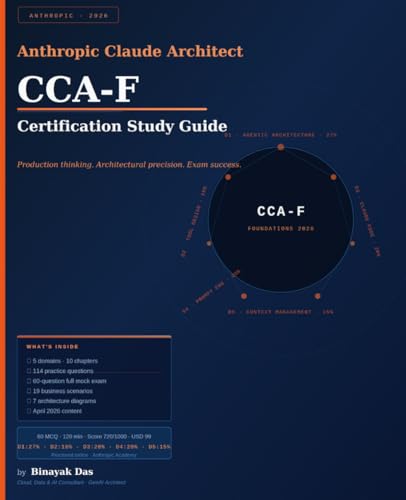
 Buy on Amazon
 Take courses on Udemy
Same family resources
Explore More Anthropic Claude Certifications
Continue into nearby exams from the same family. Each card keeps practice questions, study guides, flashcards, videos, and articles in one place.
More From This Family
Videos and articles for deeper review.
VideoCCA-F Practice Questions 2026: Current CCAR-F Blueprint, Scenarios, and Answer StrategyThis examVideoCCAR-F Exam Guide 2026: Claude Certified Architect – FoundationsThis examVideoCCAR-F vs CCA-F: Registration and Pearson VUE Guide for Claude Architect Foundations (2026)This examVideoWhich Claude Certification Should You Take in 2026? CCAO-F vs CCDV-F vs CCAR-F vs CCAR-PThis examArticleWhich Claude Certification Should You Take in 2026? CCAO-F vs CCDV-F vs CCAR-F vs CCAR-P13 min readArticleCCAR-F vs CCA-F: Registration and Pearson VUE Guide for Claude Architect Foundations (2026)19 min readArticleCCAR-F Exam Guide 2026: Claude Certified Architect – Foundations12 min readArticleCCA-F Practice Questions 2026: Current CCAR-F Blueprint, Scenarios, and Answer Strategy15 min read