Reading Comprehension
Not publishedof exam
Listening Comprehension
Not publishedof exam
Written Expression
Not publishedof exam
Oral Expression
Not publishedof exam
Quick Facts
- Test
- TEF Canada
- Recognized by
- IRCC since 2002
- Immigration
- Four same-day tests
- Citizenship
- Listening plus speaking
- Reading
- 40 questions, 60 minutes
- Listening
- 40 questions, 40 minutes
- Writing
- Two sections, 60 minutes
- Speaking
- Two sections, 15 minutes
- Validity
- Two years
Immigration Four
Read, listen, write, speak: all four.
Immigration vs Citizenship
Immigration
- Four required tests
- All same day
- Reading through speaking
Citizenship
- Two required tests
- Listening and speaking
- NCLC requirement applies
Choose the correct application route.
Immigration Test Format
- Reading
- 40 MCQ, 60 minutes
- Listening
- 40 MCQ, 40 minutes
- Writing
- Two sections, 60 minutes
- Speaking
- Two sections, 15 minutes
- Immigration session
- All four same day
- Citizenship
- Listening and speaking only
- Lexique structure
- Not TEF Canada
TEF Canada vs Études
TEF Canada
- Canadian immigration purpose
- Four specified tests
- No grammar standalone
TEF Études
- Study admission purpose
- Different required set
- Lexique structure included
Purpose selects the TEF version.
Reading Rules
- Format
- Four-option MCQ
- Correct response
- One point
- Wrong response
- Zero points
- Blank response
- Zero points
- Navigation
- Move within questionnaire
- Objective
- Understand written documents
- Time budget
- Ninety seconds each
Reading vs Listening
Reading
- 60 minutes
- Free questionnaire navigation
- Written documents
Listening
- 40 minutes
- No backward return
- Audio once only
Listening pacing is irreversible.
Comprehension Response Path
- Question appears→Read prompt first
- Audio begins→Listen for purpose
- Detail is named→Match exact evidence
- Main idea asked→Choose overall message
- Choice conflicts→Eliminate contradiction
- Listening answer chosen→Commit and continue
- Reading answer uncertain→Flag and revisit
- Time remains→Answer every reading item
Listening Rules
- Format
- Four-option MCQ
- Correct response
- One point
- Wrong response
- Zero points
- Audio
- Played one time
- Navigation
- No backward return
- Read ahead
- Use pre-audio seconds
- Objective
- Understand spoken documents
Results and Rules
- NCLC
- Canadian language benchmark
- CEFR
- European proficiency framework
- Skill result
- Reported separately
- Calibrated score
- Accounts for difficulty
- No single pass
- Programme sets threshold
- Oral materials
- No notes allowed
- Computer materials
- No exit during tests
Writing B
Position, reasons, examples, conclusion.
Writing A vs B
Section A
- Continue an article
- 25 minutes
- 80-word minimum
Section B
- Justify viewpoint
- 35 minutes
- 200-word minimum
Meet both distinct minimums.
Production Response Path
- Task starts→Identify purpose
- Reader is clear→Set suitable register
- Writing section A→Continue the article
- Writing section B→State and justify view
- Speaking section A→Ask useful questions
- Speaking section B→Persuade with reasons
- Arguments need force→Add examples
- Time ends soon→Close clearly
Writing Format
- Section A
- Continue an article
- Section A time
- 25 minutes
- Section A minimum
- 80 words
- Section B
- Justify viewpoint
- Section B time
- 35 minutes
- Section B minimum
- 200 words
- Total time
- 60 minutes
Writing Control
- Register
- Match purpose and reader
- Structure
- Opening, development, close
- Position
- State viewpoint clearly
- Support
- Give reasons and examples
- Cohesion
- Link ideas logically
- Lexicon
- Choose precise vocabulary
- Proofread
- Check agreement and accents
Speaking B
Claim, reason, example, response, close.
Speaking A vs B
Section A
- Obtain information
- Five minutes
- Ask targeted questions
Section B
- Argue to convince
- Ten minutes
- Give persuasive reasons
Question first, persuade second.
Speaking Format
- Format
- Examiner interaction
- Section A
- Obtain information
- Section A time
- Five minutes
- Section B
- Argue to convince
- Section B time
- Ten minutes
- Total time
- 15 minutes
- Objective
- Communicate with interlocutor
Speaking Control
- Opening
- State purpose promptly
- Questions
- Seek missing details
- Clarification
- Ask when uncertain
- Argument
- Claim with reasons
- Example
- Make reason concrete
- Concession
- Recognize opposing point
- Closing
- Restate requested action
Common Traps
Wrong TEF version
Canada serves IRCC routes ≠ Études serves academic admission
Grammar test assumption
TEF has five modules ≠ Canada has no Lexique test
Listening navigation
Audio plays one time ≠ Return navigation is unavailable
Writing minimums
Section A needs 80 ≠ Section B needs 200
Score misconception
No universal pass mark ≠ Programme selects NCLC threshold
Last Minute
- 1.Immigration requires all four tests
- 2.Take immigration tests same day
- 3.Reading: 40 questions, 60 minutes
- 4.Listening: 40 questions, 40 minutes
- 5.Listening audio plays once
- 6.Reading permits questionnaire navigation
- 7.Writing A: 80 words minimum
- 8.Writing B: 200 words minimum
- 9.Speaking A: obtain information
- 10.Speaking B: argue to convince
- 11.No standalone grammar test
- 12.Programme determines required NCLC
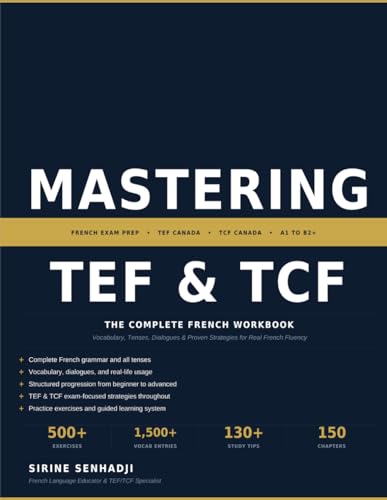
 Buy on Amazon
Explore More TEF (Test d'évaluation de français)
Continue into nearby exams from the same family. Each card keeps practice questions, study guides, flashcards, videos, and articles in one place.