Last updated: June 14, 2026. Verified against RRB Chandigarh CEN 06/2025 Graduate and CEN 07/2025 Undergraduate notice pages, the revised Undergraduate CBT-I schedule notice, and local Open Exam Prep resources for rrb-ntpc.
RRB NTPC 2026: Pick the Right Track Before You Study
RRB NTPC is not one single 2026 timetable. Candidates are dealing with two active NTPC tracks: Graduate posts under CEN 06/2025 and Undergraduate posts under CEN 07/2025. The study subjects overlap, but the stage you are preparing for may be different today.
As of the official notices checked on June 14, 2026, the RRB Chandigarh CEN 06/2025 NTPC Graduate page lists CBT-1 result, cut-off, and score-card activity, and it shows a tentative CBT-2 date of July 10, 2026. The RRB Chandigarh CEN 07/2025 NTPC Undergraduate page lists a revised tentative CBT-1 schedule dated June 1, 2026. The official revised Undergraduate CBT-I schedule PDF says May 07, 08, and 09 were already conducted, with June 13, 14, 15, and June 16 to 20 as the revised CBT-I dates.
That split matters. A Graduate candidate shortlisted after CBT-1 should not spend the final weeks as if the next test is another screening paper. An Undergraduate candidate whose CBT-1 date is still active needs a different plan: protect accuracy, control negative marking, and avoid getting distracted by CBT-2 details before the first stage is finished.
| Candidate situation on June 14, 2026 | Track | Practical next step |
|---|---|---|
| You applied under CEN 06/2025 and your CBT-1 result/score card is live | Graduate | Check your zone notice and prepare for CBT-2 routing, post preferences, and any post-specific stage. |
| You applied under CEN 07/2025 and have a June CBT-1 date | Undergraduate | Prioritize CBT-1 score protection, Aadhaar/e-call letter instructions, and fast mixed practice. |
| You are not sure which notice applies to you | Either | Match your application CEN number first, then use only your regional RRB notice for dates. |
| You are preparing early for a future cycle | Either | Learn the shared subjects now, but separate Graduate and Undergraduate eligibility, posts, and stage flow in your notes. |
Use third-party exam pages for explanations if they help, but act only after checking your regional RRB page. RRB Chandigarh itself warns candidates to rely on official RRB websites for notices and to ignore unauthenticated social media claims.
Graduate vs Undergraduate: The Clean Routing Map
The easiest mistake is to study for "RRB NTPC" without naming the route. The Graduate and Undergraduate tracks both sit inside Non-Technical Popular Categories, and both use computer-based testing, but they are not interchangeable applications.
Graduate NTPC, CEN 06/2025, is for graduate-level posts. Candidates who clear CBT-1 move toward CBT-2 and then, depending on the post, may face a Computer Based Aptitude Test, typing skill test, document verification, and medical examination. The CEN 06/2025 detailed Graduate notification PDF is the official place to verify post names, eligibility, stage rules, and medical standards.
Undergraduate NTPC, CEN 07/2025, is for 12th-level posts. It uses the same broad academic subjects but has its own application, post list, schedule notices, and post-specific later stages. The CEN 07/2025 detailed Undergraduate notification PDF is the source to verify whether your post preference has typing, document verification, medical standards, or other requirements.
For study planning, this is the routing rule:
- If your next official event is CBT-1, study for screening efficiency: General Awareness, Mathematics, and General Intelligence and Reasoning in mixed sets.
- If your next official event is CBT-2, study for higher selectivity: the same subjects, but with more attention to speed, normalization risk, and the post level you are competing for.
- If your post has CBAT or typing later, do not ignore it, but do not let it steal time from the CBT stage immediately in front of you.
- If your CBT date is close, administrative readiness is part of exam readiness: city intimation, e-call letter timing, Aadhaar, photo ID, reporting time, and zone-specific instructions can decide whether you get into the room smoothly.
Current 2026 Schedule Status Candidates Should Know
For Graduate candidates under CEN 06/2025, the official Chandigarh update page showed on June 12, 2026: CBT-2 tentative exam date, CBT-2: July 10, 2026. The same page also lists CBT-1 result, cut-off marks, and score-card links dated June 11, 2026. In plain English, the Graduate track has moved beyond ordinary CBT-1 preparation for shortlisted candidates. Your immediate question is whether you are shortlisted and what CBT-2 readiness gap remains.
For Undergraduate candidates under CEN 07/2025, the revised schedule notice dated June 1, 2026 says the May 7, 8, and 9 CBT-I dates were already conducted, and the revised remaining dates are June 13, 14, 15, and June 16 to 20. That means many Undergraduate candidates are still in first-stage execution mode in mid-June 2026. The notice also says exam city/date viewing and SC/ST travel authority links are made live 10 days before the exam date, e-call letters start 4 days before the exam date in the city/date intimation link, and Aadhaar-linked biometric authentication will be done at the exam center.
Do not treat these dates as permanent beyond the page timestamp. RRB schedules are explicitly tentative and zone notices can change. Before travel, always verify your own RRB zone website, your login, and the newest notice for your CEN.
What CBT-1 and CBT-2 Are Testing
The core NTPC CBT subjects are not mysterious: General Awareness, Mathematics, and General Intelligence and Reasoning. The official CENs define the exact pattern and stage rules, and candidates should read the Graduate or Undergraduate notification for their own CEN before relying on any prep summary. In practical study terms, the subjects behave differently.
General Awareness is the broadest and easiest to under-prepare. It usually rewards steady recall across current affairs, Indian polity, history, geography, economy, science basics, railways awareness, and everyday factual knowledge. For 2026 candidates, GA should be studied in short daily cycles, not saved for the final week. The risk is not that one chapter is impossible; the risk is that the spread is too wide for last-minute memorization.
Mathematics is score protection. Percentages, ratio and proportion, profit and loss, time and work, time speed distance, simplification, number system, averages, simple and compound interest, mensuration, and data interpretation are all manageable if you drill with a clock. The common trap is spending too long on one calculation because it feels solvable. In an NTPC CBT, a slow correct answer can still damage your paper if it blocks four easier questions.
General Intelligence and Reasoning is pattern recognition under pressure. Series, analogy, classification, coding-decoding, blood relations, directions, syllogism, seating arrangement, ranking, Venn diagrams, non-verbal reasoning, and statement-based questions need repeated mixed practice. Candidates often improve fastest here because missed questions expose a repeatable method: diagram the relation, test options, or eliminate impossible cases.
The CENs also include negative marking, so your target is not maximum attempts at any cost. Your target is high-confidence attempts first, medium-confidence attempts after elimination, and disciplined skips when a question is consuming time without progress.
A Better 2026 Study Plan Than Reading Everything Again
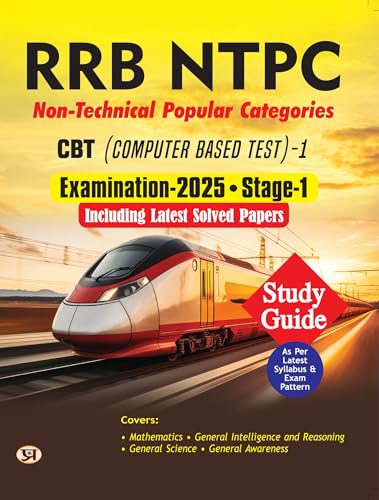
Open Exam Prep already has a full RRB NTPC study guide with chapters on exam process, General Awareness, Mathematics, Reasoning, and final review. This blog is not trying to replace that. Use this article to decide your route, then use the study guide and practice bank for execution.
If you are a Graduate CBT-2 candidate, start with a score report audit. Write down your CBT-1 strengths and misses by subject. Then build a 10-day loop if July 10 is your target date:
| Day type | Main work | Score goal |
|---|---|---|
| GA recall day | Current affairs, static GK, railways facts, science basics | More correct first-pass answers, fewer blind guesses |
| Math speed day | Timed arithmetic and data sets | Faster selection of solvable questions |
| Reasoning accuracy day | Mixed puzzles, series, syllogism, coding | Fewer preventable logic errors |
| Full mixed day | Timed CBT-style set | Better section switching and skip discipline |
| Review day | Error log and weak subtopics | Convert repeated misses into targeted drills |
If you are an Undergraduate CBT-1 candidate with a June date, shorten the loop. Do not open five new resources. Use one timed mixed set, review every miss, drill the two weakest subtopics, and then stop before fatigue damages the next day. Your last 48 hours should emphasize admit card instructions, Aadhaar readiness, sleep, travel timing, formulas, current affairs notes, and a small mixed set for rhythm.
If you are preparing for a future cycle, separate your notes into four buckets: official process, General Awareness, Mathematics, and Reasoning. Keep the official process bucket light but current. Put most of your hours into questions and error review.
Free Practice Path on Open Exam Prep
After one set, do not only look at the score. Mark each miss as one of four types:
| Miss type | What it means | What to do next |
|---|---|---|
| Fact gap | You did not know the GK, formula, or rule | Add a one-line note and review it tomorrow. |
| Method gap | You knew the topic but not the fastest route | Redo the question slowly, then find two similar questions. |
| Time loss | You solved it but too slowly | Practice skip decisions and shortcuts. |
| Careless error | You misread, copied, or calculated incorrectly | Add a personal warning cue, not a long chapter review. |
Then move into the RRB NTPC study guide for the chapter that matches the miss pattern. If General Awareness is weak, do not reread the entire exam process chapter. If Mathematics timing is weak, do not spend the session on selection flow. Let practice results choose the next chapter.
Exam-Day and Notice-Checking Checklist
The revised Undergraduate schedule notice is useful beyond dates because it reminds candidates about operational steps. City/date intimation can appear before the e-call letter. E-call letters are tied to the exam date shown in the city/date link. Aadhaar-linked biometric authentication is expected before entry, and the notice asks candidates to bring original Aadhaar or an e-verified Aadhaar printout and keep Aadhaar unlocked in UIDAI before the exam.
Before acting, check these items on your own zone website:
- Your CEN number: 06/2025 Graduate or 07/2025 Undergraduate.
- Your latest notice date and whether the schedule is revised or tentative.
- Your city intimation, e-call letter, exam date, reporting time, shift, and identity instructions.
- Whether your post preference later needs CBAT, typing, document verification, or specific medical standards.
- Whether any rescheduling notice applies to your center, lab, date, or shift.
Avoid social media screenshots as a source of truth. If a coaching post says a date changed, use it only as a prompt to check the official RRB page.
What to Study First If You Are Behind
If you have less than two weeks, do not try to become equally strong everywhere. The highest-return plan is to protect the subjects where structured practice can still move your score.
For Mathematics, review formulas and drill common arithmetic with a timer: percentages, ratio, average, profit and loss, SI/CI, time and work, speed, simplification, and DI. Skip exotic problems that take too long unless they are repeated in your error log.
For Reasoning, build speed through pattern families: series, coding-decoding, analogy, classification, directions, blood relations, syllogism, Venn diagrams, and seating. Write diagrams cleanly. Many reasoning mistakes are not knowledge gaps; they are messy setup errors.
For General Awareness, use short recall bursts. Prioritize current affairs, Indian polity, modern history basics, geography, science, economy terms, sports/awards, and railways-related facts. Do not spend an hour polishing a topic you already answer correctly while ignoring a repeated weak area.
The final test-day skill is restraint. Negative marking means a candidate with fewer but cleaner attempts can beat a candidate who treats every question as compulsory. Build the habit in practice: answer what you can defend, eliminate where you can, and skip when the question is turning into a time sink.
Official Sources to Keep Open
Use these official pages before making schedule, eligibility, or travel decisions:
- RRB Chandigarh CEN 06/2025 NTPC Graduate updates
- RRB Chandigarh CEN 07/2025 NTPC Undergraduate updates
- CEN 07/2025 Undergraduate revised CBT-I schedule PDF
- CEN 06/2025 Graduate detailed notification PDF
- CEN 07/2025 Undergraduate detailed notification PDF
A good prep page can explain the exam. Only the official RRB notice can tell you what applies to your application right now.
 Buy on Amazon