Free MCAT Chem/Phys Exam Prep
MCAT Chemical and Physical Foundations of Biological Systems
Prepare for the MCAT Chem/Phys exam without spending hundreds on expensive prep courses. Free study guides, practice questions, flashcards, and related exam resources.
Quick Facts
Third-party resources · We may earn a commission from purchases.

MCAT EXAM Prep Book 2026-2027: Medical College Admission Test Prep with Chemical and Physical, CARS, Biological and Biochemical, Psychological and Social, 1,610 Practice Questions, and Explanations
By Publishing, Eduvello
$35.00 · 
 Prep course on Achievable
 Study guide on Mometrix
Explore More MCAT
Continue into nearby exams from the same family. Each card keeps practice questions, study guides, flashcards, videos, and articles in one place.
Free MCAT Chem/Phys Prep Tools
121+ Practice Questions
Practice by topic with detailed answer explanations
AI Tutor Explains Mistakes
Understand why answers are wrong, not just which ones
Independent Study Resources
Check the exam sponsor for current requirements
$0 Forever
Start without a credit card or trial
What You'll Study
14 chapters covering the exam topics in this guide
Introduction
2 sections
Chapter 1: Translational Motion, Forces, Work & Energy
6 sections
Chapter 2: Fluids & Gas Phase
4 sections
Chapter 3: Electrochemistry & Circuits
5 sections
Chapter 4: Light & Sound
4 sections
Chapter 5: Atomic Structure & the Periodic Table
5 sections
Chapter 6: Water, Solutions & Acid-Base Equilibria
4 sections
Chapter 7: Covalent Bonding & Intermolecular Forces
4 sections
Chapter 8: Separations & Purification Methods
2 sections
Chapter 9: Biomolecules I — Nucleic Acids, Amino Acids & Proteins
6 sections
Chapter 10: Biomolecules II — Carbohydrates & Organic Functional Groups
7 sections
Chapter 11: Enzymes & Bioenergetics
4 sections
Chapter 12: Thermodynamics, Kinetics & Chemical Equilibrium
5 sections
Chapter 13: Integration, Strategy & Final Review
4 sections
MCAT Chem/Phys Exam Details
MCAT Chemical and Physical Foundations of Biological Systems
Administered by Association of American Medical Colleges (AAMC)
Exam Content Breakdown
Based on the official Association of American Medical Colleges (AAMC) content outline
Atomic structure, electron configuration, periodic trends, chemical bonding (ionic, covalent, metallic), stoichiometry, ideal and real gases, solutions and colligative properties, acids and bases (Brønsted–Lowry, pKa, buffers), chemical equilibrium (Kc, Kp, Le Chatelier's principle), thermodynamics (ΔH, ΔS, ΔG, Hess's law), kinetics (rate laws, Arrhenius equation, half-life), and electrochemistry (galvanic/electrolytic cells, Nernst equation, Faraday's laws).
Translational kinematics and dynamics (Newton's laws, forces, friction), energy and work (conservation of energy, power), momentum and collisions, fluids (Bernoulli's equation, continuity, hydrostatic pressure, surface tension, buoyancy), thermodynamics (heat, PV work, heat capacity), waves and sound (wavelength, frequency, Doppler effect, standing waves), electrostatics (Coulomb's law, electric fields and potential), circuits (Ohm's law, series/parallel resistors, capacitance), and light/optics (reflection, refraction, Snell's law, lens equation, wave optics). Atomic and nuclear physics: radioactive decay, half-life, photoelectric effect, de Broglie wavelength.
Functional group identification and reactivity (alcohols, aldehydes, ketones, carboxylic acids, esters, amines, amides), stereochemistry (chirality, R/S, enantiomers, diastereomers, meso compounds), alkene and alkyne reactions (Markovnikov addition, electrophilic addition), substitution and elimination reactions (SN1, SN2, E1, E2), carbonyl chemistry, separations and purification (TLC, column chromatography, distillation, recrystallization), and spectroscopy (IR, ¹H NMR, mass spectrometry) as applied to biological molecules.
Amino acid structure, ionization (pKa, isoelectric point, zwitterion), protein structure and function, enzyme kinetics (Michaelis–Menten, Km, Vmax, competitive/noncompetitive/uncompetitive inhibition, Lineweaver–Burk plots), lipid structure and biological membranes, metabolic processes framed through physical and chemical principles (acid–base physiology, bicarbonate buffer system, osmotic pressure in biological contexts).
Biological systems contexts for physical/chemical principles: cardiovascular fluid dynamics, respiratory mechanics (surface tension, pulmonary surfactant), renal filtration (Starling equation), nerve conduction (membrane potential), and cellular chemistry — always tested through a physics or chemistry lens.
What's Included
14 Chapters
Complete exam coverage
Practice Quizzes
With detailed explanations
Free to Start
No credit card required
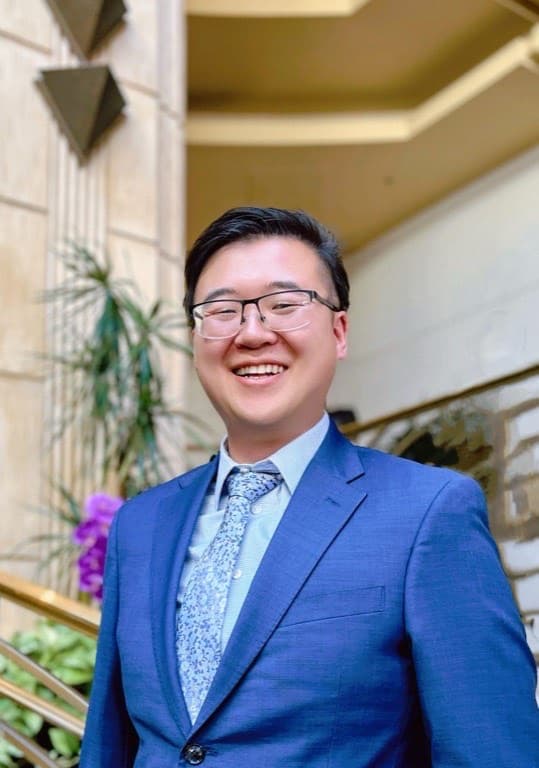
Quality Exam Prep Shouldn't Cost Hundreds
I'm Ran Chen, an engineer with 20+ years of coding experience. I passed my Life Insurance license, EA exam, SIE, Series 6, 63, 65, and finally the CFP® exam.
Through all these exams, one thing became clear: exam prep is expensive. But with AI, we can change that. Quality preparation can now be free for everyone.
MCAT Chem/Phys Exam FAQ
Official Association of American Medical Colleges (AAMC) Resources
Verify information with these official sources
More Free Resources
Ready to Start Your Free MCAT Chem/Phys Prep?
Review the study guide, practice key concepts, and use the free tools at your own pace.