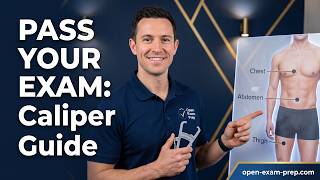
Best Body Fat Calipers for Personal Trainers: Complete 2026 Buying Guide
Video
Before initiating any fitness assessments, what should a personal trainer obtain from a new client?
Acsm Cpt Client Assessment
Question · Easy
It was only the cuff
Short
In-depth guide to the best skinfold body fat calipers for NASM-CPT, ACE-CPT, ACSM-CPT, and CSCS certification candidates. Covers Jackson-Pollock 3-site and 7-site protocols, caliper technique, Accu-Measure vs Sequoia TrimCal comparison, and why body composition assessment is tested on every major fitness certification exam in 2026.
Blog
A client with no known cardiovascular, metabolic, or renal disease and no signs or symptoms wants to start light walking. What does ACSM preparticipation screening suggest?
Chapter 1: Exam Overview & ACSM CPT Foundations
1.1 ACSM CPT Exam Structure, Logistics & Passing Standards
Study guide
Which client finding is considered a sign or symptom that warrants medical evaluation before exercise progression?
Question · Medium
FREE ACSM CPT Study Guide 2026: Blueprint, 12-Week Plan, and Clinical-Focused Tips
What is the primary purpose of ACSM preparticipation screening?
Best Body Measuring Tapes for Personal Trainers: Complete 2026 Buying Guide
In-depth guide to the best body measuring tapes for NASM-CPT, ACE-CPT, ACSM-CPT, and CSCS certification candidates. Covers circumference measurement protocols, waist-to-hip ratio calculation, proper technique for consistent readings, analog vs smart Bluetooth tape measures, and why body composition assessment is tested on personal trainer certification exams in 2026.
NASM-CPT Hardest Domains Ranked + Study Order (2026)
A physically inactive client with known type 2 diabetes has no current signs or symptoms and wants to begin vigorous interval training. What is the best recommendation?
Best Goniometers for Physical Therapy Students: Complete 2026 Buying Guide
In-depth guide to the best goniometer sets for physical therapy and corrective exercise certification candidates. Covers range of motion (ROM) assessment protocols, proper goniometry technique, normal ROM values for major joints, digital vs manual goniometers, and which sizes to use for each joint. Includes recommendations for NASM-CES, NASM-CPT, and ACSM-CPT exam prep in 2026.
Which of the following best describes “known disease” in ACSM screening?
1.2 The ACSM Scope of Practice & Allied Health Network
A regular exerciser with no known disease reports new onset chest discomfort during workouts. What should the trainer do first?
In ACSM screening, why is current physical activity status important?
Use this free ACSM CPT study guide for 2026 to master exam format, domain weights, and a practical schedule that fits full-time work and improves pass odds.
A client with known CVD is asymptomatic and currently performing moderate exercise 4 days/week. They want to begin vigorous sessions. What is the best ACSM-consistent action?
Question · Hard
Which NASM-CPT domains are hardest in 2026? Full difficulty ranking, optimal study order by domain weight, and a 10-week plan to pass on your first try.
Which intake form primarily documents medications, surgeries, and diagnosed conditions?
1.3 Evidence-Based Practice & Exercise Science Principles
A new client reports lightheadedness when climbing one flight of stairs recently. How should this affect session planning?
If a client is apparently healthy and wants to begin moderate-intensity resistance training, what is generally required first?
Which response by a client during screening most strongly indicates immediate referral before testing?
What is the trainer’s best role during preparticipation screening?
Chapter 2: Health Screening & Risk Stratification
2.1 Pre-Participation Physical Activity Screening (ACSM Algorithm)
A client with chronic kidney disease is currently inactive and asymptomatic. They request to start vigorous boot-camp classes. Which recommendation is most appropriate?
Which item is most relevant to ask during preparticipation screening for safety planning?
Which lipid value is considered a negative (protective) cardiovascular risk factor in traditional ACSM risk-factor counting?
A 48-year-old male who does not exercise has resting BP 134/84 mmHg and BMI 31 kg/m². Which statement is most accurate?
2.2 Health History Evaluation & Medical Clearance Criteria
A female client age 56 has HDL 64 mg/dL, BP 128/78 mmHg, fasting glucose 108 mg/dL, and no regular exercise. Using traditional risk-factor logic, which is correct?
Which family-history pattern counts as a positive CVD risk factor?
Why is risk-factor assessment still useful even with modern ACSM preparticipation screening?
Which blood pressure reading is generally categorized as elevated for risk-factor consideration?
2.3 Cardiovascular & Metabolic Disease Risk Factors
Physical inactivity is usually defined as not accumulating at least:
A client has total cholesterol 225 mg/dL, HDL 62 mg/dL, and no other findings. Which interpretation is best?
A 44-year-old male has obesity, controlled hypertension, and exercises 5 days/week. He reports no symptoms and has no diagnosed CMR disease. Which statement is most appropriate?
What is one practical use of risk stratification during goal setting?
Chapter 3: Initial Client Assessment & Baseline Testing
3.1 Vital Signs & Resting Baseline Measurements
A client with multiple CVD risk factors asks whether those factors mean they should never perform vigorous exercise. What is the best response?
Which pretest instruction improves reliability of resting blood pressure measurement?
When administering a YMCA submax cycle test, why is steady cadence important?
A client takes a beta-blocker. Which adjustment is best when interpreting submax cardiorespiratory test results?
3.2 Body Composition Assessment Methods
Which body composition method is commonly used in health clubs due to accessibility and low cost?
Loading more…