EA vs CMA
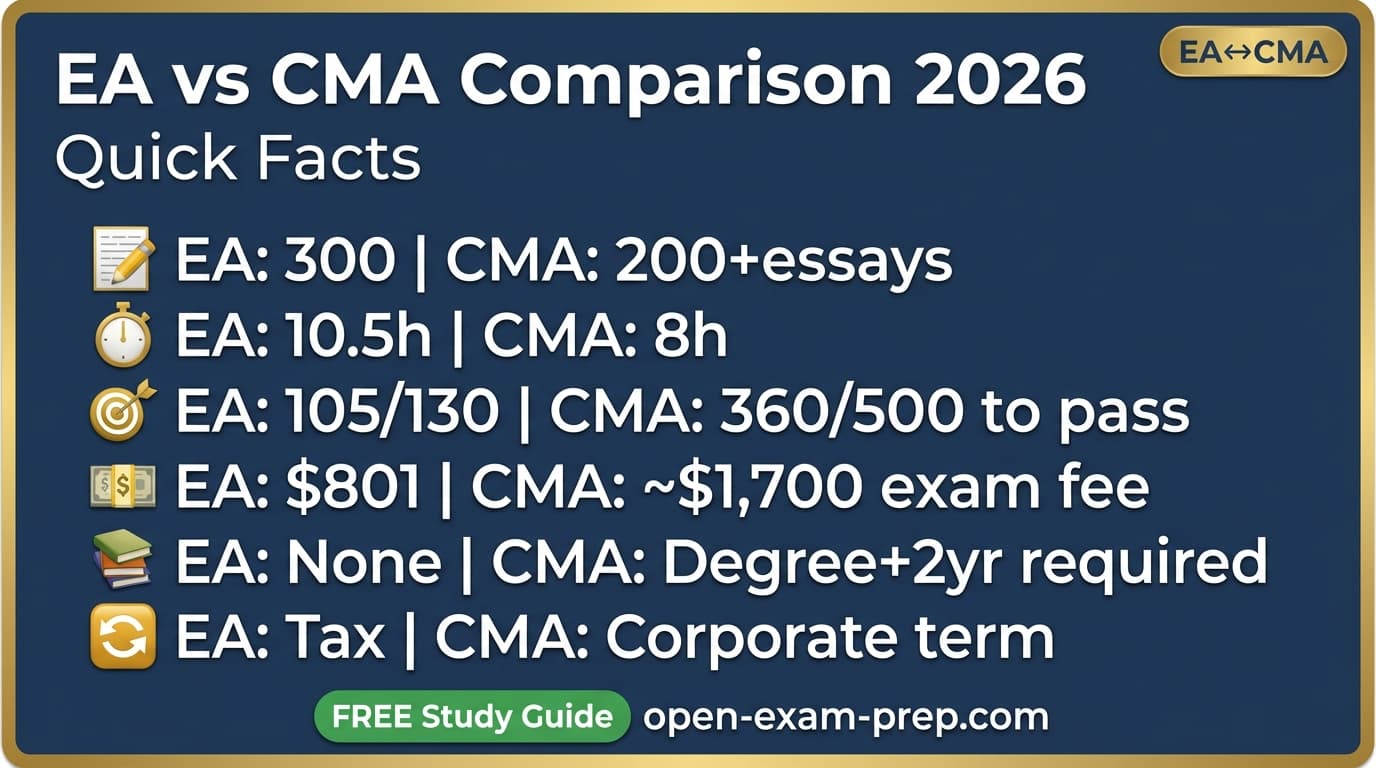
The EA is an IRS federal credential for tax specialists who prepare returns and represent clients before the IRS. The CMA is a global certification for management accountants working in corporate finance, FP&A, and strategic decision-making. EA requires no degree; CMA requires a bachelor's plus experience.
Side-by-Side Comparison
| Feature | EA | CMA |
|---|---|---|
| Full Name | Enrolled Agent | Certified Management Accountant |
| Exam Cost | $801 (3 parts at $267 each) | ~$1,700 total |
| Passing Score | 105/130 scaled score | 360/500 |
| Questions | 300 (100 per part × 3) | 200 MCQ + 4 essays (2 parts) |
| Time Limit | 10.5 hours (3.5 hrs × 3) | 8 hours (4 hrs × 2 parts) |
| Study Time | 150-250 hours | 150-300 hours |
| Difficulty | Moderate-Challenging | Challenging |
| Prerequisites | None - no degree required | Bachelor's degree + 2 yrs management accounting experience |
| Exam Body | IRS | IMA |
Key Differences
- 1EA: tax focus (IRS representation); CMA: corporate finance focus (FP&A, budgeting)
- 2EA: no degree required; CMA: bachelor's degree + 2 years experience required
- 3EA: federal license from IRS; CMA: professional certification from IMA
- 4EA: serves external clients; CMA: internal corporate role
- 5EA avg salary $58K-$72.5K; CMA avg salary $105,943
- 6EA: seasonal work option; CMA: year-round corporate role
- 7EA: 3 exam parts; CMA: 2 exam parts
What Each Exam Allows You To Do
EA
- Prepare individual and business tax returns
- Represent clients before ALL IRS offices
- Handle audits, appeals, and collections
- Federal credential - practice in any state
- Specialize in tax compliance and resolution
CMA
- Work in corporate finance and FP&A
- Perform cost accounting and budgeting
- Make strategic financial decisions
- Advance to Controller or CFO roles
- Global credential - internationally recognized
Who Should Take Each Exam?
Take the EA if you...
- →Tax preparers seeking credentials
- →Those without college degrees
- →IRS representation specialists
- →Those starting tax practices
Take the CMA if you...
- →Corporate accountants seeking advancement
- →Financial analysts in FP&A roles
- →Those targeting CFO career path
- →Professionals in corporate finance
Which Should You Take First?
Choose EA if you want to specialize in tax preparation and IRS representation, especially without a college degree. Choose CMA if you want a corporate finance career path leading to Controller or CFO roles. They serve completely different career paths.
Frequently Asked Questions
QCan I get both EA and CMA?
Yes, though it's uncommon. EA + CMA would be valuable for someone in corporate tax who needs both internal financial analysis skills and IRS representation authority. More common combinations are CPA + EA or CPA + CMA.
QWhich has better salary potential?
CMA has significantly higher average salary ($105,943 vs $58K-$72.5K for EA). CMAs in senior roles can earn $150K-$230K+. However, EAs running their own tax practices can also achieve high earnings.
QEA vs CPA - which is better for tax work?
Both have unlimited IRS representation rights. EAs specialize 100% in tax with no degree requirement. CPAs have broader scope (audit, consulting) but require 150 credit hours. Choose EA for pure tax focus; CPA for broader accounting career.
QWhich exam is harder?
CMA is generally considered harder: pass rate ~45% vs EA's ~66-72%, requires essay questions, covers strategic management topics. However, EA Part 2 (Businesses) goes deeper into tax than CMA covers.
10 free AI interactions per day
Free exam resources
Start Studying the Exact Exam
Use the comparison to choose a path, then move into the matching practice questions, study guide, and flashcards.
Third-party resources · We may earn a commission from purchases.
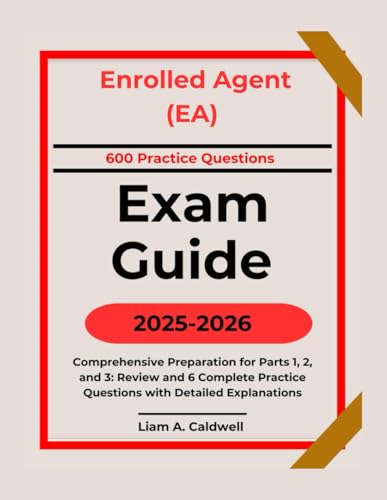
Enrolled Agent (EA) Exam Guide 2025-2026: Comprehensive Preparation for Parts 1, 2, and 3: Review and 6 Complete Practice Questions with Detailed Explanations
By Caldwell, Liam A.
$29.99 · 
 Study resources on Achievable
 Take courses on Udemy
Third-party resources · We may earn a commission from purchases.

HOCK Certified Management Accountant Textbook Part 1: Financial Planning, Performance, and Analytics (HOCK international Certified Management Accountant (CMA) Textbooks)
By Hock, Brian, Roden, Lynn
$68.77 ·
Prep options on Achievable Flashcards on MometrixTake courses on Udemy
Related Exam Comparisons
Stay Updated
Get free exam tips and study guides delivered to your inbox.