Airway & Specialty Therapies
21%of exam
Ventilation, Oxygenation & Synchrony
32%of exam
General Critical Care
47%of exam
Quick Facts
- Exam
- ACCS
- Credential
- RRT-ACCS
- Questions
- 170 total
- Scored
- 150 scored
- Pretest
- 20 unscored
- Time
- 4 hours
- Format
- LOFT CBT at PSI
- Fee
- $300 new $250 repeat
- Prerequisite
- RRT for 1+ year
- Pass rate
- 61.0% new 2024
- Blueprint
- August 2026 DCO
Airway Clearance & Difficult Airway
- Airway clearance
- Non-pharm plus pharm therapies
- Difficult airway
- Recognize plus escalate technique
- Bougie
- Blind difficult intubation aid
- Video laryngoscopy
- Improves glottic visualization
- Cricoid pressure
- Reduces aspiration during intubation
- Mallampati class
- Predicts difficult intubation
Artificial Airways
- Subglottic suction ETT
- Reduces VAP risk
- Double-lumen tube
- Independent lung ventilation
- RAE tube
- Oral or nasal surgery
- Wire-reinforced ETT
- Resists kinking
- Exchanging ETT
- Airway exchange catheter
- Speaking trach tube
- Allows phonation cuff down
- T-tube
- Tracheostomy weaning trial
Specialty Inhalants
- Inhaled nitric oxide
- Selective pulmonary vasodilator
- Heliox
- Lower density gas mix
- Nitrous oxide
- Analgesic sedation adjunct
- iNO complication
- Methemoglobinemia risk
- Heliox indication
- Upper airway obstruction
Airway Pharmacology
- Aerosolized TXA
- Controls airway bleeding
- Aerosolized heparin
- Reduces mucus plugging
- Aerosolized antimicrobials
- Targets resistant pathogens
- Instilled epinephrine
- Airway bleeding control
- Instilled lidocaine
- Topical airway anesthesia
DOPE Crash Check
Sudden vent decompensation: check displacement, obstruction, pneumothorax, equipment failure.
VV ECMO vs VA ECMO
VV ECMO
- Respiratory support only
- Refractory hypoxemia hypercapnia
- No hemodynamic support
VA ECMO
- Respiratory plus cardiac support
- Refractory cardiogenic shock
- Provides hemodynamic support
VA adds circulatory support
ARDS Severity & Rescue Picker
- P/F 200 to 300→Mild ARDS lung protection
- P/F 100 to 200→Moderate ARDS consider prone
- P/F below 100→Severe ARDS prone plus consider ECMO
- Refractory hypoxemia→VV ECMO evaluation
- Rising plateau pressure→Decrease tidal volume
ARDS & Lung Protection
- Tidal volume target
- 6 mL/kg PBW
- Plateau pressure limit
- 30 cmH2O or less
- Driving pressure target
- Below 15 cmH2O
- Permissive hypercapnia
- Accept higher PaCO2
- Mild ARDS
- P/F 200 to 300
- Moderate ARDS
- P/F 100 to 200
- Severe ARDS
- P/F below 100
Driving Pressure vs Plateau
Plateau pressure
- Alveolar distending pressure
- Limit 30 or less
Driving pressure
- Plateau minus PEEP
- Target below 15
Driving reflects lung strain
PEEP & Recruitment Picker
- Hypoxemia persists on FiO2→Increase PEEP per table
- Compliance improves with PEEP→Keep higher PEEP level
- Plateau rises overdistension→Reduce PEEP or volume
- Recruitable atelectasis suspected→Recruitment maneuver trial
- Hemodynamics drop after PEEP→Reduce PEEP fluid bolus
PEEP & Recruitment
- PEEP/FiO2 table
- ARDSNet titration guide
- Recruitment maneuver
- Sustained inflation opens alveoli
- Best PEEP
- Highest compliance or oxygenation
- Overdistension sign
- Rising plateau falling compliance
- Auto-PEEP
- Air trapping incomplete exhalation
Prone vs Recruitment Maneuver
Prone positioning
- Hours-long session
- Improves V/Q matching
Recruitment maneuver
- Brief pressure application
- Reopens collapsed alveoli
Prone is sustained recruitment
Weaning & Liberation Picker
- RSBI below 105→Proceed to SBT
- SBT tolerated 30 minutes→Assess extubation criteria
- Cuff leak absent→Consider steroid or delay
- Adequate cough and mentation→Extubate to support device
- SBT fails→Return to rest settings
Prone Positioning
- Prone criteria
- P/F below 150
- Prone FiO2/PEEP
- FiO2 0.6 PEEP 5+
- Session duration
- At least 16 hours
- Prone complication
- Pressure injury facial edema
ECMO & ECLS
- VV ECMO
- Refractory hypoxemic respiratory failure
- VA ECMO
- Refractory cardiogenic shock
- ECCO2R
- CO2 removal only
- ELSO oxygenation criteria
- P/F below 80
- ELSO Murray score
- Greater than 3
- ELSO pH criteria
- Below 7.25 high PaCO2
Waveforms & Synchrony
- Flow starvation
- Concave inspiratory flow curve
- Double triggering
- Breath stacking short Ti
- Reverse triggering
- Diaphragm follows vent breath
- Missed trigger
- Auto-PEEP blunts effort
- Scalar plateau
- No flow alveolar pressure
Weaning & Liberation
- RSBI
- f/VT below 105
- SBT criteria
- Stable oxygenation and hemodynamics
- SAT/SBT pairing
- Daily sedation and breathing trials
- Cuff leak test
- Predicts post-extubation stridor
- Extubation readiness
- Adequate cough and mentation
Capnography & Monitoring
- EtCO2 normal
- 35 to 45 mmHg
- Phase III
- Alveolar plateau segment
- Lost waveform
- Esophageal tube or arrest
- Transpulmonary pressure
- Esophageal balloon estimate
- NAVA signal
- Diaphragm EMG catheter
- Differential lung vent
- Asymmetric lung disease
RASS Ladder
RASS runs -5 unarousable to +4 combative.
CVP vs PCWP
CVP
- Right atrial preload
- Normal 2 to 8
PCWP
- Left atrial preload
- Normal 6 to 12
Right side vs left side
Sedation & Delirium Picker
- RASS above target→Reduce sedation titrate down
- RASS below target→Perform SAT if safe
- CAM-ICU positive→Treat delirium non-pharm first
- Pain suspected nonverbal patient→Use behavioral pain scale
- Daily SAT passes→Pair with SBT same day
Hemodynamics
- CVP normal
- 2 to 8 mmHg
- PCWP normal
- 6 to 12 mmHg
- Mean PAP
- 10 to 20 mmHg
- Cardiac index
- 2.5 to 4 L/min/m2
- SVR normal
- 800 to 1200 dynes
- Preload
- Volume before contraction
- Afterload
- Resistance during ejection
ABCDEF Bundle
ABCDEF: pain, breathing trial, sedation choice, delirium, mobility, family.
SAT vs SBT
SAT
- Stops sedation daily
- Assesses awakening safety
SBT
- Tests spontaneous breathing
- Assesses extubation readiness
Pair SAT then SBT
Hemodynamic Support Picker
- Septic shock MAP low→Norepinephrine first-line vasopressor
- Cardiogenic shock low output→Dobutamine or milrinone
- Refractory cardiogenic shock→Consider IABP or VAD
- Volume responsive hypotension→Crystalloid fluid bolus
- Right heart failure→Avoid excess fluid support RV
Sedation & Delirium
- RASS target
- -2 to 0
- RASS -5
- Unarousable to voice
- RASS +4
- Combative violent danger
- CAM-ICU positive
- Acute change plus inattention
- ABCDEF bundle
- Coordinated wake and breathe
Sepsis 1-Hour Bundle
Lactate, cultures, antibiotics, fluids, vasopressor within the first hour.
qSOFA vs SOFA
qSOFA
- Bedside 3-criteria screen
- No labs needed
SOFA
- Six organ system score
- Requires lab values
qSOFA screens SOFA scores
Sepsis & Shock
- 1-hour bundle
- Lactate cultures antibiotics fluids
- Fluid bolus
- 30 mL/kg crystalloid
- MAP goal
- 65 mmHg or higher
- First vasopressor
- Norepinephrine per SSC
- qSOFA positive
- 2 of 3 criteria
- Septic shock
- Vasopressors plus lactate above 2
IABP vs VAD
IABP
- Counterpulsation timing dependent
- Needs some native function
VAD
- Continuous flow pump
- Supports failing ventricle fully
VAD replaces more function
Labs & Acid-Base
- pH normal
- 7.35 to 7.45
- PaCO2 normal
- 35 to 45 mmHg
- HCO3 normal
- 22 to 26 mEq/L
- Elevated lactate
- Tissue hypoperfusion marker
- HIT diagnosis
- Platelet drop plus heparin
- D-dimer
- Rules out clot
Non-Pulmonary Systems
- ROX index
- Predicts HFNC failure risk
- IAH threshold
- Above 12 mmHg
- Abdominal compartment syndrome
- Above 20 with dysfunction
- TTM target
- 32 to 36 degrees C
- Brain death exam
- Two exams plus apnea test
- AKI marker
- Rising creatinine falling output
Procedures & Troubleshooting
- Mini-BAL
- Diagnoses VAP without scope
- IABP timing
- Inflate at dicrotic notch
- IABP contraindication
- Severe aortic insufficiency
- Chest tube leak
- Continuous bubbling water seal
- ECMO chatter
- Low preload or hypovolemia
- VAD flow
- Continuous flow reduced pulse
End-of-Life & Ethics
- Ethics items
- At least 5 per minipool
- Brain death
- Irreversible loss of function
- Organ donor care
- Hemodynamic and hormonal support
- START triage
- Rapid disaster sorting
- Withdrawal of support
- Comfort-focused symptom management
Common Traps
Oxygenation vs Ventilation Failure
Oxygenation needs FiO2 or PEEP ≠ Ventilation needs minute volume change
Ethics Items vs Clinical Items
At least 5 ethics items ≠ Embedded within every minipool
Scored vs Pretest Items
150 items count toward score ≠ 20 pretest items look identical
New vs Reapplicant Fee
New applicants pay $300 ≠ Reapplicants pay $250 only
CVP vs PCWP Preload
CVP reflects right heart ≠ PCWP reflects left heart
RASS vs CAM-ICU Purpose
RASS measures sedation depth ≠ CAM-ICU screens for delirium
SAT vs SBT Focus
SAT stops sedation infusion ≠ SBT tests breathing readiness
Last Minute
- 1.170 items: 150 scored + 20 pretest
- 2.4-hour LOFT exam at PSI
- 3.RRT required for 1+ year
- 4.ARDS tidal volume: 6 mL/kg
- 5.Plateau pressure limit: 30 or less
- 6.Driving pressure target: below 15
- 7.Prone criteria: P/F below 150
- 8.VV ECMO: refractory hypoxemia
- 9.VA ECMO: refractory cardiogenic shock
- 10.RSBI below 105 predicts success
- 11.RASS target: -2 to 0
- 12.Sepsis bundle completed within 1 hour
- 13.MAP goal: 65 mmHg or higher
- 14.At least 5 ethics items
- 15.New fee $300, repeat fee $250
 Free CE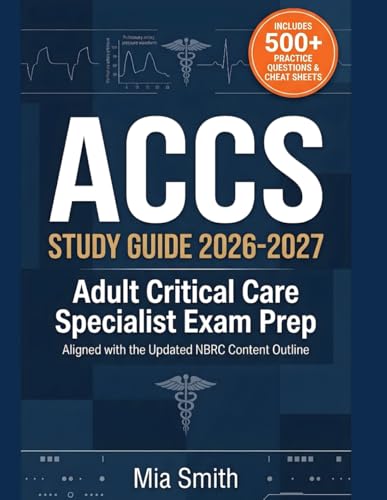
 Buy on Amazon
Explore More NBRC Respiratory Care Credentials
Continue into nearby exams from the same family. Each card keeps practice questions, study guides, flashcards, videos, and articles in one place.
More From This Family
Videos and articles for deeper review.