Linux Community and Open Source
Not publishedof exam
Finding Your Way on Linux
Not publishedof exam
Power of the Command Line
Not publishedof exam
Linux Operating System
Not publishedof exam
Security and File Permissions
Not publishedof exam
Quick Facts
- Exam
- 010-160
- Version
- 1.6
- Provider
- Linux Professional Institute
- Questions
- 40
- Time
- 60 minutes
- Prerequisites
- None
- Validity
- Lifetime
- Topic weights
- 7 9 9 8 7
- Test centers
- Pearson VUE
- Online delivery
- Pearson OnVUE
- Pricing
- Varies by country
Official Objective Weight Map
- 1.1 Linux Evolution
- Weight 2Topic 1
- 1.2 Open Applications
- Weight 2Topic 1
- 1.3 FOSS Licensing
- Weight 1Topic 1
- 1.4 ICT Skills
- Weight 2Topic 1
- 2.1 Shell Basics
- Weight 3Topic 2
- 2.2 Getting Help
- Weight 2Topic 2
- 2.3 Directories Files
- Weight 2Topic 2
- 2.4 File Operations
- Weight 2Topic 2
- 3.1 Archiving
- Weight 2Topic 3
- 3.2 Search Extract
- Weight 3Topic 3
- 3.3 Shell Scripts
- Weight 4Topic 3
- 4.1 Choosing OS
- Weight 1Topic 4
- 4.2 Computer Hardware
- Weight 2Topic 4
- 4.3 Data Storage
- Weight 3Topic 4
- 4.4 Basic Networking
- Weight 2Topic 4
- 5.1 User Security
- Weight 2Topic 5
- 5.2 Users Groups
- Weight 2Topic 5
- 5.3 Permissions Ownership
- Weight 2Topic 5
- 5.4 Special Files
- Weight 1Topic 5
Linux and FOSS Landscape
- Linux
- Operating system kernel
- Distribution
- Kernel plus packaged software
- Debian family
- Debian Ubuntu Linux Mint
- Red Hat family
- Red Hat CentOS
- SUSE family
- SUSE openSUSE
- Raspberry Pi
- Small single-board computer
- Android
- Linux-kernel mobile platform
- Cloud Linux
- Common virtual server platform
- FOSS
- Free and open source software
- Free software
- Freedom not necessarily price
- GPL
- Copyleft license
- BSD license
- Permissive license
- Creative Commons
- Content licensing family
- FSF
- Promotes free software
- OSI
- Promotes open source
- Copyleft
- Derivatives preserve freedoms
- Permissive
- Few redistribution restrictions
Applications and Packages
- LibreOffice
- Office productivity suite
- Thunderbird
- Email client
- Firefox
- Web browser
- GIMP
- Raster image editor
- Nextcloud ownCloud
- File sync platforms
- Apache NGINX
- Web servers
- MariaDB MySQL
- Relational databases
- NFS
- Unix network file sharing
- Samba
- SMB file sharing
- dpkg
- Debian package tool
- apt-get
- Debian repository package tool
- rpm
- RPM package tool
- yum
- RPM repository package tool
- Repository
- Managed package source
Absolute vs Relative Paths
Absolute
- Begins with slash
- Independent of current directory
Relative
- No leading slash
- Depends on current directory
Leading slash starts at root
Command Picker
- Need current location→pwd(Print working directory)
- Need hidden files→ls -a(Includes dot entries)
- Need command manual→man(Search with slash)
- Need filename database search→locate(Database may be stale)
- Need matching lines→grep(Pattern search)
- Need ending lines→tail(Defaults to ten)
- Need live processes→top(Interactive display)
- Need memory summary→free(Shows RAM and swap)
- Need network addresses→ip addr show(Inspect interfaces)
- Need user identity→id(Shows UID and groups)
Shell Syntax and Help
- Bash
- Common Linux shell
- Command syntax
- Command options arguments
- echo
- Prints arguments
- history
- Lists prior commands
- PATH
- Command search directories
- export
- Marks variable for children
- type
- Identifies command resolution
- Single quotes
- Preserve literal text
- Double quotes
- Allow variable expansion
- Backslash
- Escapes next character
- $NAME
- Expands variable value
- man
- Displays manual pages
- info
- Displays Info documentation
- /usr/share/doc
- Installed package documentation
- locate
- Searches filename database
Single vs Double Quotes
Single quotes
- Preserve literal characters
- Suppress variable expansion
Double quotes
- Preserve spaces
- Allow variable expansion
Quote choice controls expansion
Stream Numbers
Input zero; output one; errors two
Globs vs Regular Expressions
Glob
- Shell expands filenames
- Star matches character sequence
Regex
- Tools match text patterns
- Star repeats previous expression
Same symbols differ by context
Stream and Redirect Picker
- Replace output file→>(Existing data is lost)
- Append output file→>>(Existing data remains)
- Read stdin from file→<(Input redirection)
- Capture errors only→2>(Redirect stderr)
- Chain command output→Pipe(stdout feeds stdin)
- Count matching lines→grep then wc(Connect with pipe)
- Page long output→Pipe to less(Interactive reading)
- Sort file lines→sort(Writes sorted stdout)
Archives and Compression
- Archive
- Bundles multiple files
- Compression
- Reduces stored size
- tar -cf
- Create tar archive
- tar -xf
- Extract tar archive
- tar -tf
- List tar contents
- tar -z
- Use gzip compression
- tar -j
- Use bzip2 compression
- tar -J
- Use xz compression
- gzip gunzip
- Compress decompress gzip
- bzip2 bunzip2
- Compress decompress bzip2
- xz unxz
- Compress decompress xz
- zip unzip
- Create extract zip
tar Actions
Create c; extract x; list t
stdout vs stderr
stdout
- Normal output stream
- File descriptor one
stderr
- Error output stream
- File descriptor two
Redirect streams independently
Streams and Text Tools
- stdin
- Standard input stream 0
- stdout
- Standard output stream 1
- stderr
- Standard error stream 2
- >
- Overwrite stdout destination
- >>
- Append stdout destination
- <
- Redirect file into stdin
- 2>
- Redirect stderr
- Pipe
- Connect stdout to stdin
- cat
- Concatenate and print files
- less
- Page through text
- head
- Show beginning lines
- tail
- Show ending lines
- grep
- Print matching lines
- sort
- Order input lines
- cut
- Extract fields or characters
- wc
- Count lines words bytes
- Regex dot
- Matches any single character
- Regex star
- Matches zero-plus previous atom
- Regex brackets
- Match one listed character
Overwrite vs Append
>
- Truncates destination first
- Writes new output
>>
- Preserves existing content
- Adds output afterward
Count angle brackets carefully
Shell Scripting
- Shebang
- Selects script interpreter
- #!/bin/bash
- Select Bash interpreter
- Assignment
- NAME=value uses no spaces
- $1
- First positional argument
- $#
- Argument count
- $@
- All positional arguments
- $?
- Previous exit status
- Exit zero
- Command succeeded
- Nonzero exit
- Command reported failure
- for loop
- Repeats over item list
- do done
- Enclose loop body
- chmod +x
- Add executable permission
- ./script
- Run script from here
- vi nano
- Command-line text editors
Archive vs Compression
Archive
- Bundles files together
- tar creates archives
Compression
- Reduces data size
- gzip bzip2 xz compress
tar can combine both
Core Data Paths
Etc config; var logs; proc processes
Program vs Process
Program
- Stored executable instructions
- Passive file
Process
- Running program instance
- Has process identifier
Execution creates a process
Path Picker
- Need system configuration→/etc(Mostly text files)
- Need system logs→/var/log(Variable log data)
- Need process details→/proc(Virtual filesystem)
- Need device files→/dev(Hardware interfaces)
- Need kernel device model→/sys(Virtual filesystem)
- Need boot files→/boot(Kernel bootloader content)
- Need user documents→/home(Regular user homes)
- Need temporary workspace→/tmp(Sticky bit commonly set)
System Hardware and Data
- GUI
- Graphical user interface
- CLI
- Command-line interface
- Stable release
- Production-focused software
- Beta release
- Pre-release testing software
- LTS
- Long-term support release
- Virtualization
- Multiple virtual systems
- CPU
- Executes instructions
- RAM
- Volatile working memory
- HDD
- Magnetic persistent storage
- SSD
- Solid-state persistent storage
- Partition
- Logical disk region
- /dev/sd*
- Common disk device names
- Driver
- Controls hardware device
- Program
- Stored executable code
- Process
- Running program instance
- ps
- Process snapshot
- top
- Live process display
- free
- Memory usage summary
- dmesg
- Kernel message buffer
- syslog
- System logging facility
Filesystem Hierarchy
- /
- Filesystem root
- /etc
- System configuration
- /var/log
- System log files
- /boot
- Bootloader and kernel files
- /proc
- Process kernel information
- /dev
- Device files
- /sys
- Kernel device information
- /home
- Regular user homes
- /root
- Root user home
- /tmp
- Temporary files
- /var/tmp
- Longer-lived temporary files
- /usr/share/doc
- Package documentation
Basic Networking
- IPv4
- 32-bit network addressing
- IPv6
- 128-bit network addressing
- Router
- Forwards between networks
- DNS
- Maps names and addresses
- ip addr show
- Display interface addresses
- ifconfig
- Legacy interface display
- ip route show
- Display routing table
- route
- Legacy routing display
- ss
- Display network sockets
- netstat
- Legacy network statistics
- ping
- Test IP reachability
- host
- Query DNS records
- /etc/resolv.conf
- DNS resolver configuration
- /etc/hosts
- Static hostname mappings
Permission Values
Read four; write two; execute one
sudo vs su
sudo
- Runs privileged command
- Policy controls authorization
su
- Switches user identity
- Can start new shell
Command elevation differs from switching
Permission Picker
- Owner needs full access→7(Read write execute)
- Need read execute→5(Four plus one)
- Need read write→6(Four plus two)
- Need read only→4(No write execute)
- Change mode bits→chmod(Symbolic or octal)
- Change file owner→chown(Privilege usually required)
- Directory needs traversal→Execute permission(Not file execution)
- Directory needs listing→Read permission(Names become visible)
- Shared directory protects files→Sticky bit(File/dir owner or root deletes)
- Need path-based reference→ln -s(Create symbolic link)
Users Groups and Security
- root
- Administrative superuser
- UID zero
- Root identity
- Standard user
- Limited regular account
- System user
- Service-owned account
- /etc/passwd
- Public account metadata
- /etc/shadow
- Protected password hashes
- /etc/group
- Group membership data
- id
- Show user group identities
- who
- Show logged-in users
- w
- Show users and activity
- last
- Show login history
- sudo
- Run command with privilege
- su
- Switch user identity
- useradd
- Create user account
- groupadd
- Create group
- passwd
- Set account password
- /etc/skel
- New-user template files
Permission Class Order
User Group Others
File vs Directory Execute
File execute
- Allows program execution
- Requires valid executable
Directory execute
- Allows directory traversal
- Access known entry names
Execute meaning depends object
Permissions and Special Files
- Permission order
- User group others
- Read
- Numeric value 4
- Write
- Numeric value 2
- Execute
- Numeric value 1
- chmod
- Change permission mode
- chown
- Change owner and group
- File read
- Read file contents
- File write
- Modify file contents
- File execute
- Run file as program
- Directory read
- List entry names
- Directory write
- Change entries with execute
- Directory execute
- Traverse directory
- Sticky bit
- Limits deletion to authorized owners
- Symbolic link
- Path-based reference
- ln -s
- Create symbolic link
- ls -d
- List directory entry itself
- chmod 754
- rwx r-x r--
- chown alice:dev
- Set owner and group
Common Traps
Objective Weights Are Relative
LPI publishes integer weights ≠ Topic percentages are not published
Pricing Varies by Country
Use LPI country pricing ≠ Avoid universal fee assumptions
Certificate Validity Is Lifetime
Linux Essentials does not expire ≠ Do not apply LPIC cycles
Root Path Is Not Root Home
Slash is filesystem root ≠ /root is superuser home
rm Has No Default Trash
Removal is normally immediate ≠ Review targets before running
Single Quotes Block Expansion
Single quotes stay literal ≠ Double quotes expand variables
Single Redirect Overwrites
One angle bracket truncates ≠ Two angle brackets append
Globs Are Not Regex
Shell expands globs ≠ Text tools interpret regex
Directory Permissions Differ
Read lists names ≠ Execute permits traversal
/etc/passwd Stores No Hashes
/etc/passwd holds metadata ≠ /etc/shadow protects hashes
Last Minute
- 1.Exam code is 010-160
- 2.Objectives version is 1.6
- 3.Forty questions; sixty minutes
- 4.No prerequisites; lifetime validity
- 5.Weights 7-9-9-8-7 by topic
- 6.Absolute paths begin with slash
- 7.Single quotes block expansion
- 8.stdout is one; stderr two
- 9.One redirect overwrites
- 10.Pipe connects stdout to stdin
- 11.tar c creates; x extracts
- 12.Processes are running programs
- 13./etc stores configuration
- 14./var/log stores logs
- 15.DNS maps names and addresses
- 16.Permissions use 4 2 1
- 17.Directory execute means traverse
- 18.sudo runs privileged commands
- 19.Sticky bit limits deletion to owners
 Free CE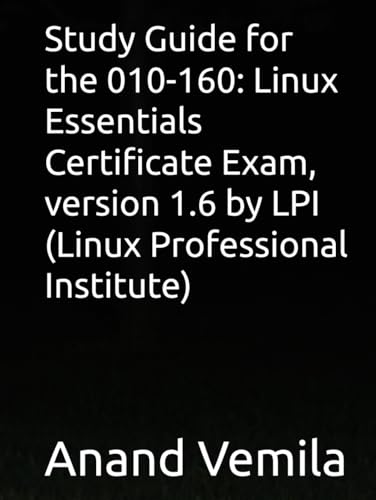
 Buy on Amazon
Explore More Linux Professional Institute Certifications
Continue into nearby exams from the same family. Each card keeps practice questions, study guides, flashcards, videos, and articles in one place.