The shortest correct route depends on the licence you already hold
Getting an Alberta Class 6 motorcycle licence in 2026 is not one identical four-step process for everyone. Your current licence determines whether you enter or remain in Graduated Driver Licensing, and the motorcycle you bring can determine whether your new licence is restricted.
The current Alberta Class 6 licence page gives the core eligibility rule: you must be at least 16 years old and have at minimum held a Class 7 learner's licence for one year. A person who already holds a full Class 5 still takes the Class 6 knowledge and road tests, but does not need to start the Class 7 waiting period again.
Use this starting-point table before booking anything:
| Licence you hold now | What comes next | Likely licence after passing |
|---|---|---|
| Full, non-GDL Class 5 | Pass the Class 6 knowledge test and Class 6 road test | Full Class 6 added to your driving privileges |
| Class 5-GDL | Pass both Class 6 tests | Combined Class 5/6-GDL; probationary restrictions continue |
| Class 7 held at least one year, age 16 or older | Pass both Class 6 tests | Class 6-GDL |
| No Alberta Class 5 or Class 7 | Complete the Class 7 requirements and required holding period first | Class 6-GDL after the Class 6 tests |
If you are exchanging a motorcycle licence from another province or country, do not assume you must take this route. Alberta has a separate out-of-province licence exchange process, and Class 6 exchange eligibility depends on the issuing jurisdiction and documented experience.
Step 1: Confirm eligibility before buying a test
A registry record, not simply your riding experience, controls test eligibility. Check these items first:
- You are at least 16.
- You hold a valid Alberta Class 5 or Class 7 licence.
- If Class 7 is your baseline, you have held it for at least one year.
- You have no unresolved suspension, reinstatement, or licence-condition issue that blocks testing.
- You understand whether your current licence is full or GDL.
A full Class 5 holder and a Class 5-GDL holder both take the Class 6 tests, but the result is different. A full Class 5 holder is adding motorcycle privileges to an already full licence. A Class 5-GDL holder stays subject to the probationary program. If the GDL dates shown in your record are unclear, ask a registry agent to confirm the date on which you may exit before assuming the Class 6 test resets or ends probation.
A Class 6 licence also allows the holder to operate Class 5 vehicles as a learner; it is not a substitute for a full Class 5 licence. Decide whether you ultimately want motorcycle privileges only or a combined Class 5/6 record.
Step 2: Pass the Class 6 knowledge test
The Alberta driver's knowledge-test page sets the province-wide format:
- 30 multiple-choice questions
- 25 correct answers required
- one attempt per day
- a new fee for every attempt
Take the test at a registry agent and bring your existing Class 5 or Class 7 licence. Phone ahead because not every office offers every service at every time. Class 6 knowledge tests are currently offered only in English. Alberta allows a paper English conversion dictionary for a Class 6 candidate who needs minimal English assistance, but the broader translator process described for Class 7 should not be assumed to apply to Class 6. Confirm accommodations with the registry before arriving.
What does the knowledge test cost in July 2026?
The official Registry Agent Product Catalogue dated 2 July 2026 lists the all-classes knowledge test as a $5 government fee plus a maximum $12.60 registry service charge. That produces a maximum listed standard charge of $17.60, before considering any separately applicable transaction circumstances. An old page quoting $17 is using an earlier service-charge schedule.
Passing the test is not a motorcycle learner's licence that permits solo riding. It completes the knowledge requirement for the road test. Until you pass the road test and reclassify your licence, the learning-rider supervision rules still apply.
Study both official sources named in the Alberta Rider's Guide: the Rider's Guide for motorcycle operation and the Driver's Guide for traffic laws, signs, and signals. Use the free Alberta Class 6 practice questions to find weak areas, then review them in the Alberta Class 6 study guide.
Step 3: Practise legally before the road test
A learning motorcycle rider must be supervised by a person who holds a full, non-GDL Class 6 licence. The Rider's Guide says the supervisor can:
- sit on the learner's motorcycle,
- follow on another motorcycle, or
- follow in another vehicle.
The supervisor must provide supervision at all times. A full Class 5 driver who does not also hold full Class 6 is not the motorcycle-qualified supervisor described by the Rider's Guide. This specific motorcycle rule is the safer controlling instruction when a general Alberta licence summary appears less precise.
The restrictions attached to your current GDL stage continue while you practise. Class 7 motorcycle learners have a night-riding restriction, must maintain zero alcohol and drug levels, and must remain below the GDL demerit suspension threshold. Class 5-GDL learners also have zero alcohol and drug tolerance, cannot supervise another learning rider, and face the lower GDL demerit threshold.
Alberta strongly recommends motorcycle rider training, but the Class 6 page does not make a course a universal prerequisite for the knowledge or road test. Training is still useful for controlled practice in low-speed balance, clutch control, progressive and emergency braking, push steering, curves, lane position, shoulder checks, and hazard response. Verify that any course claiming a GDL time reduction is delivered by a school licensed by Transportation and Economic Corridors.
Step 4: Book the Class 6 road test through an offering registry
Passenger-vehicle road tests, including Class 6, are delivered by private examiners through registry agents. Use Alberta's registry road-test map to find an office that actually offers Class 6 appointments, then follow that registry's booking link or book in person.
The current Alberta road-test page says you need the nine-digit Motor Vehicle Identification number near the barcode on your Alberta licence. It also requires all outstanding government fines to be paid before booking. If you pay close to the appointment date, ask the registry how long the payment takes to appear on your motor-vehicle record.
There is no single province-wide Class 6 road-test retail price. The July 2026 product catalogue lists a $7 government component and allows the registry agent to determine its service charge. Alberta.ca says private registry agents set and publish the fees for the Class 5 and 6 tests they deliver. Compare the total published fee, motorcycle-rental options, weather policy, cancellation cutoff, and rescheduling terms before paying.
Do not use the commercial road-test prices on the Alberta page; those fixed amounts apply to Classes 1 through 3, not Class 6. Also do not assume the first registry in a location search offers motorcycle tests. The official map shows only participating passenger-road-test registries, and appointment types still vary by office.
Step 5: Prepare the motorcycle and evidence package
Alberta's Class 6 page says you must provide the motorcycle and have a cell phone equipped with earbuds for examiner communication. The Rider's Guide adds that the motorcycle must have valid registration and insurance and must be mechanically safe. The examiner checks the machine before starting.
Use this pre-booking and test-day evidence checklist:
- Valid Alberta Class 5 or Class 7 driver's licence
- Passed Class 6 knowledge-test status on the registry record
- Booking confirmation and the registry's required arrival time
- Valid motorcycle registration
- Valid proof of insurance for that motorcycle
- Approved motorcycle helmet and suitable protective equipment
- Fully charged mobile phone and working earbuds
- Motorcycle with safe tires, controls, brakes, lights, signals, mirrors, horn, and no unsafe defect
- Enough fuel and a practical plan to get the motorcycle to the test legally
- Any original documents the registry has told you to bring for post-pass licence reclassification
A learner cannot solve the transport problem by riding alone to the test. Arrange continuous supervision by a full non-GDL Class 6 holder, use a properly arranged motorcycle rental, or transport the motorcycle another legal way. Confirm that a borrowed or rented motorcycle's registration, insurance, and contract permit its use by you on a road test.
A three-wheeled test creates a real restriction
If you take the road test on a three-wheeled motorcycle, Alberta restricts the resulting Class 6 licence to operating three-wheeled motorcycles. Choose the test vehicle according to the privilege you need after the test, not only according to what is easiest to borrow. A candidate seeking an unrestricted two-wheeled motorcycle privilege should not discover this consequence after passing on a trike.
What the Class 6 road test evaluates
The official Rider's Guide describes an on-road test of about 60 minutes, including an equipment and motorcycle-fitness check and riding in varied traffic conditions. The examiner observes:
- legal right and left turns,
- safe judgment at intersections,
- balance and speed control,
- road and lane position,
- communication and observation habits, and
- overall readiness for public-road riding.
The examiner follows in another vehicle and communicates instructions. Planned curbside stops allow scoring during the route; they do not automatically mean you made an error.
Under the current Alberta road-test scoring page, a Class 5 or 6 candidate fails by receiving more than 75 points. An automatic fail can also result from endangering another road user, riding unsafely, or breaking traffic law. The practical target is not to memorise a route. It is to make every observation, lane-position choice, signal, speed adjustment, and right-of-way decision visible and defensible.
If you do not pass, use the examiner's result and comments as a remediation list. You cannot simply retake without paying: road-test fees and the registry's booking rules apply to each new appointment. Practise the exact failed behaviours under legal supervision before rebooking.
Step 6: Reclassify and purchase the licence card
Passing the road test does not by itself change the class printed in the driver record. Return to a registry agent to reclassify and purchase the Class 6 licence card. The July 2026 catalogue lists licence reclassification as a $15 government fee plus a maximum $13.65 service charge.
Alberta gives a temporary licence valid for 30 days or until the physical card arrives. The Class 6 page says the card should arrive within 21 business days. If it does not, follow the contact instructions on the temporary licence and report it missing to a registry agent within 60 days of applying to avoid a possible replacement charge. Destroy the temporary licence after the card arrives.
July 2026 card-document alert
Alberta introduced new driver's licence and ID cards on 2 July 2026. The new process requires proof of legal entitlement in Canada when first applying or renewing, and Alberta Health Care Insurance Plan revalidation may require a physical or mobile health card plus original legal-entitlement documents.
The official Class 6 test page still identifies your existing licence as the item to bring for the knowledge test. Card issuance is a separate registry transaction. Ask the registry before test day whether your Class 6 reclassification will also trigger the new document check, particularly if you have not yet completed it. That prevents a successful road test from turning into a second trip for original documents.
Step 7: Exit Class 6-GDL without another road test
Since 1 April 2023, Alberta no longer requires an advanced road test to exit GDL. To upgrade from Class 6-GDL to full, non-GDL Class 6 in 2026, Alberta lists three conditions:
- be at least 18,
- complete 24 months of probationary driving, and
- be suspension and demerit free for the final 12 months.
A Class 5 or Class 6 training program from an Alberta-licensed driver training school may reduce the 24-month probationary period by up to six months when all other conditions are met. The Rider's Guide explains that the course completion must be recorded on the driving record. Save the original completion evidence and verify that the registry has applied it; finishing a course does not waive the age or final clean-record requirements.
Until the upgrade is recorded, Class 6-GDL conditions continue: zero alcohol and drug levels, suspension at eight or more demerit points, and no supervision of a learning rider. Do not treat the calendar end of 24 months as automatic proof that the record has moved to full status. Confirm the licence class before supervising someone else.
The 2026 no-surprise checklist
The efficient Alberta Class 6 path is a sequence of verified gates:
- Identify whether your current licence is full Class 5, Class 5-GDL, or Class 7.
- Confirm age, Class 7 holding period, and registry eligibility.
- Study the Rider's Guide and Driver's Guide, then pass 25 of 30 knowledge questions.
- Practise only with a full non-GDL Class 6 supervisor.
- Find a registry that offers Class 6 road tests and compare its published fee and policies.
- Clear outstanding fines and book using your MVID.
- Bring a safe, insured, registered motorcycle, approved helmet, phone, earbuds, and requested evidence.
- Avoid a three-wheel-only restriction unless that is the privilege you want.
- After passing, complete the registry reclassification and card transaction.
- If issued Class 6-GDL, track the 24-month, age-18, and final 12-month clean-record requirements.
That checklist addresses the errors the simplified four-step summaries miss: starting-licence status, legal practice supervision, private road-test pricing, test-vehicle restrictions, post-pass reclassification, and the current no-advanced-test GDL exit. Verify each gate before paying, and the Class 6 process becomes predictable rather than a chain of registry surprises.

 Course Playlist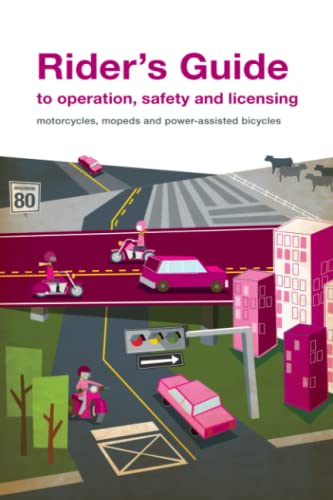
 Buy on Amazon