Cloud+ Is Built for Multi-Cloud Operations
CompTIA Cloud+ CV0-004 is for people who work across cloud infrastructure, not just one vendor console. CompTIA lists the exam as a maximum of 90 questions, 90 minutes, multiple-choice plus performance-based questions, and a 750 passing score on the 100-900 scale.
The exam’s value is the same as its challenge: it mixes architecture, deployment, operations, security, DevOps fundamentals, and troubleshooting. You need to understand how cloud infrastructure behaves when something has to be built, maintained, secured, automated, or fixed.
CV0-004 Domain Weights Change the Study Order
| Domain | Weight | What to practice |
|---|---|---|
| Cloud Architecture | 23% | Models, virtualization, networking, containers, orchestration, resource optimization |
| Deployment | 19% | Migration, IaC, provisioning, workload placement |
| Operations | 17% | Monitoring, lifecycle management, backup, recovery, observability |
| Security | 19% | IAM, vulnerabilities, compliance, container security, security controls |
| DevOps Fundamentals | 10% | Source control, CI/CD, automation, integration, event-driven basics |
| Troubleshooting | 12% | Deployment, network, security, and service-level problem solving |
The largest domain is architecture, but the exam is not just design. CV0-004 expects practical operations judgment.
What CV0-004 Added to the Prep Problem
CV0-004 is not just a rename of older Cloud+ material. CompTIA's objectives emphasize cloud-native design, containerization, infrastructure as code, deployment workflows, observability, automation, DevOps fundamentals, security controls, and troubleshooting. If your materials are built for CV0-003, use them carefully and cross-check every topic against the current CV0-004 objectives.
CompTIA also recommends about five years of total IT experience, including 2-3 years as a systems administrator or cloud engineer. Candidates without that background can pass, but they should add labs for networking, IAM, containers, backup, monitoring, and troubleshooting instead of relying only on vocabulary review.
Performance-Based Questions Require Process Memory
Performance-based items punish vague understanding. You may need to place steps, interpret a scenario, choose a configuration, or troubleshoot a misbehavior. Prepare by practicing workflows, not only definitions.
For each domain, write a procedure: deploy a workload, plan a migration, secure access, monitor a service, restore from backup, troubleshoot connectivity, and interpret logs. If you cannot explain the order of operations, review the task before doing more multiple-choice questions.
The Vendor-Neutral Advantage and Risk
Cloud+ can help if your job touches AWS, Azure, Google Cloud, private cloud, or hybrid environments. It proves you understand infrastructure concepts that carry across platforms.
The risk is shallow prep. Vendor-neutral does not mean generic. You still need concrete understanding of VPC/VNet concepts, subnets, routing, load balancers, IAM, keys, encryption, containers, orchestration, automation, backup, observability, and incident response.
90-Minute Pacing and PBQ Triage
Cloud+ gives only 90 minutes for up to 90 questions, including performance-based questions. Start by checking how many PBQs appear. If a PBQ is long, scan it, answer what you can confidently answer, and avoid letting one simulation consume the time needed for 10 easier multiple-choice items.
For multiple-choice troubleshooting questions, use a process: identify the symptom, isolate the layer, check recent change, choose the least disruptive verification step, then select the fix. That workflow helps with deployment failures, route or DNS issues, IAM denial, expired certificates, storage latency, autoscaling surprises, backup failures, and observability gaps.
A useful readiness standard is 80-85% on timed mixed sets plus the ability to explain each PBQ workflow in order: objective, inputs, configuration, validation, rollback or monitoring.
Troubleshooting Is a Scored Skill, Not a Bonus Topic
Cloud+ candidates often study architecture and security first, then treat troubleshooting as final review. CV0-004 makes that risky. Troubleshooting is its own scored domain, and PBQs can combine broken deployment, network, IAM, certificate, monitoring, backup, or service-health symptoms in the same item.
During final prep, keep a small runbook for each failure type: symptom, likely layer, first verification step, low-risk fix, and validation signal. That runbook discipline is more useful than memorizing cloud-product marketing names.
Official CompTIA Cloud+ Sources
Use the CompTIA Cloud+ certification page and the CV0-004 exam objectives PDF to confirm the active exam code, launch date, format, passing score, recommended experience, and domain weights.
An 8-Week Cloud+ Plan
| Week | Focus |
|---|---|
| 1 | Cloud models, architecture, virtualization, networking foundations |
| 2 | Containers, orchestration, databases, resource and billing optimization |
| 3 | Deployment planning, migration, IaC, provisioning, workload placement |
| 4 | Operations, monitoring, backup, recovery, lifecycle management |
| 5 | Security, IAM, vulnerability handling, compliance, container security |
| 6 | DevOps fundamentals, source control, CI/CD, automation, integration |
| 7 | Troubleshooting scenarios across deployment, network, service, and security issues |
| 8 | Timed mixed practice and performance-based review |
Turn the Blueprint Into Working Labs
For FREE CompTIA Cloud+ CV0-004 Exam Guide 2026, reading alone is rarely enough. Translate each objective into a task you can perform, explain, or troubleshoot. A good study block starts with the official objective, moves into a small lab or documentation walkthrough, and ends with a timed question set. If the topic is security, build a chain from identity to detection to response. If it is cloud, map the service to a failure mode, a cost or governance concern, and an operational control. If it is DevOps or platform work, practice the command, configuration, permission model, and rollback path rather than memorizing vocabulary in isolation.
Keep a lab notebook with three fields: what I changed, what evidence proves it worked, and what would break it. That last field is where exam readiness improves. Certification questions often describe symptoms instead of naming the service or feature. If you know only the happy path, every distractor sounds plausible. If you have intentionally broken a policy, pipeline, role, cluster object, dashboard permission, integration, or service configuration, you can recognize the symptom faster under time pressure.
Official-Source Check
Use CompTIA certification pages as the baseline for current exam names, objectives, retirement notices, scheduling rules, and candidate guidance. Vendor blogs, course notes, and older flashcards can be useful, but they often lag behind blueprint revisions. When an objective has changed wording, update your notes to match the current official language. That habit prevents a common failure pattern: overstudying a familiar legacy feature while underpracticing the new wording that appears in modern scenario questions.
Scenario and Troubleshooting Method
Read each technical scenario as an incident ticket. First identify the desired state: secure access, reliable deployment, compliant configuration, correct data result, restored service, or least-privilege operation. Next identify the constraint: no downtime, smallest change, approved service, auditability, cost, latency, regional availability, or user impact. Then eliminate options that solve the wrong layer. Many wrong answers are real tools, but they operate at the network layer when the problem is identity, at the code layer when the problem is configuration, or at the monitoring layer when the question asks for prevention.
For command-heavy or hands-on exams, rehearse search and verification patterns. Know how to inspect state before changing it, how to confirm the change, and how to undo or narrow the blast radius if the first attempt is wrong. For multiple-choice exams, practice explaining why each distractor is attractive. The explanation matters because the exam is testing tradeoffs, not only definitions. A correct answer usually fits the constraint with the fewest unnecessary side effects.
Practice Routing and Final Review
After every practice set, tag misses by failure type: concept, service boundary, syntax, sequence, or speed. Concept misses require documentation review. Service-boundary misses require a comparison table. Syntax misses require a short hands-on drill. Sequence misses require writing the order of operations. Speed misses require smaller timed sets with strict review afterward. Do not treat all misses as equal, because rereading a chapter will not fix a lab-verification problem.
In the final week, mix domains deliberately. Build short sets that combine identity, networking, logging, automation, data, operations, and security so you can switch context the way the exam expects. Also rehearse the first minute of a question: define the goal, underline the constraint, identify the layer, and choose the least risky action. That process is slower while practicing but faster on test day because it keeps you from rereading the same scenario three times.
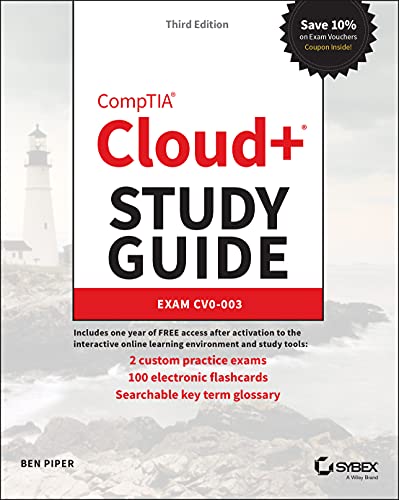
 Buy on Amazon
 Learning path on Pluralsight