PMP Exam Changes July 2026: Everything You Need to Know
PMI launches a redesigned PMP exam on July 9, 2026. The current exam is available through July 8, 2026; anyone who tests on or after July 9 sits the new version. This is the biggest PMP change since the 2021 overhaul that added agile/hybrid content, and it is driven by a new Examination Content Outline (ECO) and the PMBOK Guide, 8th Edition.
Three things actually change: the three domains are reweighted (Business Environment more than triples), the exam aligns to PMBOK 8, and the format gets 10 more minutes and new question types. Everything else - eligibility, the three-domain structure, online proctoring - stays familiar. This guide gives you the exact old-vs-new comparison, verified dates, and a clear test-now-or-wait framework.
Start Your FREE PMP Exam Prep Today
Practice FREE PMP Questions | Open the FREE PMP Study Guide
Scenario-based questions across all three domains with AI-powered explanations - 100% free, no credit card.
At a Glance: What Changes vs. What Stays the Same
| Element | Current Exam (through July 8, 2026) | New Exam (from July 9, 2026) |
|---|---|---|
| Domain weights | People 42% / Process 50% / Business Env. 8% | People 33% / Process 41% / Business Env. 26% |
| Reference standard | PMBOK 7 + Agile Practice Guide | PMBOK 8 (single combined volume) |
| Total testing time | 230 minutes | 240 minutes |
| Questions | 180 (175 scored + 5 pretest) | 180 (170 scored + 10 pretest) |
| Breaks | Two 10-minute breaks | Two 10-minute breaks |
| Delivery mix | ~50% predictive / ~50% agile-hybrid | ~40% predictive / ~60% agile-hybrid |
| New topics | - | AI in PM, sustainability, value delivery |
| Three-domain structure | People / Process / Business Environment | Unchanged (same three domains) |
| Eligibility window | 8 years of experience counted | 10 years of experience counted |
| Delivery | Pearson VUE center or online proctored | Unchanged |
The rest of this guide explains each row.
What's Changing on July 9, 2026
New Domain Weightings
The three-domain structure stays, but the new ECO redistributes the weights dramatically:
| Domain | Current Exam (through July 8) | New Exam (from July 9) | Change |
|---|---|---|---|
| People | 42% | 33% | -9 pts |
| Process | 50% | 41% | -9 pts |
| Business Environment | 8% | 26% | +18 pts |
The biggest shift: Business Environment jumps from 8% to 26% - more than tripling its weight, from roughly 14 questions to about 47 of the 180. The new exam tests far more content on:
- Benefits realization and project value delivery
- Organizational strategy alignment - how projects connect to strategic goals
- Compliance and governance frameworks
- AI and emerging technology in project management (scheduling, risk, data-driven decisions)
- Sustainability considerations in project decisions
PMBOK 8th Edition Integration
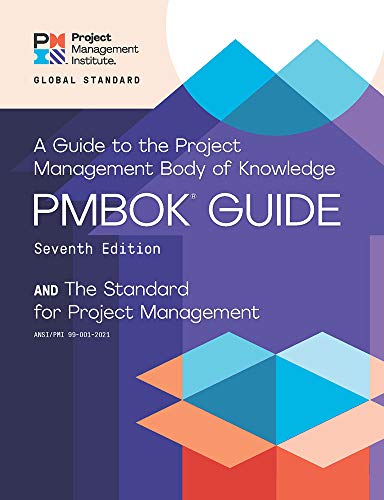
The new exam aligns with the PMBOK Guide, 8th Edition (released late 2025), which represents a major philosophical shift:
| Aspect | PMBOK 7 (Current Exam) | PMBOK 8 (New Exam) |
|---|---|---|
| Structure | 12 Principles | 6 Core Principles + 7 Performance Domains + 5 Focus Areas |
| Release | 2021 | November 13, 2025 (PDF/Kindle); January 13, 2026 (paperback) |
| Format | Separate Standard + Guide | Combined into a single volume |
| Approach | Principles-only, methodology-agnostic | Principles plus reintroduced, non-prescriptive process guidance; ~60% of exam is agile/hybrid |
| AI Coverage | Minimal | AI integrated across PM processes (scheduling, risk, decisions) |
| Sustainability | Brief mention | Elevated to a core principle and woven through the standard |
| Processes | No process list (principles only) | Process guidance reintroduced in an evolved, non-prescriptive form |
Release dates: PMBOK 8 was released as a PDF/Kindle edition on November 13, 2025 and as a paperback on January 13, 2026. PMI members can download the digital edition free from PMI.org. Updated PMP study materials from PMI roll out in April-May 2026, ahead of the July 9 launch.
New Question Formats
The current PMP exam already uses several interactive item types. The new exam expands them and adds case-study sets:
| Question Type | Current Exam | New Exam |
|---|---|---|
| Multiple-choice (single answer) | Yes | Yes |
| Multiple-response (select 2-3) | Yes | Yes |
| Matching / drag-and-drop | Yes | Yes (enhanced) |
| Hot spot / graphic interpretation | Limited | Expanded (charts, diagrams, artifacts) |
| Pull-down / inline dropdown | Limited | Yes |
| Case-study sets (linked questions) | Limited | Yes (a scenario followed by several related questions) |
Delivery Approach Rebalancing
The new exam shifts the predictive vs. agile/hybrid balance toward adaptive work:
| Approach | Current Exam | New Exam |
|---|---|---|
| Predictive (waterfall) | ~50% | ~40% |
| Agile / hybrid | ~50% | ~60% |
Candidates targeting the new exam should be very comfortable with Scrum, Kanban, sprint planning, and adaptive/hybrid planning.
Format: What Actually Changes
- Questions: stays 180, but the scored/pretest split changes - the current exam is 175 scored + 5 unscored pretest, the new exam is 170 scored + 10 unscored pretest. Pretest items do not count toward your score.
- Testing time increases from 230 to 240 minutes (roughly 80 seconds per question).
- Breaks are unchanged: two optional 10-minute breaks, after question 60 and after question 120.
- Delivery is unchanged - Pearson VUE test center or online proctored, worldwide.
- Passing score is still not published by PMI; the cut score is set by psychometric analysis, not a fixed percentage, so do not rely on a "60-65%" target.
What Stays the Same
- The three domains (People, Process, Business Environment) remain - only their weights change.
- 35 contact hours of project management education are still required to apply.
- Experience: 36 months leading projects with a four-year degree, or 60 months with a high school diploma / associate's. What changed: the experience window widened from the last 8 years to the last 10 years, so older project work now counts.
- CCR / renewal: 60 PDUs every 3 years to maintain the credential.
Should You Test Before or After July 9, 2026?
The deadline to sit the current exam is July 8, 2026 - to take it, your eligibility must be approved and your exam scheduled and completed by that date. Here's a framework:
Take the CURRENT Exam (by July 8) If...
| Factor | Why It Favors Testing Now |
|---|---|
| You're already deep in current-exam prep | Your materials align with PMBOK 7; switching mid-study is disruptive. |
| Business Environment is your weakest area | The new exam triples this domain from 8% to 26%. If strategic/governance topics aren't your strength, test under the lighter 8% weighting. |
| You prefer proven study resources | Current-exam courses, practice banks, and textbooks are mature; new-exam materials are first-generation. |
| You want to avoid AI/sustainability content | These are net-new testable topics on the new exam. |
| Your eligibility and 35 hours are ready now | A short, focused sprint to a June/early-July seat is realistic. |
Take the NEW Exam (July 9 onward) If...
| Factor | Why It Favors Waiting |
|---|---|
| You haven't started studying yet | Start fresh on PMBOK 8 and the new ECO - nothing to re-learn. |
| You work in strategic/governance roles | The 26% Business Environment weighting plays to your strengths. |
| You're comfortable with AI and agile/hybrid | The new exam rewards both, and is ~60% agile/hybrid. |
| You can't realistically be ready by July 8 | Don't rush an under-prepared current-exam attempt to beat the cutoff. |
| You prefer the PMBOK 8 approach | If hybrid delivery is your world, study against the aligned standard. |
The Deadline Math (counting from today)
With the cutoff at July 8, 2026, a current-exam attempt now means a short, intense sprint; most candidates with more runway should target the new exam.
| Path | Realistic Start | Target Exam Date | Study Time |
|---|---|---|---|
| Beat the cutoff (current exam) | Now (late June) | Early July 2026 | ~60-90 hrs in a 2-week sprint - only if you already have a base |
| New exam, fast track | Now | August-September 2026 | ~150-180 hrs over 8-10 weeks |
| New exam, standard pace | Now | October-November 2026 | ~150-180 hrs over 12-16 weeks |
Bottom line: Unless you already have a strong base and can secure a seat before July 9, plan for the new exam - you'll study the right standard once instead of cramming the old one and re-learning later.
Practice PMP Questions for FREE
Our practice questions cover all three domains with scenario-based questions matching the exam style - completely free, with AI explanations.
How to Prepare for the Current PMP Exam (Before July 8)
If you decide to test before the change, here's your accelerated plan:
12-Week Current Exam Study Plan
| Week | Focus | Domain | Key Topics |
|---|---|---|---|
| 1-2 | People domain fundamentals | People (42%) | Team leadership, conflict resolution, stakeholder engagement, servant leadership |
| 3-4 | People domain advanced | People (42%) | Virtual teams, emotional intelligence, negotiation, shared vision |
| 5-6 | Process domain - predictive | Process (50%) | Scope, schedule, cost, quality management, WBS, critical path |
| 7-8 | Process domain - agile/hybrid | Process (50%) | Scrum framework, Kanban, sprint planning, backlogs, burndown charts |
| 9 | Process domain - integration | Process (50%) | Change management, risk response, procurement, stakeholder communication |
| 10 | Business Environment | Business (8%) | Benefits management, organizational change, compliance |
| 11 | Full practice exams (timed) | All | Take 2 full 180-question practice exams with breaks |
| 12 | Weak area review + final exam | All | Focus on lowest-scoring domains; take final practice exam |
Study Hour Allocation (Current Exam)
| Domain | % of Exam | Recommended Study Hours |
|---|---|---|
| People | 42% | 50-60 hours |
| Process | 50% | 60-70 hours |
| Business Environment | 8% | 10-15 hours |
| Practice exams | - | 20-25 hours |
| Total | 100% | 140-170 hours |
How to Prepare for the New PMP Exam (After July 8)
If you're targeting the new exam, here's what to adjust:
Key Differences in Preparation
| Study Area | Current Exam | New Exam |
|---|---|---|
| Business Environment study time | 10-15 hours | 35-45 hours |
| AI in project management | Not tested | Must understand AI tools, automation, data-driven decisions |
| Sustainability | Not tested | Must understand sustainable project practices, environmental considerations |
| PMBOK reference | PMBOK 7 + Agile Practice Guide | PMBOK 8 |
| Benefits realization | Basic concepts | Deep understanding of value delivery metrics |
New Exam Study Plan (14 Weeks)
| Week | Focus | Key Topics |
|---|---|---|
| 1-2 | People domain | Leadership styles, team dynamics, virtual collaboration, stakeholder mapping |
| 3-4 | People domain + conflict | Conflict resolution, emotional intelligence, mentoring, negotiation |
| 5-6 | Process domain - predictive | WBS, critical path, EVM, quality management, scope control |
| 7-8 | Process domain - agile/hybrid | Scrum events, Kanban metrics, backlog refinement, continuous integration |
| 9 | Process domain - integration | Risk management, procurement, change control, communications |
| 10-11 | Business Environment (expanded) | Benefits realization, strategic alignment, compliance, governance models |
| 12 | AI & sustainability in PM | AI tools for scheduling/risk, sustainable project practices, data analytics |
| 13 | Full practice exams | 2 timed practice exams matching new format |
| 14 | Weak area review + final exam | Focus on new Business Environment content; exemptions drill |
PMP Exam Cost and Fee Changes (2026)
Two separate dates matter: the exam redesign on July 9, 2026 and the fee increase on August 6, 2026. They are not the same event - you can sit the new exam before the price goes up.
| Fee | Through Aug 5, 2026 | From Aug 6, 2026 |
|---|---|---|
| PMI member exam fee | $405 | $445 |
| Non-member exam fee | $555 | $675 |
| PMI membership | about $129-154/year (+$10 one-time application fee) | unchanged |
| Re-exam fee (member) | $275 | rises with the base fee |
| Re-exam fee (non-member) | $375 | rises with the base fee |
Cost-saving tip: Joining PMI before you register almost always wins. Membership runs roughly $129-154/year plus a one-time $10 application fee, and members pay the lower exam rate. Under current pricing that is $405 vs. $555 - a $150 gap; after August 6 it is $445 vs. $675 - a $230 gap, which more than covers a year of dues. Membership also includes free digital access to PMBOK 8 and PMI's learning library.
PMP Retake Policy
| Detail | Current Policy |
|---|---|
| Wait period | 1 year from initial exam date, up to 3 attempts |
| Retake fee | $275 member / $375 non-member |
| Exam version on retake | You take whatever version is current at the time of your retake |
| If you fail before July 9 and retake after | You will take the NEW exam format |
Important: If you fail the current exam close to July 8 and your retake falls after the transition date, you'll need to study additional Business Environment, AI, and sustainability content for the new format. This is another reason to test early if you choose the current exam - give yourself buffer time for a potential retake.
Start Your PMP Prep Now - 100% FREE
Practice FREE PMP Questions | Open the FREE PMP Study Guide
Our PMP prep includes:
- All three domains (People, Process, Business Environment) with detailed explanations
- Scenario-based practice questions with instant AI explanations for any concept
- A study planner that adapts to whether you target the current or the new exam
- Free forever - no credit card, no trial period
The PMP is the most recognized project management certification worldwide, held by well over a million professionals. Whether you test before or after July 9, start studying today.
Official PMP Resources
- PMI Official PMP Page - Exam registration, eligibility
- PMI New PMP Exam Information - July 2026 changes details
- PMI Examination Content Outline - Current and new ECO
- Pearson VUE - PMI Testing - Schedule your exam
- PMBOK Guide, 8th Edition - New exam reference

 Buy on Amazon
 Take courses on Udemy
 Prep course on Brain Sensei
 PMP course on Alison