Serving Alcohol Is a Skill --- and a Legal Responsibility
Every night across America, bartenders and servers make decisions that carry real legal consequences. Serve a visibly intoxicated patron who then causes a fatal accident, and you --- not just the establishment --- can face criminal charges and civil liability. Responsible alcohol service is not optional. It is a professional requirement backed by state law, and the certification exam proves you understand it.
The restaurant and bar industry is enormous. The National Restaurant Association projects the U.S. restaurant industry will reach $1.5 trillion in sales in 2025, employing nearly 15.9 million workers. According to the Bureau of Labor Statistics, there are approximately 745,600 bartenders working in the U.S., with employment projected to grow 6% from 2024 to 2034 --- faster than the average for all occupations. The BLS reports about 129,600 annual openings for bartenders alone. Servers, barbacks, managers, and off-premise sellers push the total workforce that needs alcohol service training into the millions.
The pay is solid and improving. The BLS median hourly wage for bartenders is $16.12 (May 2024), but that figure excludes tips. With tips, experienced bartenders in metropolitan areas regularly earn $40,000 to $75,000+ per year. Server wages have risen nearly 40% over the past five years, reflecting strong demand for trained hospitality talent. Alcohol server certification is often the first barrier between you and your first shift.
Thirty-three states and the District of Columbia require or strongly incentivize alcohol server/seller training and certification. The exam tests your knowledge of liquor laws, signs of intoxication, ID verification, liability, and intervention techniques. This guide provides everything you need: the exam format, a state-by-state directory of free practice tests, detailed content breakdowns, 10 sample questions with answers, a study plan, and a comparison of free vs. paid resources.
Start Your FREE Alcohol Server Practice Test
Select your state below and start practicing with free questions tailored to your state's alcohol laws and regulations.
No signup. No credit card. Instant access to 3,300+ questions.
Alcohol Server Exam Format at a Glance
| Feature | Detail |
|---|---|
| Full name | Alcohol Server/Seller Certification Exam (title varies by state: RBS, TIPS, RAMP, TAM, etc.) |
| Prerequisite | Must be of legal serving age in your state (typically 18-21) |
| Administered by | State-approved training providers (ServSafe Alcohol, TIPS, 360training, state agencies) |
| Format | Online or in-person, multiple-choice, closed-book |
| Questions | 40-80 questions depending on state and provider |
| Time limit | Typically untimed for online; 1-2 hours for proctored exams |
| Passing score | 70-80% depending on state |
| Cost | $10-$50 for approved course + exam (some states offer free options) |
| Required for | Bartenders, servers, sellers, managers in alcohol-serving establishments |
| Validity | 2-5 years depending on state; renewal/recertification required |
Key point: State programs go by different names --- California's RBS (Responsible Beverage Service), Pennsylvania's RAMP, Oregon's OLCC permit, Texas TABC certification, Nevada TAM Card --- but they all test the same core competencies: liquor law, ID verification, intoxication recognition, and intervention techniques.
Free Alcohol Server Practice Tests by State
| State | Practice Test | Regulatory Authority | Key Detail |
|---|---|---|---|
| Alaska | AK Alcohol Server Practice | Alaska AMCO (Alcohol & Marijuana Control Office) | TAP certification, 3-year validity |
| Arizona | AZ Alcohol Server Practice | Arizona Dept. of Liquor Licenses & Control | Title 4 training, on-/off-premise |
| California | CA Alcohol Server Practice | California ABC (Alcoholic Beverage Control) | RBS certification mandatory since July 2022 |
| District of Columbia | DC Alcohol Server Practice | DC ABRA (Alcoholic Beverage Regulation Administration) | Server training required within 60 days of hire |
| Delaware | DE Alcohol Server Practice | Delaware Office of Alcoholic Beverage Control | Responsible server training program |
| Florida | FL Alcohol Server Practice | Florida DBPR (Dept. of Business & Professional Regulation) | Responsible vendor program, voluntary but incentivized |
| Hawaii | HI Alcohol Server Practice | Hawaii Liquor Commission (county-level) | Server education required by county |
| Illinois | IL Alcohol Server Practice | Illinois Liquor Control Commission | BASSET certification required |
| Indiana | IN Alcohol Server Practice | Indiana Alcohol & Tobacco Commission | Server training certification |
| Louisiana | LA Alcohol Server Practice | Louisiana ATC (Office of Alcohol & Tobacco Control) | Responsible vendor permit, mandatory training |
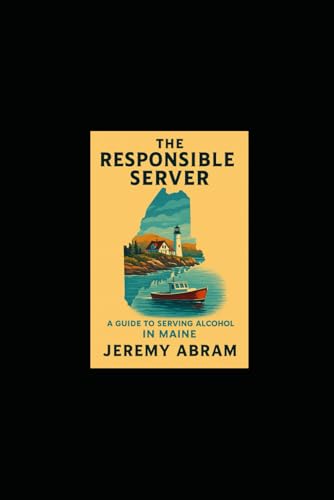
| Maine | ME Alcohol Server Practice | Maine Bureau of Alcoholic Beverages & Lottery Operations | Responsible server certification |
| Michigan | MI Alcohol Server Practice | Michigan Liquor Control Commission | Server training program |
| Montana | MT Alcohol Server Practice | Montana Dept. of Revenue, Liquor Control Division | Responsible alcohol sales & service training |
| North Carolina | NC Alcohol Server Practice | North Carolina ABC Commission | Responsible alcohol seller/server training |
| Nebraska | NE Alcohol Server Practice | Nebraska Liquor Control Commission | Server training program |
| New Hampshire | NH Alcohol Server Practice | New Hampshire Liquor Commission | Responsible server training |
| New Mexico | NM Alcohol Server Practice | New Mexico Regulation & Licensing Dept. | Alcohol server training required |
| Nevada | NV Alcohol Server Practice | Nevada Dept. of Taxation | TAM Card (Techniques of Alcohol Management) required |
| New York | NY Alcohol Server Practice | New York State Liquor Authority | ATAP (Alcohol Training Awareness Program) |
| Ohio | OH Alcohol Server Practice | Ohio Division of Liquor Control | Responsible server training |
| Oklahoma | OK Alcohol Server Practice | Oklahoma ABLE Commission | Mandatory server training |
| Oregon | OR Alcohol Server Practice | Oregon Liquor & Cannabis Commission (OLCC) | Service permit mandatory for all servers |
| Pennsylvania | PA Alcohol Server Practice | Pennsylvania Liquor Control Board | RAMP (Responsible Alcohol Management Program) |
| Rhode Island | RI Alcohol Server Practice | Rhode Island Dept. of Business Regulation | Responsible beverage server training |
| South Carolina | SC Alcohol Server Practice | South Carolina Dept. of Revenue, ABL Division | Alcohol seller/server training |
| South Dakota | SD Alcohol Server Practice | South Dakota Dept. of Revenue | Responsible server training |
| Tennessee | TN Alcohol Server Practice | Tennessee ABC (Alcoholic Beverage Commission) | Server permit required |
| Texas | TX Alcohol Server Practice | Texas Alcoholic Beverage Commission (TABC) | Seller/server certification mandatory |
| Utah | UT Alcohol Server Practice | Utah DABS (Dept. of Alcoholic Beverage Services) | Alcohol server training required |
| Vermont | VT Alcohol Server Practice | Vermont Dept. of Liquor & Lottery | Responsible server training |
| Washington | WA Alcohol Server Practice | Washington Liquor & Cannabis Board | MAST permit (Mandatory Alcohol Server Training) |
| Wisconsin | WI Alcohol Server Practice | Wisconsin Dept. of Revenue | Responsible beverage server training |
| West Virginia | WV Alcohol Server Practice | West Virginia ABCA (Alcohol Beverage Control Administration) | Server training program |
Exam Content Breakdown: What the Alcohol Server Exam Tests
Domain 1: Alcohol Laws and Regulations (25-30% of most exams)
This domain is the legal foundation of responsible alcohol service and the most heavily state-specific portion of the exam.
-
Legal drinking age and service age --- Federal law sets the minimum drinking age at 21, but states set their own minimum age for serving or selling alcohol (typically 18-21). Know your state's specific serving age and any exceptions for food establishments vs. bars.
-
Hours of legal sale --- Every state restricts when alcohol can be sold. Know your state's legal hours for on-premise (bars, restaurants) and off-premise (liquor stores, grocery stores) sales, including special rules for Sundays, holidays, and election days.
-
License types and permitted activities --- States issue different license types (on-premise, off-premise, brewery, winery, catering). Each license specifies what can be sold, where, and when. Serving outside the scope of the license is a violation.
-
Dram shop liability --- In most states, establishments and servers can be held civilly liable for injuries caused by intoxicated patrons they served. Some states impose criminal liability as well. Know your state's dram shop statute and the legal standard for liability.
-
Third-party liability and social host laws --- Some states extend liability to social hosts who serve alcohol to minors or visibly intoxicated guests. Know whether your state has social host liability and how it differs from commercial server liability.
-
Penalties for violations --- Consequences for unlawful service include fines ($500-$10,000+), license suspension or revocation, criminal misdemeanor charges, and personal civil liability for the server. Know the specific penalty structure in your state.
Domain 2: Identifying Intoxication and Impairment (20-25% of most exams)
-
Blood alcohol concentration (BAC) basics --- BAC is influenced by body weight, gender, rate of consumption, food intake, and tolerance. The legal limit for driving is 0.08% in all states, but visible intoxication can occur well below or above this level. Know the factors that affect BAC.
-
Signs of visible intoxication --- Physical signs include slurred speech, impaired coordination, bloodshot or glassy eyes, flushed face, and difficulty standing. Behavioral signs include loud or aggressive behavior, ordering multiple drinks rapidly, decreased inhibitions, and difficulty counting money. Know the full range of indicators.
-
Alcohol absorption and metabolism --- Alcohol is absorbed primarily in the small intestine and metabolized by the liver at approximately one standard drink per hour. Food slows absorption. Carbonation accelerates it. Know the physiological process and the factors that affect it.
-
Standard drink equivalents --- One standard drink equals 12 oz. of beer (5% ABV), 5 oz. of wine (12% ABV), or 1.5 oz. of distilled spirits (40% ABV/80 proof). Know the equivalents and how different drink sizes affect intoxication.
-
Drug and medication interactions --- Alcohol combined with medications, prescription drugs, or illegal substances can dramatically increase impairment. Servers must recognize that a patron may show signs of intoxication after fewer drinks if medications are involved.
Domain 3: ID Verification and Minors (20-25% of most exams)
-
Acceptable forms of identification --- Valid government-issued photo ID: driver's license, state ID card, military ID, passport, and passport card. Know which IDs your state accepts and which it does not (student IDs and expired IDs are never acceptable).
-
Checking ID properly --- Verify the photo matches the person, check the expiration date, examine the birth date (the patron must be 21+), and inspect for signs of tampering or alteration. Know the step-by-step verification process.
-
Spotting fake and altered IDs --- Common signs include mismatched fonts, uneven lamination, incorrect holograms, altered birth dates, photos that do not match, and IDs that feel too thick or thin. Know the common red flags for your state's ID format.
-
Minor stings and compliance checks --- Law enforcement conducts undercover operations using minors to test whether establishments verify ID properly. Failing a sting results in fines, license action, and potential criminal charges for the server. Know the procedure and your legal obligations.
-
Minors on premises --- State laws vary on whether minors can enter bars, sit in bar areas of restaurants, or be present at events where alcohol is served. Know your state's rules for minors on licensed premises.
Domain 4: Intervention Techniques and Refusal Skills (15-20% of most exams)
-
When to stop service --- You must refuse service to anyone who is visibly intoxicated, anyone under 21 (or who cannot produce valid ID), and anyone you reasonably believe is purchasing for a minor. There is no "right" to be served alcohol.
-
How to refuse service --- Use a calm, firm, non-confrontational approach. State the refusal clearly ("I cannot serve you another drink"). Offer alternatives (food, water, coffee, a ride). Do not argue, debate, or apologize excessively. Document the refusal.
-
De-escalation techniques --- When a patron becomes angry or aggressive after being refused, remain calm, maintain a safe distance, do not touch the patron, and involve a manager or security if needed. Know the step-by-step de-escalation process.
-
Arranging safe transportation --- If a patron is intoxicated, offer to call a cab, rideshare, or designated driver. Do not allow them to drive. Some states impose an affirmative duty on servers to prevent intoxicated patrons from driving.
-
Documentation and incident reports --- Record the time, patron description, number of drinks served, signs of intoxication observed, and the refusal of service. This documentation protects you and the establishment in any subsequent legal action.
Domain 5: Establishment Policies and Management (10-15% of most exams)
-
House policies on alcohol service --- Responsible establishments set policies on maximum drink counts, drink specials, last call timing, and server authority to refuse service. Know how house policies work alongside state law.
-
Promotions and drink specials --- Many states restrict or prohibit happy hours, two-for-one deals, unlimited drink packages, and other promotions that encourage excessive consumption. Know your state's rules on alcohol promotions.
-
Server training requirements --- Most states require initial certification within a specified period after hire (often 30-60 days) and renewal every 2-5 years. Know your state's training timeline and renewal requirements.
-
Record-keeping obligations --- Establishments must maintain records of server certifications, incident reports, and compliance documentation. Failure to maintain records can result in license violations during inspections.
Key 2026 Alcohol Server Industry Developments
| Development | Details | Impact |
|---|---|---|
| California RBS maturity | California's mandatory RBS program (launched July 2022) now fully enforced | 600,000+ servers certified, model for other states |
| Expanded state mandates | Additional states moving from voluntary to mandatory server training | Growing demand for certified servers |
| Online training dominance | 75%+ of certifications now completed online | Greater accessibility, faster certification |
| Cannabis co-regulation | States with legal cannabis adding dual-substance awareness to server training | Broader impairment recognition skills |
| AI-powered ID verification | Growing use of ID-scanning technology at points of sale | Technology supplements but does not replace server training |
| Wage growth continues | Bartender and server wages up nearly 40% since 2020 | Certification increasingly valuable for career advancement |
10 Alcohol Server Sample Questions with Answers
Question 1
A customer shows you an ID that appears to have a birth date of March 15, 2005. Today is March 28, 2026. Can you legally serve this person alcohol?
- A) Yes, they turned 21 on March 15, 2026
- B) No, they are only 20 years old
- C) Yes, but only beer and wine
- D) No, you need two forms of ID to verify
Answer: A --- A person born on March 15, 2005 turned 21 on March 15, 2026. Since today is March 28, 2026, this person is legally old enough to be served alcohol. Always calculate the age carefully by subtracting the birth year from the current year and checking whether the birthday has already occurred this calendar year.
Question 2
A patron who has been drinking steadily for two hours begins slurring words and has difficulty counting change. What is your legal obligation?
- A) Serve one more drink and then cut them off
- B) Immediately stop serving alcohol to this patron
- C) Ask the patron if they feel intoxicated
- D) Continue serving as long as they can sit upright
Answer: B --- Slurred speech and difficulty counting change are classic signs of visible intoxication. In virtually every state, it is illegal to serve alcohol to a visibly intoxicated person. You must immediately stop service, regardless of how much the patron has spent, how long they have been a customer, or whether they insist they are fine. Continuing to serve is a violation of state liquor law and exposes you and the establishment to dram shop liability.
Question 3
What is the legal blood alcohol concentration (BAC) limit for driving in the United States?
- A) 0.05%
- B) 0.08%
- C) 0.10%
- D) It varies by state
Answer: B --- The legal BAC limit for driving is 0.08% in all 50 states and the District of Columbia. This standard was established federally through the national minimum drinking age and highway safety legislation. However, some states have lower limits for commercial vehicle operators (0.04%) and zero-tolerance laws for drivers under 21. A person can be visibly intoxicated at a BAC well below 0.08%, and you must refuse service based on visible signs, not BAC estimation.
Question 4
A group of college students enters your bar. One of them presents a valid-looking driver's license, but the photo does not closely resemble the person. What should you do?
- A) Accept the ID since it appears valid
- B) Refuse to serve and ask for a second form of ID or ask verification questions
- C) Accept the ID but limit them to two drinks
- D) Call the police immediately
Answer: B --- If the photo on an ID does not match the person presenting it, you should not accept it. Ask for a second form of government-issued photo ID or ask verification questions (such as the address, zip code, or zodiac sign listed on the ID). If you are still uncertain, refuse service. Accepting an ID that you have reason to believe does not belong to the patron is a violation and could result in serving a minor.
Question 5
Which of the following factors does NOT affect how quickly a person becomes intoxicated?
- A) Body weight
- B) Amount of food in the stomach
- C) The color of the alcoholic beverage
- D) The rate of alcohol consumption
Answer: C --- The color of an alcoholic beverage has no effect on intoxication rate. The factors that do affect how quickly a person becomes intoxicated include body weight (larger people generally have a lower BAC per drink), food in the stomach (food slows alcohol absorption), rate of consumption (faster drinking raises BAC more quickly), gender (women generally reach higher BAC levels faster due to body composition), carbonation (carbonated drinks accelerate absorption), and medications.
Question 6
A regular customer who has been drinking heavily asks you to serve "one more for the road." They mention they are driving home. What should you do?
- A) Serve the drink since they are a regular
- B) Refuse additional service and offer to arrange transportation
- C) Serve a weaker drink
- D) Suggest they wait 30 minutes before driving
Answer: B --- You must refuse additional service to a patron who is intoxicated and planning to drive. Offering "one more for the road" to someone who has been drinking heavily is never appropriate. Arrange alternative transportation --- offer to call a cab, rideshare, friend, or family member. In many states, you have an affirmative duty to prevent intoxicated patrons from driving, and serving someone who then causes an accident while driving exposes you and the establishment to dram shop liability.
Question 7
A one-standard-drink equivalent of distilled spirits (80 proof) is approximately:
- A) 3 ounces
- B) 1.5 ounces
- C) 5 ounces
- D) 8 ounces
Answer: B --- One standard drink of distilled spirits (80 proof / 40% ABV) is 1.5 ounces. This is equivalent to 12 ounces of regular beer (5% ABV) or 5 ounces of wine (12% ABV). Understanding standard drink equivalents is essential because over-pouring spirits is one of the most common ways servers unknowingly accelerate patron intoxication. A "double" is two standard drinks, and a strong cocktail may contain 2-3 standard drinks.
Question 8
Your state has a dram shop law. What does this mean for you as a server?
- A) You can only serve draft beer, not bottled
- B) You and the establishment can be held civilly liable for injuries caused by an intoxicated patron you served
- C) You must measure every drink with a jigger
- D) The establishment must have a separate "dram" liquor license
Answer: B --- Dram shop laws hold alcohol-serving establishments and their employees civilly liable for damages caused by intoxicated patrons to whom they served alcohol. If you serve a visibly intoxicated patron who then injures a third party (in a car accident, assault, etc.), the injured party can sue both the establishment and potentially you personally. Dram shop liability is one of the most important legal concepts in alcohol service and the primary reason responsible service training exists.
Question 9
During a compliance check, a minor sent by law enforcement attempts to purchase alcohol at your bar. They present no ID. What is the correct response?
- A) Ask their age verbally
- B) Refuse to serve and request valid government-issued photo ID
- C) Serve them since they look over 21
- D) Ask a coworker for a second opinion on their age
Answer: B --- You must always request valid government-issued photo ID before serving anyone who appears to be under a certain age (many states set this at 30 or 40 years old, and best practice is to card everyone). If no ID is presented, refuse service --- no exceptions. Compliance checks (stings) are specifically designed to test whether servers follow this procedure. Failing a compliance check results in fines for the server (typically $200-$1,000+), potential license action for the establishment, and possible criminal charges.
Question 10
What is the best way to slow a patron's rate of alcohol consumption without directly refusing service?
- A) Serve smaller portions without telling the patron
- B) Add extra ice to drinks to dilute them
- C) Offer food, water, and non-alcoholic alternatives between drinks; slow the pace of service
- D) Ignore the patron until they leave
Answer: C --- The most effective and professional way to slow consumption is to offer food (which slows alcohol absorption), water and non-alcoholic beverages (which pace consumption), and to time your service so there is a gap between alcoholic drinks. Engaging the patron in conversation can also naturally slow their drinking pace. Secretly reducing portion sizes or diluting drinks without disclosure can be considered a deceptive practice. These techniques are proactive responsible service measures used before a patron reaches visible intoxication.
Study Plan: How to Pass the Alcohol Server Exam
Week 1: Foundations of Alcohol Law
- Study your state's specific liquor laws: legal drinking age, serving age, hours of sale, license types
- Learn dram shop liability and third-party liability rules in your state
- Understand penalties for violations: fines, license suspension, criminal charges
- Memorize standard drink equivalents (beer, wine, spirits)
- Take 20 practice questions daily on OpenExamPrep
Week 2: Intoxication, ID Verification, and Intervention
- Master the signs of visible intoxication (physical and behavioral)
- Study BAC factors: weight, gender, food, rate of consumption, medications
- Practice ID verification: acceptable IDs, expiration dates, spotting fakes
- Learn refusal and de-escalation techniques step by step
- Study safe transportation options and your duty to prevent drunk driving
- Take 30 practice questions daily
Week 3: Practice Exams and Final Review
- Take 2-3 full-length practice exams under timed conditions
- Review every missed question and trace it to the specific state regulation
- Focus on your weakest areas: most test-takers struggle with state-specific laws and dram shop liability
- Re-study ID verification procedures and intoxication signs --- the highest-yield topics
- Review establishment policies: drink specials restrictions, record-keeping, training timelines
- Schedule your exam
Free vs. Paid Alcohol Server Exam Prep Resources
| Feature | OpenExamPrep (FREE) | ServSafe Alcohol ($35-$50) | TIPS Online ($38-$50) | 360training ($10-$25) |
|---|---|---|---|---|
| Price | $0 | $35-50 | $38-50 | $10-25 |
| Question count | 3,300+ | 50-100 (exam only) | 40-60 (exam only) | 50-80 |
| State-specific | 33 states + DC | Yes | Yes | Yes |
| AI tutor | Yes, built-in | No | No | No |
| Explanations | Detailed for every Q | Limited | Limited | Limited |
| Updated for 2026 | Yes | Yes | Yes | Yes |
| Signup required | No | Yes | Yes | Yes |
| Official certification | Practice only | Yes (ServSafe cert) | Yes (TIPS cert) | Yes (state-approved) |
Note: OpenExamPrep provides practice questions and study material to help you prepare. For official certification, you will still need to complete a state-approved training course and pass the official exam. Use our free practice tests to build your knowledge before taking the paid certification course.
Career Outlook and Salary
The alcohol service industry offers multiple career paths, all of which begin with server certification:
| Role | Median Salary | Key Requirements |
|---|---|---|
| Bartender | $16.12/hr + tips ($40,000-$75,000 total) | Alcohol server cert, 18-21+ age |
| Server | $14.92/hr + tips ($30,000-$55,000 total) | Alcohol server cert, 18+ age |
| Bar Manager | $45,000-$65,000 | Server cert + management experience |
| Beverage Director | $55,000-$85,000 | Advanced certifications (sommelier, cicerone) |
| Restaurant/Bar Owner | $60,000-$150,000+ | Business license, server cert, capital |
Job growth is strong. The BLS projects 6% growth for bartenders and 5% growth for food and beverage servers from 2024 to 2034. Combined, the restaurant industry is expected to add over 200,000 net new jobs in 2025 alone. With approximately 129,600 annual bartender openings and over 1.1 million annual openings across all food and beverage serving roles, certified alcohol servers face excellent employment prospects.
Tips make the difference. While base wages appear modest, tips can double or triple total compensation. High-volume establishments, craft cocktail bars, and upscale restaurants offer the highest earning potential for skilled, certified servers.
 Buy on Amazon