How to Become a Notary Public in Massachusetts
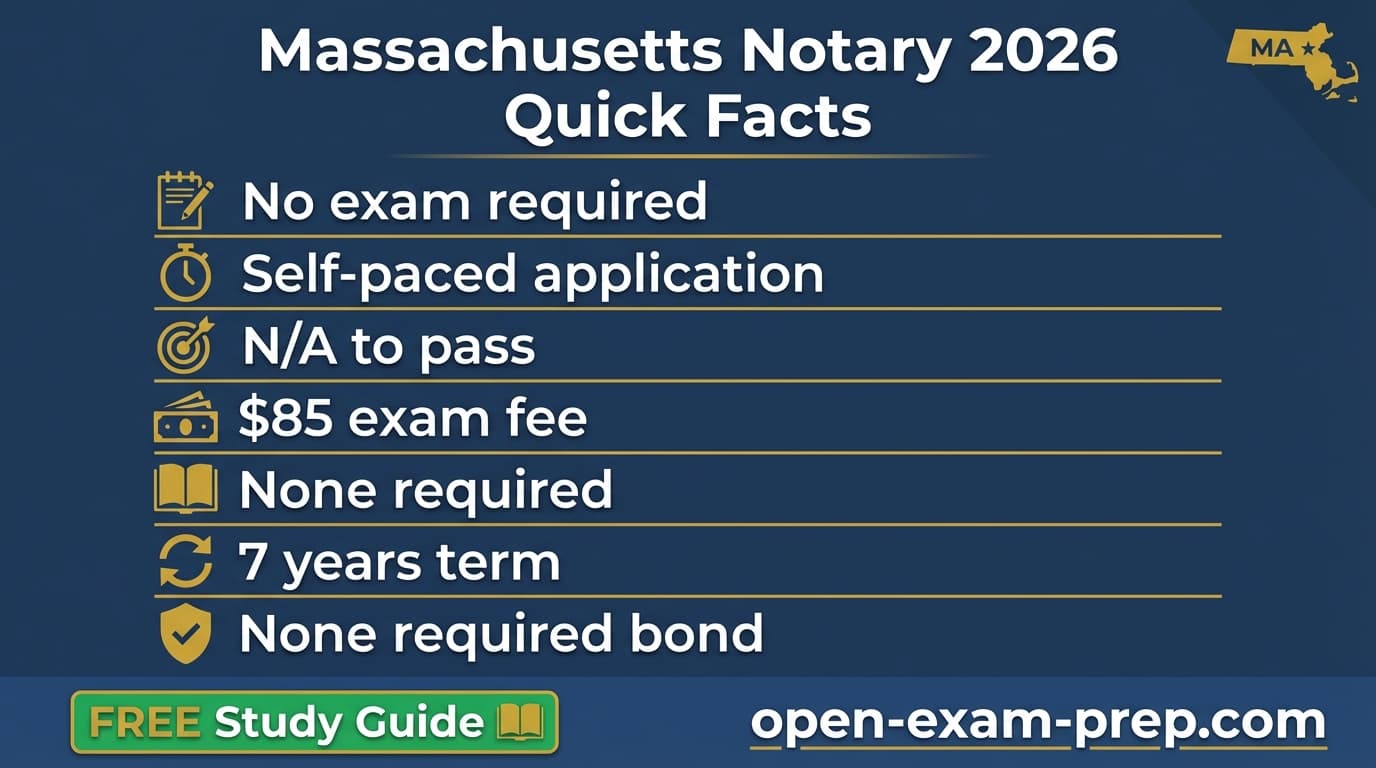
Massachusetts does not require an exam to become a notary public. The application process is straightforward, involving submission of an application to the Governor's Office and approval from the Governor and Council. Massachusetts notaries are appointed by the Governor, making this state unique in its appointment process.
Massachusetts Notary Requirements at a Glance
| Requirement | Details |
|---|---|
| Minimum Age | 18 years |
| Residency | Massachusetts resident OR maintain principal office in MA |
| Exam Required | No |
| Education Required | No (recommended to study notary laws) |
| Surety Bond | Not required for traditional notaries |
| Commission Term | 7 years |
| Application Fee | $85 (commission fee) |
Why Become a Massachusetts Notary?
- No exam required - Simple application process
- 7-year commission - One of the longest terms in the nation
- No bond required - Lower startup costs for traditional notaries
- RON authorized - Remote Online Notarization available since July 2023
- Growing demand - Strong need in Greater Boston metropolitan area
- Attorney exception - Attorneys can become notaries more easily
Explore More Notary Resources
Looking for notary study materials or guides for other states? Check out our comprehensive resources. For additional education and supplies, visit the National Notary Association.
View All Notary Exam Prep Resources
Step-by-Step: How to Become a Massachusetts Notary
Step 1: Meet Eligibility Requirements
To become a Massachusetts notary public, you must:
- Be at least 18 years old
- Be a resident of Massachusetts OR maintain a principal place of business in Massachusetts
- Be able to read and write English
- Not have been convicted of a crime involving dishonesty or moral turpitude
Step 2: Complete the Notary Application
Apply through the Massachusetts Secretary of the Commonwealth website:
- Go to the Secretary of the Commonwealth's Notary Public Division
- Complete the Notary Public Application form
- Provide personal information and residency details
- Submit required attestations
Required Information:
- Full legal name
- Date of birth
- Home address (must be in Massachusetts if resident)
- Business address (if applying based on workplace)
- Attestation of qualifications
Step 3: Pay the Commission Fee
- Commission Fee: $85 (valid for 7 years)
- Payment can be made online during application submission
- Fee covers the entire 7-year commission term
Step 4: Await Governor's Approval
Your application must be approved by the Governor and Council:
- Applications are reviewed during regular Governor's Council meetings
- Processing typically takes 4-8 weeks
- You will receive notification of approval via mail
Step 5: Receive Your Commission Certificate
Once approved:
- The Secretary of the Commonwealth's office issues your Commission Certificate
- Your commission information is recorded in the public record
- You can verify your commission status online
Step 6: Purchase Notary Supplies
After receiving your commission, purchase required supplies:
Official Notary Seal (Required):
- Rubber ink stamp (preferred) or embosser
- Must be rectangular or circular
- Cost: $20-$50
Required Seal Information:
- Your name exactly as commissioned
- "Notary Public"
- "Commonwealth of Massachusetts"
- Commission expiration date
Notary Journal (Recommended but not legally required):
- While not legally mandated, maintaining a journal is highly recommended
- Provides protection in case of disputes
- Cost: $15-$40
Massachusetts Notary Fees
| Service | Maximum Fee |
|---|---|
| Acknowledgment | $2.50 per signature |
| Jurat/Oath | $2.50 per signature |
| Protest | $5.00 |
| Safe deposit box opening | $25.00 |
| Travel fees | Reasonable amount by agreement |
Important Notes:
- Massachusetts has some of the lowest notary fees in the nation
- Notaries may charge less than the maximum or waive fees entirely
- Additional services may have negotiated rates
Massachusetts-Specific Requirements
Seal Requirements
Your Massachusetts notary seal must meet specific requirements:
Format Options:
- Rubber ink stamp (most common)
- Embosser (acceptable but ink stamp preferred for reproducibility)
Required Information:
- Your exact name as commissioned
- "Notary Public"
- "Commonwealth of Massachusetts"
- Commission expiration date
Size Requirements:
- Rectangular stamps typically 7/8" x 2-3/8"
- Circular stamps must be readable and clear
Journal Requirements
Massachusetts does not legally require notaries to maintain a journal. However:
- Highly recommended for all notaries
- Provides legal protection in disputes
- Essential for tracking notarial acts
- RON notaries must maintain electronic records
Certificate Requirements
Each notarization must include:
- Proper notarial certificate language
- Your signature
- Notary seal impression
- Date of notarization
- Type of notarial act performed
Remote Online Notarization (RON) in Massachusetts
Massachusetts authorizes Remote Online Notarization (RON) effective July 1, 2023, under Chapter 222 of the Acts of 2022.
Becoming a Massachusetts Remote Notary
To perform RON in Massachusetts:
- Hold a valid Massachusetts notary commission in good standing
- Register as a Remote Notary with the Secretary of the Commonwealth
- Obtain a surety bond ($25,000 required for RON)
- Complete RON training through an approved provider
- Select an authorized technology platform
RON Bond Requirement
Unlike traditional notaries, Massachusetts remote notaries must:
- Obtain a $25,000 surety bond
- Maintain bond throughout RON authorization
- Cost: $50-$100 annually
RON Technology Requirements
- Reliable computer with webcam and microphone
- Stable high-speed internet connection
- Approved remote notarization platform
- Secure identity verification technology
- Tamper-evident recording capabilities
RON Training Requirements
Remote notaries must complete training covering:
- Massachusetts RON laws and regulations
- Technology platform operations
- Identity verification procedures
- Electronic record-keeping
- Security protocols
Types of RON Permitted
Massachusetts allows remote online notarization for:
- Acknowledgments
- Jurats
- Oaths and affirmations
- Most standard notarial acts
Total Cost to Become a Massachusetts Notary
| Item | Cost |
|---|---|
| Commission Fee | $85 |
| Notary Seal | $20-$50 |
| Journal (optional) | $15-$40 |
| Total Estimated | $105-$175 |
Note: Massachusetts does NOT require a surety bond for traditional notaries.
For RON (additional):
| Item | Cost |
|---|---|
| RON Registration | Varies |
| Surety Bond ($25,000) | $50-$100/year |
| RON Training Course | $50-$150 |
| Technology Platform | $20-$50/month |
| RON Additional Total | $100-$300+ first year |
Timeline: How Long Does It Take?
| Step | Estimated Time |
|---|---|
| Complete application | 1 day |
| Governor & Council review | 4-8 weeks |
| Receive commission | 1-2 weeks after approval |
| Order supplies | 3-5 days |
| Total | 5-10 weeks |
Note: Processing times may vary based on Governor's Council meeting schedules.
Renewing Your Massachusetts Commission
Massachusetts notary commissions are valid for 7 years - one of the longest terms in the nation.
Renewal Process:
- Apply for renewal before your commission expires
- Submit a new application with $85 fee
- No re-examination required
- Must meet same eligibility requirements
Important Notes:
- If your commission expires, you cannot notarize until renewed
- Plan to renew well in advance (2-3 months before expiration)
- Update your seal with new expiration date
Special Considerations
Attorney Notaries
Massachusetts attorneys have a streamlined path:
- May apply directly through the Board of Bar Overseers
- Same commission term and fee structure
- Must maintain active bar membership
Principal Place of Business
Non-residents may qualify if they:
- Maintain a principal place of business in Massachusetts
- Can demonstrate regular business operations in the state
- Use business address on application
Name Changes
If your name changes during your commission:
- Notify the Secretary of the Commonwealth
- May need to apply for a new commission
- Update your seal to reflect your new name
Commission Verification
Your commission can be verified:
- Through the Secretary of the Commonwealth website
- Commission number and expiration date are public record
- Useful for document recipients to verify your authority
Start Your Massachusetts Notary Career Today
Massachusetts offers one of the simplest paths to becoming a notary public with no exam requirement and no bond for traditional notaries. The 7-year commission term is among the longest in the nation, making it an excellent choice for long-term notary services. With RON now authorized, Massachusetts notaries have expanded opportunities to serve clients remotely.
Final Verification Step
Before you act on this guide, compare your plan with the current state agency and testing vendor instructions. Use the guide for strategy and explanation, then use official materials for the final administrative details. That habit protects you from outdated forms, expired authorizations, wrong identification assumptions, and avoidable scheduling delays.

 Free CE
 Buy on Amazon
 Notary training on Notary.net
 Take courses on Udemy