Last updated: June 2026 | Data sources: Project Management Institute (PMI), PMI Earning Power Salary Survey, PMP Examination Content Outline (ECO)
How Hard Is the PMP Exam? The Honest Answer
The Project Management Professional (PMP) exam is one of the most respected and most challenging professional certifications in the world. With an estimated 60-70% first-attempt pass rate, roughly 3 to 4 out of every 10 candidates walk out without passing on the first try.
Why is it so hard? The PMP does not test memorization. Nearly every question presents a realistic project scenario and asks you to choose the best course of action. You are tested on your ability to think like a seasoned project manager -- to weigh trade-offs, manage stakeholders, adapt your approach, and deliver results in ambiguous situations.
Big news for 2026: PMI is rolling out a redesigned PMP exam effective July 9, 2026. It keeps 180 questions but scores only 170 (10 are unscored pretest items), extends the clock to 240 minutes, reweights the three domains, pushes Agile/hybrid content to about 60%, and adds case-study and graphic question types. If you test on or after July 9, you face the new blueprint; before that date, you take the prior format. This guide covers both so you can prepare for the version you will actually sit.
The good news: With disciplined preparation -- typically 150-200 hours over 2-4 months (more if you are newer to Agile/hybrid) -- the PMP is absolutely passable. More than 1.4 million professionals hold the credential worldwide, and the salary premium makes the investment worthwhile.
This guide gives you the unfiltered truth about PMP difficulty, backed by current data, so you can decide if you are ready and build a plan to pass on your first attempt.
PMP at a Glance (New Exam, Effective July 9, 2026)
| Detail | Information |
|---|---|
| Estimated Pass Rate | ~60-70% (first attempt; no official PMI figure) |
| Total Questions | 180 (170 scored + 10 unscored pretest) |
| Time Limit | 240 minutes (4 hours) |
| Breaks | Two optional 10-minute breaks |
| Domains | People (33%), Process (41%), Business Environment (26%) |
| Content Split | ~40% predictive / ~60% Agile-hybrid |
| Question Types | Multiple choice, multiple response, matching, hotspot, limited fill-in-the-blank, plus new case-study and graphic items |
| Exam Cost (US) | ~$405 (PMI member) / ~$575 (non-member) |
| Retake Cost (US) | ~$275 (PMI member) / ~$375 (non-member) |
| Attempts | Up to 3 within 1-year eligibility period |
| Eligibility | 36 months leading projects (four-year degree) or 60 months (HS diploma) + 35 contact hours of PM education |
| Certification Validity | 3 years (60 PDUs to renew) |
| Active Holders Worldwide | 1.4+ million across 200+ countries and territories |
PMI exam fees vary by country and are adjusted periodically; confirm current pricing on PMI.org before you apply.
Start FREE PMP Practice Questions -->Free exam prep with practice questions & AI tutor
What Changed on July 9, 2026 (and Why It Matters)
The July 9, 2026 update is the most significant PMP revision since the 2021 overhaul. The exam is still built from the PMP Examination Content Outline (ECO) -- not the PMBOK Guide -- but the blueprint shifted in five ways:
| Element | Prior Exam (through July 8, 2026) | New Exam (from July 9, 2026) |
|---|---|---|
| Scored questions | 175 | 170 |
| Pretest (unscored) questions | 5 | 10 |
| Total questions | 180 | 180 |
| Time limit | 230 minutes | 240 minutes |
| People domain | 42% | 33% |
| Process domain | 50% | 41% |
| Business Environment domain | 8% | 26% |
| Predictive vs Agile/hybrid | ~50% / ~50% | ~40% / ~60% |
| New question types | -- | Case-study and graphic questions |
Why it matters for difficulty:
- Business Environment jumps from 8% to 26%. This is the biggest single change. Candidates who treated it as a rounding error before now must master benefits realization, organizational change, compliance, and strategic alignment.
- More Agile/hybrid (about 60%). Waterfall-only candidates face an even steeper climb than before.
- Case-study questions present one detailed scenario followed by several linked questions -- rewarding deep reading and penalizing skimming.
- Graphic questions ask you to interpret a diagram or chart (for example, a network diagram or burndown chart) to answer.
- 240 minutes adds 10 minutes but also adds reading-heavy items, so pacing pressure is similar.
If your study materials predate this update or are organized around the old 42/50/8 weights, rebalance toward Business Environment and Agile/hybrid before exam day.
PMP Pass Rates: What the Numbers Actually Tell Us
Why PMI Doesn't Publish a Pass Rate
PMI has not officially published a PMP pass rate or passing score since 2005. The often-cited "61%" figure is from that era and refers to a completely different exam, so treat it as historical trivia, not a current benchmark.
Here is why PMI keeps pass rates private:
- Psychometric scoring: The PMP uses Item Response Theory (IRT), a statistical method that evaluates both the number of correct answers and the difficulty level of each question. Two candidates could answer the same number correctly but receive different results.
- No fixed passing percentage: There is no single "passing score." The threshold adjusts based on the specific set of questions you receive, making a simple pass rate misleading.
- Exam integrity: Publishing exact pass rates could influence candidate behavior in ways that undermine the exam's validity.
Be skeptical of any site quoting an exact PMP pass rate as fact -- PMI does not release one. The 60-70% range below is an informed estimate from training providers and candidate communities, not an official statistic.
What Industry Data Tells Us
Despite PMI's silence, training providers, survey data, and industry analysis consistently point to these estimates:
| Metric | Estimated Range | Source |
|---|---|---|
| First-time pass rate | 60-70% | Training provider data, industry surveys |
| Overall pass rate (all attempts) | 55-65% | Aggregated testing center data |
| Failure rate (first attempt) | 30-40% | Inverse of first-time pass rate |
| Pass rate with structured training | 75-85% | Training provider reported outcomes |
| Pass rate self-study only | 50-60% | Community surveys |
What These Numbers Mean for You
- If you follow a structured study plan and use quality practice exams, your odds improve significantly -- training providers report 75-85% pass rates among their students
- Self-study candidates pass at a lower rate -- not because the material is harder for them, but because they often lack the discipline and structure of a formal program
- The gap between first-time and repeat pass rates suggests that many who fail do not fundamentally change their preparation approach before retaking
Take the FREE PMP Diagnostic Quiz -->Free exam prep with practice questions & AI tutor
What Makes the PMP Exam Hard
1. Situational Questions, Not Memorization
The PMP is not a knowledge test -- it is a judgment test. Almost every question presents a project scenario and asks: "What should the project manager do NEXT?" or "What is the BEST course of action?"
You will rarely be asked to define a term or recall a formula. Instead, you will need to:
- Evaluate a messy, realistic situation
- Consider multiple stakeholder perspectives
- Choose the response that aligns with PMI's recommended practices
- Distinguish between answers that are all somewhat correct
This is what makes the PMP fundamentally different from entry-level certifications like the CAPM. Memorizing the PMBOK Guide is not enough -- you need to internalize the mindset behind the processes.
2. Three Domains with Shifting Weights
The Examination Content Outline (ECO) organizes the PMP into three domains. The July 9, 2026 update rebalanced their weights significantly:
| Domain | New Weight (from July 9, 2026) | Prior Weight | What It Tests |
|---|---|---|---|
| People | 33% | 42% | Team leadership, conflict management, stakeholder engagement, servant leadership, emotional intelligence, team building, mentoring |
| Process | 41% | 50% | Planning, execution, monitoring, risk, scope, schedule, cost, quality, procurement, communications, integration |
| Business Environment | 26% | 8% | Benefits realization, organizational change, project compliance, strategic alignment, external business factors |
Key insight: On the new exam, the three domains are far more balanced -- and Business Environment more than tripled, from 8% to 26%. Many candidates from traditional PM backgrounds historically skimmed this domain; that is now a serious mistake. PMI's signal is clear: modern project managers must connect their work to organizational strategy and business value, not just execute a plan.
3. The Agile-Hybrid Majority (Now ~60%)
On the new exam, roughly 60% of the PMP covers Agile and hybrid approaches (up from a 50/50 split on the prior version). This is the area where most candidates struggle.
You need to understand:
- Scrum framework: Events (sprint planning, daily scrum, sprint review, sprint retrospective), roles (Scrum Master, Product Owner, developers), artifacts (product backlog, sprint backlog, increment)
- Kanban: WIP limits, flow management, cumulative flow diagrams
- Agile principles: The 12 principles from the Agile Manifesto, iterative delivery, adaptive planning, customer collaboration
- Hybrid approaches: When to combine predictive and adaptive methods, tailoring methodology to project needs
- Servant leadership: How the PM role shifts from directing to facilitating in Agile environments
If your experience is primarily in waterfall/predictive project management, Agile content will be your biggest challenge and deserves at least 40% of your total study time.
4. Question Format Complexity
The PMP uses multiple question types, not just standard multiple choice. The July 9, 2026 update added case-study and graphic items:
| Question Type | Description | Difficulty Factor |
|---|---|---|
| Multiple choice | One correct answer from four options | Standard -- but all options often sound correct |
| Multiple response | Select 2-3 correct answers from several options | Harder -- partial credit is not given |
| Matching | Match items from two columns | Tests relationships between concepts |
| Hotspot | Click on the correct area of an image/diagram | Tests visual/diagram interpretation |
| Fill-in-the-blank | Type a short answer | Tests precise knowledge (calculations, terms) |
| Case study (new 2026) | One detailed scenario with several linked questions | Rewards careful reading; one misread fact can sink multiple items |
| Graphic (new 2026) | Interpret a diagram or chart to answer | Tests applied reading of network diagrams, burndown charts, and similar visuals |
5. Endurance: 240 Minutes of Sustained Focus
Four hours of continuous testing is physically and mentally demanding. As fatigue sets in past the halfway point, careless errors increase -- and the new case-study items demand fresh, careful reading. The two optional 10-minute breaks help, but you need to practice full-length exams to build stamina.
Hardest PMP Topics (Ranked by Candidate Difficulty)
Based on candidate feedback, training provider data, and community surveys, these are the PMP topics that cause the most failures:
1. Agile/Hybrid Integration
Why it is hard: You must know when to use predictive, Agile, or hybrid approaches -- and how to blend them on a single project. Questions present scenarios where the "right" methodology is not obvious.
How to beat it: Study the PMI Agile Practice Guide thoroughly. Practice questions that present a project scenario and ask you to choose the correct methodology. Understand that PMI favors adaptive approaches when uncertainty is high and predictive approaches when requirements are well-defined.
2. Stakeholder Engagement
Why it is hard: Stakeholder questions present conflicting interests, political dynamics, and communication breakdowns. There is rarely a clearly "right" answer -- you must choose the best response.
How to beat it: Internalize the stakeholder engagement assessment matrix (Unaware, Resistant, Neutral, Supportive, Leading). Practice thinking from the stakeholder's perspective first, then the project's perspective.
3. Schedule Management & Earned Value
Why it is hard: Critical path method, float calculations, and earned value management (EVM) formulas require mathematical precision under time pressure.
How to beat it: Memorize the core EVM formulas (EV, PV, AC, SV, CV, SPI, CPI, EAC, ETC, VAC). Practice critical path calculations until you can identify the critical path in under 2 minutes. Use the fill-in-the-blank question format to your advantage by practicing exact calculations.
Essential EVM Formulas:
| Formula | Meaning |
|---|---|
| SV = EV - PV | Schedule Variance |
| CV = EV - AC | Cost Variance |
| SPI = EV / PV | Schedule Performance Index |
| CPI = EV / AC | Cost Performance Index |
| EAC = BAC / CPI | Estimate at Completion (typical variance) |
| ETC = EAC - AC | Estimate to Complete |
| VAC = BAC - EAC | Variance at Completion |
4. Risk Management Response Strategies
Why it is hard: You must distinguish between risk response strategies (avoid, mitigate, transfer, accept for threats; exploit, enhance, share, accept for opportunities) in nuanced scenarios where multiple strategies could apply.
How to beat it: Create a decision tree for risk response selection. Practice identifying whether a scenario calls for proactive response (before the risk occurs) or reactive response (after it materializes as an issue).
5. Servant Leadership & Conflict Resolution
Why it is hard: PMI's servant leadership model conflicts with how many organizations actually operate. You must answer according to PMI's ideal -- empowering the team, removing impediments, facilitating rather than directing -- even if your real-world experience is different.
How to beat it: When in doubt, choose the answer that empowers the team, facilitates collaboration, or removes obstacles. Avoid answers where the project manager makes unilateral decisions or escalates before attempting to resolve at the team level.
Find Your Weak Spots Now -->Free exam prep with practice questions & AI tutor
PMP Exam Format Deep Dive
Structure and Timing
The PMP exam is divided into three sections with two optional breaks. On the new (July 9, 2026) exam you have 240 minutes for 180 questions:
| Section | Questions | Time Available |
|---|---|---|
| Section 1 | 60 questions | ~80 minutes |
| Optional Break 1 | -- | 10 minutes (does not count against exam time) |
| Section 2 | 60 questions | ~80 minutes |
| Optional Break 2 | -- | 10 minutes (does not count against exam time) |
| Section 3 | 60 questions | ~80 minutes |
| Total | 180 questions | 240 minutes + 20 minutes of breaks |
Note: PMI does not publish a fixed per-section time split; once you take a break you cannot return to the prior section, so manage each block deliberately.
Time Management Strategy
- Average time per question: 240 minutes / 180 questions = about 1.33 minutes per question
- Target pace: roughly 60 questions per 80-minute block, leaving buffer for flagged questions
- Budget extra for case studies: read the scenario once carefully, then answer its linked questions together
- Flag and move: if a question takes more than 2 minutes, flag it and return later within the same section
- Review buffer: aim to finish each section a few minutes early to review flagged items
Scoring
- No penalty for guessing: answer every question, even if you must guess
- Pretest questions are unscored: 10 of the 180 questions do not count, but you cannot identify which ones
- Psychometric scoring: your score is calculated using Item Response Theory, weighting both correctness and question difficulty
- Pass/fail only: you receive a pass or fail result, not a numerical score. Your diagnostic report shows performance by domain (Above Target, Target, Below Target, Needs Improvement)
What to Expect on Exam Day
- Arrive 30 minutes early at a Pearson VUE testing center (or set up 30 minutes early for online proctored exams)
- Bring two forms of ID (one government-issued with photo and signature)
- No personal items in the testing room: no phone, watch, notes, food, or water
- Scratch paper/whiteboard is provided -- do a "brain dump" of key formulas during the tutorial period
- Online proctoring option: Available for candidates who prefer to test from home, with webcam monitoring and strict environment requirements
How the PMP Has Evolved: 2021 to 2026
The PMP has been reshaped twice in recent years. The 2021 overhaul introduced the three-domain structure; the July 9, 2026 update rebalanced those domains and added new question types. Understanding this timeline helps you avoid studying from outdated materials.
Before 2021: Five Process Groups
The old exam was structured around the five process groups from the PMBOK Guide 6th Edition:
| Old Domain | Weight |
|---|---|
| Initiating | 13% |
| Planning | 24% |
| Executing | 31% |
| Monitoring & Controlling | 25% |
| Closing | 7% |
This structure focused heavily on processes and knowledge areas (integration, scope, schedule, cost, quality, resource, communications, risk, procurement, stakeholder). The exam was predominantly predictive/waterfall in nature.
2021-2026: Three Domains, Two Sets of Weights
The 2021 ECO introduced three domains; the 2026 ECO kept them but redistributed the weights:
| Domain | 2021 Weight | 2026 Weight (from July 9) | Direction |
|---|---|---|---|
| People | 42% | 33% | Down |
| Process | 50% | 41% | Down |
| Business Environment | 8% | 26% | Up sharply |
What Changed and Why
-
Agile became central, then dominant: The pre-2021 exam was ~5-10% Agile. The 2021 exam moved to ~50% Agile/hybrid; the 2026 exam pushes that to ~60%. This tracks the reality that most organizations now use Agile or hybrid delivery.
-
Business Environment rose from afterthought to major domain: At 26% on the 2026 exam (up from 8%), PMI now tests heavily whether project managers connect projects to organizational strategy, compliance, and business value.
-
New question types: The 2026 exam adds case-study questions (one scenario, several linked items) and graphic questions (interpret a chart or diagram), rewarding careful reading and applied analysis.
-
Principle-based reference materials: PMI's PMBOK Guide moved from process-based to principle-based (12 principles and 8 performance domains). Remember that the exam is built from the ECO, drawing on multiple reference works, not from any single PMBOK edition.
-
The ECO is the source of truth: The Examination Content Outline defines exam content via tasks and enablers per domain. Always study from the current ECO.
Key Takeaway for Your Preparation
Do not study the PMP as if it were an older version. If your materials predate July 2026 or use the 42/50/8 domain weights, they will under-prepare you on Business Environment and Agile/hybrid. Use resources aligned with the current (2026) ECO, and confirm whether your exam date falls before or after July 9, 2026 so you study the right blueprint.
PMP vs Other PM Certifications
Choosing the right certification depends on your experience level, career goals, and industry. Here is how the PMP compares:
| Feature | PMP | CAPM | PRINCE2 Practitioner | PMI-ACP |
|---|---|---|---|---|
| Level | Advanced / Senior | Entry-level | Intermediate-Advanced | Intermediate (Agile) |
| Issuing Body | PMI | PMI | PeopleCert (UK origin) | PMI |
| Best For | Experienced PMs (3+ yrs) | New PMs, career changers | UK/Europe, government, structured environments | Agile practitioners |
| Experience Required | 36-60 months leading projects | Secondary diploma + 23 hours PM education | None (Foundation), Foundation cert (Practitioner) | 2,000 hrs Agile experience + 1,500 hrs general PM |
| Exam Questions | 180 | 150 | 68 | 120 |
| Exam Duration | 240 minutes | 180 minutes | 150 minutes | 180 minutes |
| Cost (US non-member) | ~$575 | ~$300 | ~$400 (varies) | ~$555 |
| Estimated Pass Rate | 60-70% | ~72-75% | ~62-68% | ~70-75% |
| Methodology Coverage | Predictive + Agile + Hybrid | Predictive (PMI framework) | PRINCE2 methodology | Scrum, Kanban, Lean, XP, TDD |
| Global Recognition | Strongest worldwide | Good (PMI ecosystem) | Strong in UK, Europe, Australia | Good (Agile-focused roles) |
| Maintenance | 60 PDUs / 3 years | No maintenance | Re-examination required | 30 PDUs / 3 years |
| Salary Impact | Highest (~33% premium) | Moderate | Moderate-High (regional) | Moderate |
Which Should You Choose?
- New to project management? Start with CAPM. It builds your foundational knowledge within the PMI framework and makes the PMP easier later.
- 3+ years of PM experience? Go directly for PMP. It has the highest global recognition and the strongest salary premium.
- Working in UK/Europe/government? Consider PRINCE2 alongside or instead of PMP. Many public-sector organizations require PRINCE2.
- Primarily working in Agile teams? PMI-ACP validates your Agile expertise, but note that the PMP now covers 50% Agile content, making it a broader credential.
- Want the highest ROI on a single certification? PMP wins. The combination of global recognition, salary premium, and broad methodology coverage makes it the strongest individual PM credential.
Start Your FREE PMP Prep Today -->Free exam prep with practice questions & AI tutor
Is the PMP Worth It? Salary Data and ROI
The Salary Premium
The headline figure is consistent across PMI's surveys:
- PMI Earning Power Salary Survey: PMP holders report a median salary about 33% higher than uncertified project managers across the surveyed countries.
- In the United States, PMP-certified project managers report a median salary in the low-to-mid $130,000s, well above the typical pay for uncertified PMs.
- Earnings rise with tenure: PMs with many years of PMP certification report meaningfully higher medians than recent certificate holders.
PMI updates its Earning Power survey periodically; check the latest edition on PMI.org for current figures in your country.
Total Investment vs. Return (US, Approximate)
| Cost Category | Amount |
|---|---|
| PMI membership | ~$129/year + ~$10 one-time application fee |
| Exam fee (member) | ~$405 |
| Study materials (avg) | $0-$500 (free options available) |
| Training course (35-hour requirement) | $0-$2,000 (free and low-cost options exist) |
| Total investment | roughly $550-$3,000 |
Even on the high end, the investment is typically recovered within the first year through the salary premium alone. A single $130,000-plus PM role versus an uncertified equivalent can mean tens of thousands of dollars more per year -- many times the cost of certifying.
Beyond Salary
- Job market advantage: PMI projects strong, sustained demand for project professionals through 2035, keeping PMP holders in demand
- Global mobility: The PMP is recognized in over 200 countries and territories, making it one of the most portable professional credentials
- Career advancement: Many senior PM, program manager, and PMO director roles list PMP as a requirement, not just a preference
- PMP vs. MBA: PMI surveys have found PMP-certified respondents reach salaries comparable to those with a master's degree -- with far less time and financial investment
Who Should NOT Get the PMP?
The PMP is not for everyone. Skip it if:
- You have fewer than 3 years of project management experience (get the CAPM instead)
- You work exclusively in a technical role with no PM responsibilities
- Your industry does not value or recognize the PMP (rare, but possible in some niche fields)
- You are looking for an Agile-only certification (consider PMI-ACP or Certified Scrum Master)
How to Pass the PMP on Your First Attempt
Step 1: Assess Your Eligibility
Before investing study time, confirm you meet the requirements:
Path A -- Bachelor's Degree or Higher:
- 36 months (3 years) of experience leading and directing projects within the last 8 years
- 35 contact hours of formal project management education
Path B -- High School Diploma or Associate's Degree:
- 60 months (5 years) of experience leading and directing projects within the last 8 years
- 35 contact hours of formal project management education
Path C -- GAC-Accredited Program Graduate:
- 24 months of experience leading projects
- 35 contact hours of project management education
Step 2: Build Your Study Plan (150-200 Hours)
Weeks 1-3: Foundation Building (40-50 hours)
- Read the PMBOK Guide 7th Edition (focus on 12 principles and 8 performance domains)
- Study the PMI Agile Practice Guide cover-to-cover
- Review the ECO (Examination Content Outline) to understand exactly what is tested
- Complete 200 practice questions across all domains
Weeks 4-6: Domain Deep Dives (50-60 hours)
- Week 4: People domain -- leadership, team building, conflict management, stakeholder engagement
- Week 5: Process domain -- planning, execution, monitoring, risk, quality, procurement
- Week 6: Agile/hybrid focus -- Scrum, Kanban, servant leadership, adaptive planning
- Complete 300+ practice questions focused on weak areas
Weeks 7-8: Integration and Practice (40-50 hours)
- Focus on cross-domain scenarios (the hardest question type)
- Complete 3 full-length timed practice exams (180 questions in 240 minutes)
- Review every wrong answer and understand why the correct answer is best
- Study earned value management formulas and critical path method
Weeks 9-10: Final Review and Exam Simulation (30-40 hours)
- Complete 2 more full-length practice exams
- Score 75%+ consistently before scheduling your exam
- Review your weakest domains one final time
- Practice the "brain dump" you will write during the exam tutorial
Step 3: Choose the Right Study Materials
Essential (free or low-cost):
- PMI Examination Content Outline (ECO) -- free download, defines what is tested
- PMBOK Guide 7th Edition -- included with PMI membership
- PMI Agile Practice Guide -- included with PMI membership
- OpenExamPrep free PMP practice questions -- 500+ questions with AI explanations
Recommended:
- A PMP prep course that aligns with the current ECO (satisfies the 35-hour education requirement)
- At least 2 question banks with 1,000+ questions each
- A study group or accountability partner
Step 4: Master the PMP Mindset
PMI has a specific philosophy. When answering PMP questions, think:
- Servant leadership first: Empower the team, remove obstacles, facilitate rather than direct
- Follow the process: Before taking action, check if there is a documented process, plan, or procedure
- Change control is sacred: Never make scope, schedule, or cost changes without going through integrated change control
- Stakeholder engagement is proactive: Identify stakeholders early, communicate frequently, manage expectations continuously
- Risk management is ongoing: Do not wait for risks to become issues; identify, assess, and plan responses proactively
- Agile over waterfall when uncertain: When requirements are unclear or likely to change, PMI favors adaptive approaches
- Lessons learned are mandatory: At every phase and at project close, capture and share lessons learned
Step 5: Exam Day Strategy
Before the exam:
- Light meal 1-2 hours before
- Arrive 30 minutes early
- During the tutorial, write your "brain dump" -- EVM formulas, critical path rules, Agile values
During the exam:
- Read each question completely -- look for words like "FIRST," "NEXT," "BEST," "MOST IMPORTANT"
- Eliminate obviously wrong answers, then choose among the remaining options
- Use both breaks -- stand up, stretch, eat a snack, reset mentally
- Pace yourself: 60 questions per section, 75 minutes each
Flag strategy:
- Flag any question that takes longer than 90 seconds
- Return to flagged questions at the end of each section
- Never leave a question blank -- guess if you must
Begin Your FREE PMP Journey -->Free exam prep with practice questions & AI tutor
Why OpenExamPrep for PMP Preparation
OpenExamPrep gives you everything you need to pass the PMP -- completely free:
Free PMP Practice Questions
- 500+ exam-style questions covering all three domains (People, Process, Business Environment)
- Questions covering topics from the current (2026) ECO and its Agile-hybrid emphasis (~60% adaptive)
- Multiple question types: multiple choice, multiple response, and scenario-based questions matching the real exam format
AI-Powered Study Tools
- AI tutor explains every question in depth -- ask follow-up questions until the concept clicks
- "Explain This Topic" breaks down complex concepts like earned value, Agile ceremonies, or stakeholder analysis
- Personalized study recommendations based on your performance by domain
- 10 free AI questions per day -- enough to build real understanding of the toughest topics
Smart Progress Tracking
- Track your performance across all three PMP domains
- Identify weak areas before they become exam-day surprises
- See your improvement over time with detailed analytics
Key Takeaways
- The PMP pass rate is estimated at 60-70% -- it is genuinely difficult, but far from impossible with proper preparation
- About 60% of the new exam is Agile/hybrid (up from 50%) -- if you only know waterfall, you will struggle, so invest heavily in Agile concepts
- On the new exam the three domains are balanced (People 33%, Process 41%, Business Environment 26%) -- and Business Environment more than tripled, so do not skip strategy, compliance, and benefits realization
- 150-200 hours of preparation over 2-4 months is the sweet spot for most candidates
- Situational judgment is everything -- memorizing the PMBOK is not enough. Practice applying concepts to realistic scenarios
- The ROI is exceptional -- a roughly 33% salary premium, global recognition, and growing demand make the PMP one of the strongest professional investments available
- Complete at least 5 full-length practice exams before scheduling your test, scoring 75%+ consistently
- Use the PMP mindset -- think servant leadership, follow the process, manage change formally, and favor Agile when uncertainty is high
The PMP exam is hard -- but it is designed to be passable by competent, well-prepared project managers. With the right study plan, quality practice materials, and disciplined preparation, you will join the 1.4 million professionals who proudly hold this credential.
Good luck with your PMP exam!

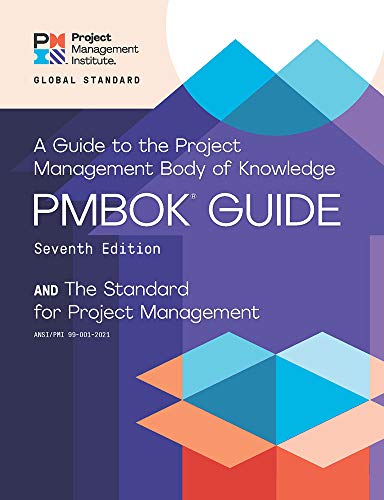
 Buy on Amazon
 Take courses on Udemy
 Prep course on Brain Sensei
 Practice exams on ExamEdge