DP-900 in 2026: The Most Efficient Azure Data Credential
The Microsoft DP-900 Azure Data Fundamentals exam is the most efficient entry point into Microsoft's data certification ecosystem. For $99 USD and roughly 20-40 hours of study, you earn a lifetime Microsoft Certified: Fundamentals credential that proves you understand relational vs non-relational data, analytics workloads, and the core Azure data services (Azure SQL, Cosmos DB, Synapse, Data Factory, Microsoft Fabric, Power BI).
This guide covers the 2026 exam at full depth: cost, format, the 4 skills measured (with verified percentages), per-skill deep dives, a 3-6 week study plan, free + paid resources, exam-day strategy, common pitfalls, and the career value data that makes DP-900 one of the best ROI certifications in cloud. Every detail was cross-referenced against learn.microsoft.com/en-us/credentials/certifications/exams/dp-900/ and the official Skills Measured PDF.
Start with FREE practice now: Jump into our free DP-900 practice questions — exam-style multiple-choice across all 4 skill areas with detailed explanations. No signup required.
DP-900 At-a-Glance (2026)
| Detail | Information |
|---|---|
| Certification Body | Microsoft (Microsoft Certified: Azure Data Fundamentals) |
| Exam Delivery | Pearson VUE — online proctored OR Pearson VUE test center |
| Questions | 40-60 (varies by exam form) |
| Duration | 60 minutes of exam time (approx. 90 min total seat time incl. check-in) |
| Format | Multiple-choice, multiple-response, drag-and-drop, case study, active screen |
| Passing Score | 700 on a 1-1000 scaled scale |
| Cost (US) | $99 USD (varies by country) |
| Languages | English, Japanese, Chinese (Simplified), Korean, German, French, Spanish, Portuguese (Brazil), Russian, Arabic (Saudi Arabia), Chinese (Traditional), Italian, Indonesian (Indonesia) |
| Prerequisites | NONE |
| Validity | Lifetime (Fundamentals certs do not expire) |
| Renewal | Not required |
| Retake Policy | 24h wait for attempt 2, 14 days for attempts 3+, max 5 attempts / 12 months |
| Exam Windows | Continuous testing, any day of the year |
| Skills Measured | 4 areas — verify current percentages on the official exam page |
FREE DP-900 Prep: Practice Before You Pay
Before committing $99, prove to yourself you can actually pass. The biggest mistake DP-900 candidates make is watching 8 hours of YouTube videos, skipping hands-on, and then failing because they can't distinguish Azure SQL Database from Azure SQL Managed Instance under a 60-second question timer.
Our free DP-900 practice question bank covers all 4 skill areas with Microsoft-style exam questions that emphasize service identification, relational vs non-relational trade-offs, and analytics workload mapping. Every question includes a detailed explanation of why the correct answer is right, why the distractors are wrong, and which skill area concept the question tests.
Claim your free practice: Start DP-900 practice questions now. No card, no email gate, no paywall.
What DP-900 Actually Is — And Who It's For
DP-900 was launched by Microsoft in 2020 as part of the Fundamentals series (AZ-900, AI-900, SC-900, MS-900, PL-900, DP-900). The certification validates your ability to:
- Describe core data concepts — relational, non-relational, transactional, analytical; batch vs streaming; roles (DBA, data engineer, data analyst)
- Identify considerations for relational data on Azure — Azure SQL Database, Managed Instance, SQL on VM, Azure Database for PostgreSQL/MySQL/MariaDB
- Describe considerations for non-relational data on Azure — Cosmos DB, Azure Storage (Blob, Table, File, Queue, Data Lake Gen2)
- Describe an analytics workload on Azure — batch vs real-time, modern data warehouse, Synapse, Azure Databricks, Azure Stream Analytics, Microsoft Fabric, Power BI
DP-900 is a conceptual exam, not a configuration exam. You will NOT write T-SQL, design partition keys, or build pipelines. You WILL be asked to pick the right Azure service for a described scenario, identify what type of data workload something is, or map a job role to typical responsibilities.
Who Should Take DP-900
| Role | Why DP-900 Fits |
|---|---|
| Aspiring Data Engineer | Canonical first step before DP-203 or DP-700 |
| Aspiring Data Analyst | Pairs with PL-300 Power BI Data Analyst Associate |
| Business Analyst / Product Manager | Credible Azure data vocabulary for cross-functional work |
| Database Administrator moving to Azure | Fastest bridge from on-prem SQL to Azure PaaS options |
| Consultants / Pre-Sales | Demonstrates Azure data literacy on client calls |
| Students (HS, college, bootcamp) | Low-cost credential that signals cloud-readiness |
| Career Changers into Tech | Entry-level credential that does not require prior coding |
DP-900 is not the right fit for experienced cloud data engineers — go straight to DP-203 or DP-700. It is also not a Power BI authoring credential — PL-300 is the dedicated Power BI cert.
Why DP-900 Is One of the Highest ROI Certifications in 2026
- Low cost. $99 USD, or effectively free with student discounts, Microsoft Reactor events, or Cloud Skills Challenge vouchers.
- Short timeline. 3-6 weeks part-time. You can realistically earn it in one month.
- Lifetime credential. Does not expire. No annual renewal assessment. You earn it once and keep it forever.
- Industry-wide recognition. Microsoft certifications appear in 40%+ of US data analyst and data engineer job postings as preferred or required, especially for hybrid Azure-first organizations (Fortune 500, US public sector, European enterprises).
- Gateway to $100K+ tracks. DP-900 opens DP-203 (Data Engineer), DP-700 (Fabric Data Engineer), DP-300 (DBA), and DP-100 (Data Scientist) — all of which unlock $115K-$170K US roles.
Skills Measured on DP-900 (2026)
Per the current Exam Content Outline published at learn.microsoft.com/en-us/credentials/certifications/exams/dp-900/, the 4 skill areas and their approximate weights are:
| # | Skill Area | Weight | Approx. Question Count |
|---|---|---|---|
| 1 | Describe core data concepts | 25-30% | 10-18 |
| 2 | Identify considerations for relational data on Azure | 20-25% | 8-15 |
| 3 | Describe considerations for working with non-relational data on Azure | 15-20% | 6-12 |
| 4 | Describe an analytics workload on Azure | 25-30% | 10-18 |
| Total | 100% | 40-60 |
Always download the current Skills Measured PDF from the official DP-900 page before finalizing your study plan — Microsoft updates the outline periodically (typically every 12-18 months) to reflect new services like Microsoft Fabric, and the percentages above are the current effective weights as of 2026.
Skill 1 — Describe Core Data Concepts (25-30%)
This is the conceptual foundation. If you don't nail this, you won't map services correctly in the later skill areas.
Core Topics
| Topic | What You Must Know |
|---|---|
| Types of data | Structured, semi-structured, unstructured |
| Common data formats | Delimited text (CSV, TSV), JSON, XML, Avro, ORC, Parquet |
| Relational vs non-relational | When to use each; trade-offs in schema, scale, query patterns |
| Transactional (OLTP) vs analytical (OLAP) | Workload characteristics; ACID vs column-store; normalization |
| Batch vs streaming data | Bounded vs unbounded; latency; use cases |
| Data processing concepts | ETL vs ELT; data warehouse, data lake, lakehouse, data mesh |
| Data roles | Database administrator, data engineer, data analyst |
| Common data tasks | Data ingestion, processing, storage, visualization |
High-Yield: OLTP vs OLAP
DP-900 tests this distinction repeatedly:
| Dimension | OLTP (Transactional) | OLAP (Analytical) |
|---|---|---|
| Purpose | Run the business (orders, users, inventory) | Analyze the business (reports, BI) |
| Operations | Many small reads and writes | Fewer, larger reads (aggregates) |
| Schema | Normalized (3NF) | Denormalized (star/snowflake) |
| Typical service | Azure SQL Database, Cosmos DB | Synapse dedicated SQL pool, Fabric warehouse |
| Data freshness | Real-time | Minutes to hours old (after ETL/ELT) |
| Query pattern | Single row / small result sets | Aggregations across millions of rows |
High-Yield: Data Roles
| Role | Responsibilities | Primary Tools |
|---|---|---|
| Database Administrator (DBA) | Manage operational databases, performance, backup, security | Azure SQL, SSMS, Azure Data Studio |
| Data Engineer | Build pipelines, transform data, manage lake/warehouse/lakehouse | ADF, Synapse, Databricks, Fabric, Spark |
| Data Analyst | Analyze data and communicate insights via reports/dashboards | Power BI, Excel, SQL |
Skill 2 — Identify Considerations for Relational Data on Azure (20-25%)
This skill tests your ability to pick the right relational Azure service for a scenario and understand core relational concepts.
Core Topics
| Topic | What You Must Know |
|---|---|
| Relational concepts | Tables, rows, columns, primary/foreign keys, indexes, normalization |
| SQL language basics | DDL vs DML vs DCL; SELECT/INSERT/UPDATE/DELETE; JOINs conceptually |
| Azure SQL family | Azure SQL Database (single, elastic pool), Managed Instance, SQL on VM |
| Open-source relational | Azure Database for PostgreSQL (Flexible/Single), MySQL, MariaDB |
| Deployment options | IaaS vs PaaS; serverless vs provisioned; hyperscale |
| Management tasks | Provisioning, configuring, security basics, backup, HA |
The Azure SQL Decision Tree (High Yield)
| Option | Type | When to Use |
|---|---|---|
| Azure SQL Database | PaaS, highest abstraction | Greenfield cloud-native apps; single DB or elastic pool |
| Azure SQL Managed Instance | PaaS, near-100% SQL Server compatibility | Lift-and-shift on-prem SQL Server with Agent, CLR, cross-DB queries |
| SQL Server on Azure VMs | IaaS, 100% SQL Server feature parity | Custom OS configs, 3rd-party tools requiring specific SQL versions |
| Azure Database for PostgreSQL | PaaS | Open-source PostgreSQL workloads |
| Azure Database for MySQL | PaaS | Open-source MySQL workloads (WordPress, Magento, etc.) |
Core Relational Concepts DP-900 Tests
- Normalization: 1NF (atomic values), 2NF (full dependency on primary key), 3NF (no transitive dependencies). You do NOT need to design schemas — just recognize the purpose.
- Indexes: Clustered (one per table, defines physical order) vs non-clustered (multiple, point to clustered index). Improve read performance, slow writes.
- Views: Virtual tables saved as queries; simplify complex queries; security layer.
- Stored procedures: Pre-compiled SQL; reduce network traffic; encapsulate business logic.
- Triggers: Auto-execute on DML events; audit logging, cascading actions.
Skill 3 — Describe Considerations for Working with Non-Relational Data on Azure (15-20%)
The smallest skill area, but densely tested. Focus on Cosmos DB and Azure Storage.
Core Topics
| Topic | What You Must Know |
|---|---|
| Non-relational data types | Key-value, document, column-family, graph |
| Azure Cosmos DB APIs | Core (SQL), MongoDB, Cassandra, Gremlin, Table |
| Cosmos DB features | Global distribution, multi-region writes, 5 consistency levels, partition keys, RU/s |
| Azure Storage services | Blob, Table, File, Queue, Data Lake Storage Gen2 |
| Blob Storage tiers | Hot, Cool, Cold, Archive |
| Management tasks | Provisioning, access (keys, SAS, Managed Identity, RBAC) |
Non-Relational Data Models (Memorize These)
| Model | Description | Example Use Case | Azure Service |
|---|---|---|---|
| Key-value | Simple key maps to a value (blob) | Session state, shopping carts | Cosmos DB (Table API), Azure Table Storage |
| Document | JSON / BSON / XML documents with flexible schema | Product catalogs, user profiles | Cosmos DB (Core SQL API, MongoDB API) |
| Column-family | Wide rows with dynamic columns grouped into families | Time-series, IoT, sensor data | Cosmos DB (Cassandra API) |
| Graph | Nodes (entities) and edges (relationships) | Social networks, recommendation engines, fraud detection | Cosmos DB (Gremlin API) |
Azure Storage Services (Memorize the Purpose of Each)
| Service | Purpose |
|---|---|
| Blob Storage | Unstructured objects (images, videos, backups, logs) |
| Azure Data Lake Storage Gen2 | Blob Storage + hierarchical namespace + Hadoop-compatible (for analytics) |
| Table Storage | Simple key-value NoSQL store (legacy; Cosmos DB Table API is the successor) |
| File Storage | Fully managed SMB/NFS file shares |
| Queue Storage | Message queue for decoupled app components |
Blob Storage Tiers
| Tier | Use Case | Access Cost | Storage Cost |
|---|---|---|---|
| Hot | Frequently accessed | Low | High |
| Cool | Infrequently accessed, stored 30+ days | Medium | Medium |
| Cold | Rarely accessed, stored 90+ days | Higher | Low |
| Archive | Rarely accessed, stored 180+ days, rehydration needed | Highest | Lowest |
Skill 4 — Describe an Analytics Workload on Azure (25-30%)
The largest skill area alongside Skill 1. Heavily updated for 2026 with Microsoft Fabric now firmly in scope.
Core Topics
| Topic | What You Must Know |
|---|---|
| Analytics types | Descriptive, diagnostic, predictive, prescriptive, cognitive |
| Data warehousing | Star schema, snowflake schema, dimension and fact tables, slowly changing dimensions |
| Modern data warehouse architecture | Ingest → store → process → serve → visualize |
| Batch vs real-time | Azure Synapse Pipelines (batch) vs Stream Analytics / Event Hubs (real-time) |
| Azure Synapse Analytics | Dedicated SQL pool, serverless SQL pool, Spark pool, Synapse Pipelines, Synapse Studio |
| Azure Databricks | Apache Spark PaaS, notebooks, Delta Lake |
| Azure Data Factory | Pipelines, dataflows, 90+ connectors, integration runtimes |
| Microsoft Fabric | Unified SaaS analytics: OneLake, Lakehouse, Warehouse, Data Factory, Real-Time Intelligence, Power BI, Fabric Copilot |
| Azure Stream Analytics / Event Hubs / IoT Hub | Real-time ingestion and processing |
| Power BI | Desktop, Service, Mobile, embedded; semantic models, reports, dashboards, paginated reports |
The 4 Types of Analytics (Tested Directly)
| Type | Question It Answers | Example Service |
|---|---|---|
| Descriptive | What happened? | Power BI report, Synapse SQL pool |
| Diagnostic | Why did it happen? | Power BI drill-down, root cause analysis |
| Predictive | What will happen? | Azure Machine Learning, Synapse ML |
| Prescriptive | What should we do about it? | Azure ML, optimization engines |
| Cognitive | Can I extract meaning from unstructured data? | Azure AI Services (vision, language, speech) |
Modern Data Warehouse Architecture (High Yield)
A typical Azure analytics workload has 5 stages — know which services map to each:
- Ingest: Azure Data Factory, Synapse Pipelines, Event Hubs, IoT Hub
- Store: Azure Data Lake Storage Gen2, Blob Storage, OneLake (Fabric)
- Process: Azure Synapse (Spark/SQL), Databricks, Stream Analytics, Fabric Lakehouse
- Serve: Synapse dedicated SQL pool, Fabric Warehouse, Cosmos DB
- Visualize: Power BI, Fabric real-time dashboards
Microsoft Fabric (2026 Must-Know)
Microsoft Fabric is Microsoft's unified SaaS analytics platform, generally available since November 2023 and heavily tested on DP-900 in 2026. Know these Fabric experiences:
| Experience | Purpose |
|---|---|
| OneLake | Single, tenant-wide data lake (the "OneDrive for data") |
| Data Factory (Fabric) | Low-code data integration and orchestration |
| Synapse Data Engineering | Lakehouse, Spark notebooks, Delta Parquet |
| Synapse Data Warehouse | T-SQL warehouse on OneLake |
| Synapse Data Science | ML notebooks, experiments, models |
| Synapse Real-Time Intelligence | KQL databases, event streams, real-time dashboards |
| Power BI | Reports, dashboards, semantic models |
| Data Activator | No-code event-driven automation |
Star Schema vs Snowflake Schema
| Schema | Structure | Pros | Cons |
|---|---|---|---|
| Star | Central fact table + denormalized dimensions | Simple, fast BI queries | Storage redundancy |
| Snowflake | Star + dimensions normalized into sub-dimensions | Less redundancy | More complex joins |
Cost & Registration
Total Cost (US)
| Item | Cost |
|---|---|
| DP-900 exam fee (standard) | $99 USD |
| DP-900 exam fee (student rate) | ~$49-65 USD with valid student ID |
| Optional: Microsoft Learn practice assessment | Free |
| Optional: 3rd-party practice test (MeasureUp, Whizlabs, Tutorialspoint) | $30-70 |
| Optional: Udemy DP-900 course on sale | $10-25 |
| Typical lean total | $99-200 |
How to Register
- Create a free Microsoft Learn profile at learn.microsoft.com.
- Visit the DP-900 page: learn.microsoft.com/en-us/credentials/certifications/exams/dp-900/.
- Click "Schedule exam with Pearson VUE."
- Choose online proctored OR test center; select date/time.
- Pay $99 USD (pricing varies by region).
Free / Discounted Exam Vouchers (Always Check Before Paying)
- Microsoft Learn Cloud Skills Challenge (runs multiple times per year)
- Microsoft Reactor events and workshops
- Microsoft Ignite and partner conferences
- Microsoft Learn Student Hub for verified students
- Employer Microsoft Enterprise Agreement — many organizations provide free exam vouchers
Renewal / Expiration
DP-900 does NOT expire. Microsoft Fundamentals certifications (DP-900, AZ-900, AI-900, SC-900, PL-900, MS-900) are lifetime credentials. There is no annual renewal assessment required, no CPE/CE credits, and no renewal fee.
This is different from Microsoft role-based and specialty certifications (DP-203, DP-300, DP-700, AZ-104, AZ-204, AZ-305), which expire after 1 year and require a free online renewal assessment at Microsoft Learn.
Microsoft does reserve the right to retire fundamentals certifications when the underlying technology materially changes (e.g., historic retirement of MCSA/MCSE pathways). Always verify the current retirement policy on the official DP-900 page before assuming.
3-6 Week DP-900 Study Plan
This plan assumes 5-8 hours per week. Scale based on your background:
- Database / SQL background: 2-3 weeks at 8 hours/week
- General IT / cloud-curious: 4 weeks at 6 hours/week
- Complete beginner: 6 weeks at 6 hours/week
Week 1: Core Data Concepts (Skill 1)
- Complete Microsoft Learn path: "Explore core data concepts" (free, ~2 hours)
- Read concepts: structured vs semi-structured vs unstructured; OLTP vs OLAP; batch vs streaming; ETL vs ELT; data roles
- Watch: Tim Warner's DP-900 overview on Pluralsight or YouTube
- Practice: 30 Skill 1 questions. Identify weak sub-topics.
Week 2: Relational Data on Azure (Skill 2)
- Complete Microsoft Learn path: "Explore relational data in Azure"
- Create a free Azure account (azure.microsoft.com/free — $200 credit for 30 days).
- Hands-on lab: Provision an Azure SQL Database, connect with Azure Data Studio, run basic SELECT queries.
- Memorize the Azure SQL family decision tree (Single DB vs Managed Instance vs SQL on VM vs PostgreSQL/MySQL).
- Practice: 30 Skill 2 questions.
Week 3: Non-Relational Data on Azure (Skill 3)
- Complete Microsoft Learn path: "Explore non-relational data in Azure"
- Hands-on lab: Provision an Azure Cosmos DB account (Core SQL API), create a database/container, insert a few JSON documents.
- Hands-on lab: Create an Azure Storage account, upload blobs across Hot/Cool tiers.
- Memorize the 5 Cosmos DB APIs and which data model they target.
- Practice: 25 Skill 3 questions.
Week 4: Analytics Workloads on Azure (Skill 4)
- Complete Microsoft Learn path: "Explore data analytics in Azure"
- Watch John Savill's Microsoft Fabric deep-dive videos on YouTube — best free Fabric content available.
- Hands-on lab: Spin up a free Microsoft Fabric trial, explore OneLake, create a Lakehouse, build a basic Power BI report.
- Map each analytics stage (ingest → store → process → serve → visualize) to Azure services.
- Practice: 40 Skill 4 questions.
Week 5: Full-Length Mock Exams + Targeted Review
- Take 2 full 40-60 question timed practice exams (Microsoft Learn practice assessment + MeasureUp or Whizlabs).
- After each, spend 2-3 hours reviewing every wrong answer and grouping weaknesses by skill area.
- Re-watch content for any skill scoring below 75%.
Week 6: Taper + Exam
- 2 more mocks at the time of day you'll sit the real exam.
- Target: consistent 80%+ scores.
- Day before: 1 hour of flashcard review, light reading only.
- Day of: 15 min early arrival for check-in (test center) or system check (online proctored).
Free + Paid Resources
Free (Start Here)
| Resource | Why |
|---|---|
| Microsoft Learn DP-900 paths | 4 free paths mapped to skills measured — the authoritative content |
| Microsoft Learn practice assessment | Free official practice test — your primary readiness signal |
| John Savill's YouTube channel | Best free Azure deep-dives on the internet; DP-900, Fabric, data architecture |
| Tim Warner's DP-900 content | Pluralsight free trial + YouTube excerpts; clear, high-quality overviews |
| Adam Marczak Azure for Everyone | Concept-first Azure channel; great for beginners |
| Microsoft Reactor events | Free live workshops, often with exam vouchers |
| OpenExamPrep free DP-900 practice | Free exam-style questions with AI tutor — start here |
| Azure free tier + $200 credit | Hands-on lab environment for 30 days |
Microsoft Learn Paths (Free — Complete All 4)
- Explore core data concepts — maps to Skill 1
- Explore relational data in Azure — maps to Skill 2
- Explore non-relational data in Azure — maps to Skill 3
- Explore data analytics in Azure — maps to Skill 4
Each path includes modules, knowledge checks, and hands-on sandbox labs.
Paid (Only If You Want More Depth)
| Resource | What It Is | Who Should Buy |
|---|---|---|
| MeasureUp DP-900 Practice Test | Microsoft's official practice partner | Candidates who want the highest-fidelity practice questions |
| Whizlabs DP-900 | Affordable practice + video | Budget-conscious candidates |
| Udemy DP-900 courses (Scott Duffy, Alan Rodrigues, In28Minutes) | Complete video courses with labs | Candidates who prefer video-led learning |
| Pluralsight DP-900 path | Tim Warner's structured video course | Candidates with Pluralsight subscription |
| A Cloud Guru DP-900 | Course + hands-on Azure sandboxes | Candidates wanting no-risk labs |
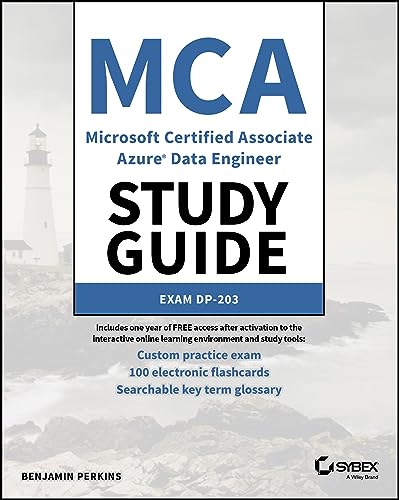
| MCA Microsoft Certified Associate Azure Data Engineer Study Guide (Sybex) | Covers DP-900 + DP-203 together | Candidates planning to chain DP-900 → DP-203 |
Lean budget stack: Microsoft Learn paths (free) + practice assessment (free) + $10-25 Udemy course on sale + $30-60 MeasureUp/Whizlabs + our free DP-900 practice. Total: under $90, covers everything.
Exam-Day Strategy
DP-900 is 40-60 questions in 60 minutes — roughly 60-90 seconds per question. The exam allows back-navigation and answer changes within the 60-minute window.
Pacing
- Minute 0-30: Answer ~50% of the questions. Flag anything that takes over 90 seconds.
- Minute 30-50: Finish remaining questions.
- Minute 50-60: Review flagged items. Only change answers with a concrete reason — first instincts are correct ~75% of the time.
The DP-900 Question Archetypes
| Archetype | Signal | Strategy |
|---|---|---|
| Definition / Identification | "Which of the following is defined as..." / "What type of data is..." | Pick the definition. Move in under 45 seconds. |
| Service-Matching Scenario | A scenario describing a workload and asking "Which Azure service..." | Identify workload type first (OLTP/OLAP, batch/stream, structured/unstructured), then pick the service. |
| Case Study | 2-3 linked questions on a single scenario | Read the scenario once carefully; answer each linked question without re-reading fully. |
| Drag-and-Drop / Sequence | Ordering steps of an architecture or lifecycle | Know the modern data warehouse stages cold: ingest, store, process, serve, visualize. |
The Elimination Engine for Hard Questions
- Eliminate services that don't match workload type. Cosmos DB for OLAP reporting = wrong. Synapse for transactional OLTP = wrong.
- Eliminate services that don't match data type. Azure SQL for billion-row JSON event streams = wrong; Cosmos DB or Data Lake fits better.
- Eliminate over-engineered answers. If a scenario needs a single relational DB, Synapse is overkill.
- Prefer PaaS over IaaS unless the question specifies feature compatibility. Azure SQL Database and Managed Instance are preferred over SQL on VM in most DP-900 scenarios.
Online-Proctored Tips
- Set up a quiet, well-lit room.
- Clear your desk of all materials (no notes, no second monitor, no phone).
- Close all background apps before launching the OnVUE client.
- Run the OnVUE system test at least 24 hours before the exam.
- Have government ID ready; webcam must capture you clearly.
Common Pitfalls That Tank First-Time Candidates
Pitfall #1: Skipping Hands-On
Reading Microsoft Learn is NOT enough. Candidates who skip hands-on in a free Azure account fail to build muscle memory around service names and UI patterns. Spend at least 5 hours in the Azure portal provisioning SQL, Cosmos, Storage, and opening Synapse/Fabric.
Pitfall #2: Confusing Azure SQL Options
Candidates routinely mix up Azure SQL Database (single), Managed Instance, and SQL on VM. Memorize the decision tree — it appears in 3-6 questions on most exam forms.
Pitfall #3: Ignoring Microsoft Fabric
Fabric is 2026's most-tested addition. Candidates who studied from 2021 materials miss 4-8 Fabric questions. Always check that your study materials post-date November 2023 and cover OneLake, Lakehouse, and Real-Time Intelligence.
Pitfall #4: Over-Studying T-SQL Syntax
DP-900 does NOT test SQL syntax beyond recognizing SELECT, INSERT, UPDATE, DELETE, and JOIN at a conceptual level. Don't waste 10 hours memorizing window functions — that's DP-203 territory.
Pitfall #5: Under-Studying Skill 4 (Analytics)
Skill 4 is 25-30% of the exam and covers the most services (Synapse, Databricks, ADF, Stream Analytics, Fabric, Power BI). Start Skill 4 by Week 4 of a 6-week plan — do NOT leave it for the last few days.
Pitfall #6: Misreading "BEST" and "MOST APPROPRIATE"
Multiple options can be technically correct — the question asks for the BEST or MOST APPROPRIATE for the scenario. Re-read the scenario requirements (cost, compatibility, scale, real-time) before choosing.
Pitfall #7: Not Taking the Microsoft Learn Practice Assessment
The official Microsoft Learn practice assessment is free and the closest match to real exam style. Candidates who skip it go in blind. If you score below 75% on it, you are not ready.
Career Value: What DP-900 Actually Earns You
DP-900 alone will not land you a senior data engineer role — it is an entry-level credential. But it is a strong resume signal that pairs with other credentials and experience to unlock specific career paths.
2026 US Salary Ranges (Robert Half + Levels.fyi + LinkedIn)
| Role | Base Salary (US) | Typical Certs |
|---|---|---|
| Junior Data Analyst | $65,000 - $95,000 | DP-900 + PL-300 |
| Data Analyst | $80,000 - $120,000 | DP-900 + PL-300 + SQL experience |
| Senior Data Analyst | $110,000 - $150,000 | PL-300 + PL-600 + domain expertise |
| Junior / Associate Data Engineer | $85,000 - $115,000 | DP-900 + DP-203 or DP-700 |
| Data Engineer | $115,000 - $170,000 | DP-203 or DP-700 + Spark/Python |
| Senior Data Engineer | $150,000 - $220,000 | DP-203 + DP-700 + DP-600 + experience |
| Analytics Engineer | $110,000 - $160,000 | DP-900 + DP-700 + dbt experience |
| Database Administrator (Azure) | $100,000 - $150,000 | DP-900 + DP-300 |
| Data Scientist (Azure) | $130,000 - $200,000 | DP-900 + DP-100 + ML experience |
Certification Stack Recommendations
- Data Analyst Track: DP-900 → PL-300 (Power BI) → PL-600 (Solution Architect)
- Traditional Data Engineer Track: DP-900 → DP-203 (Azure Data Engineer) → DP-300 (DBA)
- Modern Fabric Track: DP-900 → DP-700 (Fabric Data Engineer) → DP-600 (Fabric Analytics Engineer)
- Cloud-First Generalist: AZ-900 + DP-900 + AI-900 (the "Microsoft Cloud Trifecta") → role-based cert
DP-900 on Your Resume
- List under "Certifications" section with issue date and "Microsoft Certified: Azure Data Fundamentals"
- Include in LinkedIn badges (Microsoft issues a verifiable digital badge via Credly)
- Add to email signature if in a data-adjacent role — quick credibility on client calls
- Reference in interview stories: "After completing DP-900 hands-on labs, I understood how Synapse and Fabric differ..."
DP-900 vs DP-203 vs DP-700: Which to Take Next
| Dimension | DP-900 | DP-203 | DP-700 |
|---|---|---|---|
| Level | Fundamentals | Associate | Associate |
| Focus | Conceptual | Traditional data engineering | Microsoft Fabric data engineering |
| Prerequisites | None | DP-900 recommended | DP-900 recommended |
| Primary Services | All Azure data | Synapse, ADF, Databricks | Fabric, OneLake, Lakehouse |
| Cost (US) | $99 | $165 | $165 |
| Study Time | 20-40 hours | 80-120 hours | 80-120 hours |
| Expires? | No | Yes (free online renewal) | Yes (free online renewal) |
| Best For | Everyone new to Azure data | Synapse/Databricks shops | Fabric-first shops |
How to Choose Your Post-DP-900 Path
Check your target employer's job descriptions:
- If you see "Synapse, ADF, Databricks, Spark, T-SQL": Go DP-203 next.
- If you see "Microsoft Fabric, OneLake, Lakehouse, Real-Time Intelligence": Go DP-700 next.
- If you see both: Take DP-203 first (broader Spark + T-SQL skills transfer), then DP-700.
Microsoft has signaled Fabric as the strategic direction, so DP-700 is increasingly the forward-looking choice for career-starters in 2026+.
Final CTA: Start Practicing Today
DP-900 is one of the most pass-able Microsoft certifications — short, conceptual, and entirely covered by free Microsoft Learn content. The candidates who fail almost always share one trait: they read without practicing.
Free DP-900 practice: Start practicing now. Answer 25 questions, see where you score, then target your weakest skill area. Every correct answer includes an explanation of the underlying Azure data concept — which is how you learn to think like a Microsoft Certified: Azure Data Fundamentals professional.
The 2026 Azure data job market has more openings than qualified candidates. DP-900 is the fastest, cheapest, and lowest-risk credential path into those openings. $99, 3-6 weeks, lifetime credential. The only thing between you and that first Azure data role is the 40-60 question exam — and a study plan that actually works.
Good luck. You've got this.
Official Sources
- Microsoft DP-900 exam page: https://learn.microsoft.com/en-us/credentials/certifications/exams/dp-900/
- Microsoft Certified: Azure Data Fundamentals: https://learn.microsoft.com/en-us/credentials/certifications/azure-data-fundamentals/
- Microsoft Learn free training paths for DP-900: https://learn.microsoft.com
- Microsoft Fabric documentation: https://learn.microsoft.com/en-us/fabric/
- Azure Cosmos DB documentation: https://learn.microsoft.com/en-us/azure/cosmos-db/
- Azure SQL documentation: https://learn.microsoft.com/en-us/azure/azure-sql/
- Pearson VUE (exam delivery): https://www.pearsonvue.com/microsoft
- Azure free account: https://azure.microsoft.com/free
Information current as of April 2026. Always verify specific fees, skills measured percentages, and renewal policies at learn.microsoft.com/en-us/credentials/certifications/exams/dp-900/ before registering.

 Free CE
 Buy on Amazon
 Learning path on Pluralsight
 Take courses on Udemy