 View
ViewWhy Every Nurse and EMT Needs Quality Trauma Shears
Trauma shears are one of those tools you do not think much about until you need them — and then you need them immediately. Whether you are cutting through a blood-soaked bandage during a dressing change, removing tape from a post-surgical wound, or rapidly cutting a patient's clothing off in an emergency department trauma bay, your shears need to work the first time, every time.
For nurses, trauma shears are a daily-use instrument. You will reach for them during every dressing change, every IV site prep, every time you need to cut tape or remove a bandage. During a 12-hour shift on a med-surg floor, you might use your shears 20 or 30 times. On a trauma unit or in the ED, that number doubles.
For EMTs and paramedics, trauma shears are arguably the most critical tool after your stethoscope. In the field, you cut seatbelts to extricate patients from vehicles. You cut clothing to expose the chest for a 12-lead EKG or to assess a gunshot wound. You cut shoelaces off a patient with a lower extremity fracture. Speed matters in these situations, and dull shears or shears that stick because of adhesive buildup cost you seconds you do not have.
Here is what most nursing and EMT students discover during their first clinical rotation: the cheap scissors in your school supply box are not trauma shears. Regular scissors have two sharp tips (dangerous near skin), smooth blades (they slip on gauze and tape), and handles that are not angled for clinical use. Trauma shears are purpose-built medical instruments with a blunt lower tip for patient safety, serrated blades for grip, and angled handles that keep your hand away from the wound.
The good news is that quality trauma shears cost between $5 and $13. This is one of the most affordable pieces of clinical equipment you will buy — and at these prices, there is no reason to settle for a dull, uncoated pair that makes every dressing change harder than it needs to be.
If you are preparing for NCLEX-RN, NCLEX-PN, CNA certification, or NREMT clinical rotations, trauma shears are on your required equipment list. This guide reviews the five best options in 2026.
What to Look for in Trauma Shears
Not all trauma shears are created equal. Before comparing specific products, here are the features that separate a good pair from a pair you will replace within two months.
Blade Material: Stainless Steel Is Non-Negotiable
Every pair of trauma shears in this guide uses stainless steel blades, and yours should too. Stainless steel resists corrosion from blood, saline, betadine, chlorhexidine, and the other fluids you will encounter daily in clinical settings. Carbon steel blades rust. Plastic-coated blades chip. Stainless steel stays clean, stays sharp, and holds up to repeated exposure to clinical solutions.
Blade Coating: Fluoride (Non-Stick) vs Uncoated
This is the single most impactful feature difference between budget and mid-range trauma shears. Fluoride coating (also called non-stick coating) prevents adhesive residue from medical tape, Tegaderm, Steri-Strips, and wound dressing adhesives from building up on the blade surface.
Why it matters: after cutting through adhesive tape a few dozen times, uncoated blades become sticky. The adhesive residue makes the shears harder to open and close, reduces cutting precision, and forces you to stop and clean the blades mid-procedure. Fluoride-coated blades shed adhesive residue naturally, staying cleaner and performing better through an entire shift.
If you do one thing differently after reading this guide, buy fluoride-coated shears. The price difference is typically $1-$3 over uncoated models, and the functional improvement is immediate.
Serrated vs Smooth Blades
Serrated blades grip materials as they cut, preventing slippage on gauze, nylon straps, and wet or blood-soaked bandages. Smooth blades can slip on these materials, requiring you to reposition and cut again. Every pair of clinical-grade trauma shears has serrated blades — this is standard, not a premium feature.
Size: 5.5-Inch Compact vs 7.5-Inch Standard
| Feature | 5.5-5.8" Compact | 7.5" Standard |
|---|---|---|
| Best for | Scrub pocket carry, quick access | Primary clinical use, maximum leverage |
| Cutting leverage | Adequate for tape, gauze, light bandages | Superior for denim, seatbelts, tough materials |
| Portability | Fits in scrub pocket without printing | Too long for most scrub pockets |
| Ideal user | EMTs (cargo pocket), nurses (quick access) | Nurses (clinical bag), ED/trauma staff |
| Typical use | Daily tape and bandage cutting | Dressing changes, emergency scenarios |
Our recommendation: If you are buying only one pair, go with 7.5-inch. The extra cutting leverage matters more than pocket convenience, and you can clip them to your scrub waistband or keep them in your clinical bag. If you want both pocket access and full-size capability, buy a compact pair for your pocket and a 7.5-inch pair for your bag — at $6-$9 per pair, having both costs less than a hospital cafeteria lunch.
Blunt Tip: The Safety Feature That Matters Most
The blunt, rounded tip on the lower blade is what makes trauma shears safe for clinical use. This tip is designed to slide between a bandage and the patient's skin without risk of puncture. When you are cutting a dressing off a post-surgical wound or removing bandages from a burn patient, the blunt tip protects the patient from accidental injury. This is not a feature to compromise on — every pair in this guide has a proper blunt lower tip.
Our Top 5 Trauma Shears for 2026
1. RISEMART Bandage Scissors 7.5" Fluoride Coated — Best Overall Value
At $6.49, the RISEMART fluoride-coated bandage scissors deliver the most important feature in trauma shears — a non-stick blade coating — at the lowest price point in this review. If you want one pair of shears that will handle daily clinical work without adhesive buildup problems, this is the pair to buy.
Why the fluoride coating matters here: Most shears in this price range are uncoated. The RISEMART's fluoride coating means you spend less time cleaning adhesive off your blades and more time doing actual clinical work. During a busy shift where you are cutting tape and adhesive dressings repeatedly, the difference between coated and uncoated blades is immediately noticeable. Uncoated blades start sticking together after 8-10 tape cuts. Coated blades stay clean through an entire shift.
Build quality: The 7.5-inch stainless steel blades are serrated for grip, and the ergonomic handles are designed to reduce hand fatigue during extended use. The angled blade design keeps your knuckles above the cutting surface — important for patient safety and your own comfort during dressing changes.
Who should buy this: Any nursing student or working nurse who wants the best combination of fluoride coating and value. Also an excellent choice for EMTs who want non-stick blades for their jump bag. At $6.49, you can buy two pairs (primary and backup) for under $13 — less than what some brands charge for a single pair.
Pros:
- Fluoride-coated non-stick blades at the lowest price ($6.49)
- 7.5-inch standard clinical size with serrated edges
- Ergonomic handle design reduces hand fatigue
- Stainless steel construction resists corrosion
- Blunt lower tip for patient safety
Cons:
- Single pair — no backup included at this price
- Handle color options may be limited
- Coating may wear after 12-18 months of heavy daily use
- Not a multi-tool — shears only

RISEMART Bandage Scissors for Nurses, 7.5" Fluoride Coated Non-stick
by RISEMART
$6.49
- Fluoride coated non-stick blade for easy cleaning
- 7.5-inch size ideal for nursing and EMS use
- Ergonomic handle design reduces hand fatigue
2. Madison Supply 7.5" Premium Fluoride Coated Nurse Scissors — Best for Working Nurses
The Madison Supply trauma shears at $8.99 are the premium option among standard fluoride-coated shears. The higher price reflects a heavier-gauge stainless steel construction and a more durable fluoride coating that holds up longer under heavy daily use. If you are a working nurse who uses shears 20-30 times per shift, the durability difference justifies the extra $2.50 over the RISEMART.
Premium stainless steel: The Madison Supply uses a thicker blade stock than budget options, which translates to better cutting performance on tougher materials. You will notice the difference when cutting through multiple layers of gauze, thick ACE bandages, or adhesive wound closure strips. The blades maintain their edge longer because thicker steel distributes cutting stress more evenly.
Fluoride coating quality: The non-stick fluoride coating on the Madison Supply blades is applied in a process that bonds it more deeply to the steel, resulting in a coating that lasts longer under daily use. Budget fluoride coatings can begin to wear through after 6-8 months of heavy use. The Madison Supply coating typically holds for 12-18 months.
The serrated edge: Serrations on the Madison Supply blades are more aggressively cut than budget options, providing stronger grip on wet, blood-soaked, and slippery materials. This matters most in emergency situations where you are cutting through saturated dressings or clothing.
Who should buy this: Working nurses (especially ED, trauma, surgical, and wound care nurses), nursing students who want a pair that will last through their entire program, and anyone who prioritizes build quality and coating durability over the absolute lowest price.
Pros:
- Premium fluoride coating with extended durability
- Heavier-gauge stainless steel for superior cutting performance
- 7.5-inch standard clinical size
- Aggressive serrations grip wet and slippery materials
- Professional-grade construction for daily clinical use
Cons:
- $8.99 — higher price than comparable fluoride-coated options
- Single pair — no backup included
- Slightly heavier than budget shears due to thicker blade stock
- Premium build is overkill for students who will only use shears occasionally

Madison Supply 7.5 Inches Premium Stainless Steel Nurse Scissors
by Madison Supply
$8.99
- Non-stick fluoride coating prevents adhesive buildup
- 7.5-inch professional size for clinical use
- Premium stainless steel with serrated blade edge
3. MEUUT 2-Pack Medical Scissors — Best 2-Pack Value
The MEUUT 2-pack at $7.19 gives you two pairs of trauma shears for less than most brands charge for one. At $3.60 per pair, this is the most cost-effective way to get a primary and backup pair — which is exactly how most experienced nurses and EMTs operate.
Why you need two pairs: Ask any nurse or paramedic who has been in the field for more than a year, and they will tell you the same thing: always carry a backup. Shears get contaminated during trauma cases and need to be cleaned or replaced before the next patient. Shears get left in patient rooms, dropped in biohazard bins accidentally, or borrowed by coworkers who never return them. Having a second pair means you never get caught without shears during a critical moment.
Build quality: The MEUUT shears use a patented bandage scissor design with an ergonomic grip that distributes cutting force across a wider handle surface. The heavy-duty stainless steel blades handle standard clinical materials (tape, bandages, gauze, light clothing) without difficulty. The 8-inch length provides slightly more leverage than standard 7.5-inch models.
What you trade off: These are uncoated blades — no fluoride non-stick coating. Adhesive residue will build up on the blades after repeated tape cutting, and you will need to clean them with alcohol wipes or adhesive remover periodically. For most students and for backup use, this is an acceptable trade-off given the price.
Who should buy this: Nursing students who need shears for clinical rotations and want a backup without spending extra. EMTs and paramedics who go through shears quickly in the field. Anyone who wants to keep a pair in their clinical bag and a pair in their locker or car.
Pros:
- 2-pack at $7.19 — lowest per-pair cost ($3.60 each)
- Patented ergonomic grip design distributes cutting force
- Heavy-duty stainless steel blades
- 8-inch length provides extra cutting leverage
- Built-in backup — one pair for clinical, one for reserve
Cons:
- No fluoride coating — adhesive buildup will occur with regular tape cutting
- Blades are uncoated and will require more frequent cleaning
- Not the sharpest blades out of the box compared to premium options
- Heavier handle may feel bulky in smaller hands

MEUUT 2 Pack Medical Scissors Trauma Shears - 8 inch Patented Bandage Scissors
by MEUUT
$7.19
- 2-pack trauma shears — one for clinical, one for backup
- Patented bandage scissor design with ergonomic grip
- Heavy-duty stainless steel cuts through tough materials
4. Hummingbird 4-in-1 Medical Scissors — Best Multi-Tool for EMS
The Hummingbird 4-in-1 at $13.22 is the highest-priced option in this review, but it is not just trauma shears — it is four clinical tools in one compact package. For EMTs and paramedics who carry multiple tools in their cargo pockets, consolidating four functions into a single instrument frees up pocket space for other equipment.
The four tools:
- Trauma shears — compact-size shears for bandage, tape, and light clothing cutting
- Oxygen wrench — fits standard oxygen tank valve stems for opening and closing portable O2 cylinders
- Ruler — marked in centimeters and inches for measuring wound dimensions and laceration lengths
- Ring cutter — a notched groove designed to slide under a ring and cut it off a swollen finger without power tools
Why EMS professionals love this: In the back of an ambulance or on a scene, every pocket counts. Instead of carrying separate shears, an O2 wrench, and a ring cutter, the Hummingbird handles all three in addition to shears. The oxygen wrench alone makes it valuable for any EMT or paramedic who works with portable oxygen systems — fumbling for a separate wrench while your patient needs O2 is a problem this tool eliminates.
The trade-off: Compact multi-tools always involve compromise. The shear blades on the Hummingbird are shorter than a dedicated 7.5-inch pair, which means less cutting leverage on tough materials. The ring cutter works but is slower than a dedicated ring cutter. And the ruler, while useful for wound documentation, is short. Each function works, but none of them are as capable as a dedicated single-purpose tool.
Who should buy this: EMTs and paramedics who value pocket efficiency and carry their tools in uniform cargo pockets. Nurses who want an all-in-one backup tool for their clinical bag. Anyone who works with portable oxygen systems and wants an O2 wrench always at hand.
Pros:
- 4-in-1 functionality: shears, O2 wrench, ruler, ring cutter
- Compact pocket size — fits in scrub or cargo pockets
- Premium stainless steel construction
- Eliminates the need to carry separate O2 wrench and ring cutter
- Unique tool that no other product in this review offers
Cons:
- $13.22 — highest price in this review for the shear function alone
- Compact blade length provides less cutting leverage than 7.5-inch shears
- Not ideal as a primary pair for heavy clinical use (dressing changes, tough materials)
- Ring cutter and ruler functions are adequate but not professional-grade
- No fluoride coating on blades
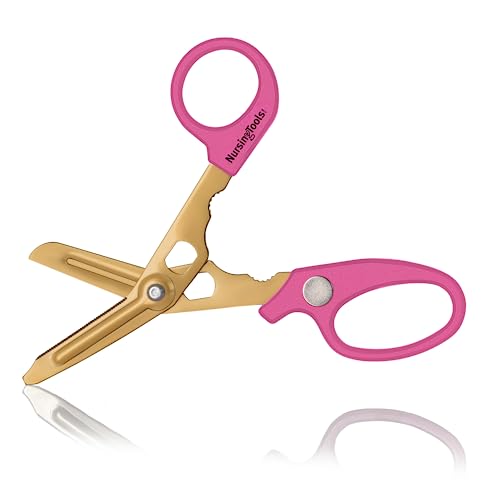
Hummingbird 4-in-1 Medical Scissors - Compact Pocket Size Trauma Shears
by Nursingtools
$13.22
- 4-in-1 tool: shears, oxygen wrench, ruler, ring cutter
- Compact pocket size for everyday carry
- Premium stainless steel construction
5. ZOINADA 2-Pack Compact Trauma Shears 5.8" — Best Compact/Pocket Option
The ZOINADA 2-pack at $6.99 is for nurses and EMTs who want shears that disappear into a scrub pocket. At 5.8 inches, these are compact enough to carry in any scrub pocket without the handle sticking out or the outline printing through the fabric. And at $3.50 per pair, they are priced for disposability — use them, contaminate them during a messy case, toss them, and grab the backup without a second thought.
The pocket carry advantage: Full-size 7.5-inch shears do not fit in standard scrub pockets. They either stick out the top or create an obvious bulge. This forces you to clip them to your waistband (where they can fall off), carry them in a holster (one more thing on your hip), or keep them in your clinical bag (not accessible when you need them quickly). Compact 5.8-inch shears solve this by fitting entirely inside the pocket — grab, cut, return. No clips, no holsters, no bag digging.
When compact is enough: For the majority of daily nursing tasks — cutting tape, snipping gauze, removing bandage wraps, cutting IV tubing — compact shears handle the job. You do not need 7.5-inch leverage to cut through medical tape or a two-layer gauze dressing. Where compact shears struggle is with tough materials: thick ACE bandages, multiple layers of clothing, seatbelts, and denim require the leverage that a full-size blade provides.
The 2-pack logic: Same as the MEUUT — two pairs means a primary and a backup, or one for your scrub pocket and one for your clinical bag. At $6.99 for two, these are essentially disposable clinical tools. When a pair gets contaminated, dull, or lost, you pull out the backup without hesitation.
Who should buy this: Nurses who want pocket-carry shears for daily tape and bandage cutting. EMTs who carry full-size shears in their jump bag but want a compact pair in their uniform pocket. Students on a tight budget who want two pairs of functional shears for under $7.
Pros:
- 2-pack at $6.99 — excellent per-pair value ($3.50 each)
- 5.8-inch compact size fits in standard scrub pockets
- Stainless steel construction with serrated blades
- Lightweight and portable for everyday pocket carry
- Blunt lower tip for patient safety
Cons:
- Compact size provides less cutting leverage than 7.5-inch models
- No fluoride coating — adhesive buildup with regular tape cutting
- Not suitable for cutting tough materials (seatbelts, denim, leather)
- Blades may dull faster due to shorter blade length and thinner steel
- No ergonomic grip enhancements
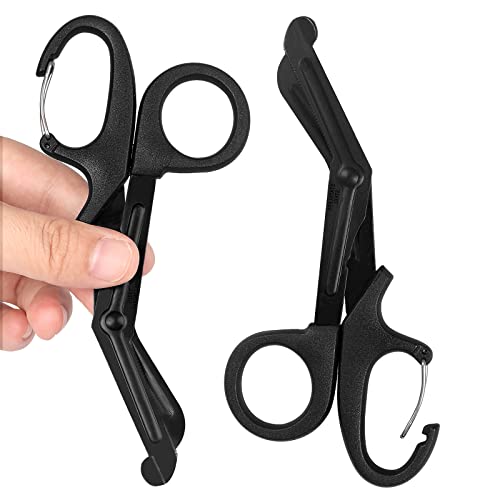
2 Pack Trauma Shears, 5.8 Inch Stainless Steel Medical Scissors
by ZOINADA
$6.99
- Compact 5.8-inch size perfect for scrub pockets
- 2-pack value set for clinical and backup use
- Stainless steel construction with serrated blades
5.5-Inch vs 7.5-Inch Trauma Shears: Which Size Should You Buy?
This is the most common question from nursing and EMT students buying their first pair. Here is a direct comparison to help you decide.
| Factor | 5.5-5.8" Compact | 7.5" Standard |
|---|---|---|
| Daily tape/bandage cutting | Handles well | Handles well |
| Dressing changes | Adequate | Superior |
| Emergency clothing removal | Limited leverage | Full capability |
| Seatbelt cutting | Difficult | Reliable |
| Scrub pocket carry | Fits comfortably | Too long for most pockets |
| Clinical bag storage | Compact | Standard |
| Cargo pocket carry (EMS) | Easy | Fits but bulkier |
| Hand fatigue | Lower (less force needed for light cuts) | Higher during extended cutting tasks |
The verdict: Buy 7.5-inch shears as your primary pair. If pocket carry matters to you, add a compact pair as a secondary/backup. At $6-$9 per pair, owning both sizes costs less than a single premium pair from some brands.
Size Recommendations by Role
NCLEX-RN / NCLEX-PN students: 7.5-inch primary. Your clinical rotations include med-surg, wound care, and emergency scenarios where full-size leverage matters. Start your exam preparation with our free NCLEX-RN study guide or NCLEX-PN study guide.
CNA students: Either size works. CNA clinical tasks focus on basic patient care — bandage cutting and tape removal are the primary uses. A compact pair in your scrub pocket is convenient. Prepare for your CNA certification exam with free study materials.
NREMT / EMT students: Carry both. Full-size 7.5-inch in your jump bag for trauma calls, compact in your uniform pocket for daily use. Practice NREMT exam questions for free at OpenExamPrep.
Paramedic students: Full-size 7.5-inch as your primary, or the Hummingbird 4-in-1 if you want multi-tool functionality. Consider the MEUUT 2-pack so you always have a backup on the rig.
Care and Maintenance: Making Your Shears Last
Trauma shears are affordable enough to replace regularly, but basic maintenance extends their useful life and keeps them performing well between replacements.
Cleaning After Every Shift
- Wipe blades with a 70% isopropyl alcohol wipe — removes blood, saline, betadine, and surface contaminants
- Remove adhesive buildup with adhesive remover pads or rubbing alcohol — adhesive is the primary cause of blade stickiness
- Dry thoroughly after cleaning — even stainless steel can develop surface discoloration if stored wet
- Clean the pivot screw area — adhesive and debris accumulate around the pivot, making the shears harder to open and close
Weekly Inspection
- Check blade alignment — the blades should meet evenly along their entire length when closed
- Test cutting performance — cut a piece of gauze or tape; if it requires noticeably more force than when new, the blades are dulling
- Tighten the pivot screw if the blades wobble — a loose pivot reduces cutting precision and accelerates blade wear
- Inspect handles for cracks, especially near the pivot area where stress concentrates
When to Replace
Replace your trauma shears when:
- Blades no longer cut tape cleanly in a single pass
- You need to use excessive force for standard bandage cutting
- The pivot screw cannot be tightened further (stripped threads)
- Handles are cracked or deformed
- Fluoride coating has worn through (blades feel sticky even after cleaning)
- Any visible rust or corrosion on the blades
At $5-$13 per pair, replacement is always more cost-effective than attempting to sharpen or repair dull trauma shears.
Product Comparison: All 5 Trauma Shears at a Glance
| Feature | RISEMART | Madison Supply | MEUUT 2-Pack | Hummingbird 4-in-1 | ZOINADA 2-Pack |
|---|---|---|---|---|---|
| Price | $6.49 | $8.99 | $7.19 (2 pairs) | $13.22 | $6.99 (2 pairs) |
| Price Per Pair | $6.49 | $8.99 | $3.60 | $13.22 | $3.50 |
| Size | 7.5" | 7.5" | 8" | Compact | 5.8" |
| Fluoride Coating | Yes | Yes | No | No | No |
| Multi-Tool | No | No | No | Yes (4-in-1) | No |
| Pairs Included | 1 | 1 | 2 | 1 | 2 |
| Best For | Best overall value | Working nurses | Budget 2-pack | EMS multi-tool | Pocket carry |
Free Nursing and Healthcare Exam Prep Resources
Your trauma shears get you through clinical rotations, but passing the licensing exam launches your career. We offer free preparation resources for every nursing and healthcare certification track:
- Free NCLEX-RN Study Guide — Complete coverage of all NCLEX-RN content areas including wound care and emergency nursing
- Free NCLEX-PN Study Guide — LPN licensing exam preparation with clinical skills review
- Free CNA Certification Study Guide — CNA exam prep covering patient care skills and clinical competencies
- Free NREMT Study Guide — EMT and paramedic certification preparation with trauma assessment content
- Best Nursing Clinical Kits — Complete clinical kit guide if you need a stethoscope, BP cuff, and other instruments alongside your trauma shears
- Best Stethoscopes for Nursing School — Detailed stethoscope comparison for nursing and healthcare students
- AI Tutor — 10 free questions per day — ask about wound care, trauma assessment, bandaging techniques, or any clinical topic
Final Recommendations
For the best overall value: The RISEMART 7.5" Fluoride Coated ($6.49) is our top recommendation. Fluoride coating at this price point is unmatched — you get non-stick blades, a standard clinical size, and stainless steel construction for less than the cost of a hospital vending machine snack. This is the pair to buy if you are purchasing one set of shears for clinical rotations.
For working nurses who use shears daily: The Madison Supply 7.5" Premium ($8.99) delivers a more durable fluoride coating and heavier-gauge steel that holds up to the demands of daily clinical use. The extra $2.50 over the RISEMART buys you longer coating life and better cutting performance on tough materials — a worthwhile investment for nurses who cut bandages, tape, and dressings 20+ times per shift.
For the tightest budget or when you need a backup: The MEUUT 2-Pack ($7.19) or ZOINADA 2-Pack ($6.99) give you two pairs for the price of one premium pair. The MEUUT offers larger 8-inch blades for more leverage; the ZOINADA offers compact 5.8-inch blades for pocket carry. Either way, you get a primary and a backup for under $8.
For EMTs and paramedics who want a multi-tool: The Hummingbird 4-in-1 ($13.22) combines shears with an oxygen wrench, ruler, and ring cutter. It is the most expensive option, but it replaces multiple tools with a single pocket-sized instrument. Carry it alongside a full-size pair in your jump bag for the best of both worlds.
Whatever you choose, remember: trauma shears are consumable clinical tools, not lifetime investments. Buy a good pair, keep them clean, and replace them when they dull. At $5-$13 per pair, the only mistake is showing up to clinicals without a pair at all.
Start your nursing or EMS exam preparation today with our free NCLEX-RN study guide, NREMT study guide, and healthcare practice questions.
As an Amazon Associate, OpenExamPrep earns from qualifying purchases. All recommendations are based on editorial review.

 Course Playlist
 4 Job Wiki
 Free CE
 Prep course on Achievable
 NCLEX-RN prep on DRCertifications
 Flashcards on Mometrix
 Practice exams on ExamEdge
 Take courses on Udemy

