 View
ViewWhy Pharmacy Technician Students Need a Pill Counting Tray
If you are studying to become a certified pharmacy technician, one of the most fundamental skills you will master is counting and dispensing solid oral medications. The pill counting tray is the tool at the center of that skill — it is where tablets and capsules are poured, counted by groups of five, and directed into prescription vials. Every retail pharmacy in the country has at least one on the counter, and every pharmacy technician uses one dozens of times per shift.
Owning your own pill counting tray as a student is not a luxury — it is a practical investment in your exam preparation and career readiness. Here is why:
- Muscle memory — the count-by-five technique requires practiced hand coordination between the spatula and tray that you can only develop through repetition
- Speed — pharmacy externship sites expect technician students to count accurately and efficiently from day one, and employers evaluate counting speed during interviews
- PTCE and ExCPT exam prep — both certification exams test medication dispensing procedures, tray cleaning protocols, and cross-contamination prevention
- Confidence — walking into your externship having already counted thousands of practice pills on your own tray puts you ahead of students who only touched a tray during lab sessions
You can practice at home using candy (like M&Ms or Skittles), vitamins, or OTC tablets. The goal is not to memorize specific medications — it is to build the counting technique and cleaning habits that will carry you through your PTCE exam, ExCPT exam, externship, and first day on the job.
This guide reviews the 5 best pill counting trays for pharmacy technician students in 2026, explains the key differences between stainless steel and plastic trays, covers proper counting technique, and connects everything back to what you need to know for your pharmacy technician certification exams.
Pill Counting Tray Buyer's Guide: What to Look For
Before choosing a tray, you need to understand the features that matter — and why they matter in a pharmacy setting.
Stainless Steel vs Plastic Trays
| Feature | Stainless Steel | Plastic (ABS/Acrylic) |
|---|---|---|
| Stain resistance | Excellent — does not absorb dyes from colored tablets | Moderate — can stain over time from iron, rifampin, etc. |
| Cleaning | Easy — wipe with alcohol, fully decontaminates | Adequate — may develop micro-scratches that harbor residue |
| Durability | Very high — lasts years of daily professional use | Moderate — can crack if dropped on hard surfaces |
| Weight | Heavier — stays put on the counter during counting | Lighter — may slide on smooth surfaces |
| Cost | Higher ($15-20) | Lower ($8-10) |
| Cross-contamination risk | Lower — non-porous surface | Slightly higher — porous over time with wear |
| Best for | Professional pharmacy use, exam-focused students | Student practice, budget-conscious buyers |
Bottom line: Stainless steel is the professional standard. If you can afford the Dukal TEC 4280 at $17, it is the closest match to what you will use in a real pharmacy. If budget is tight, any of the plastic trays on our list will serve you well for student practice and exam prep.
Spatula Types: Straight vs L-Shaped
The spatula is your primary counting tool. You use it to slide pills across the tray surface, separate them into groups of five, and guide counted pills toward the pour spout.
Straight spatulas are the traditional design. The flat, straight blade gives you precise control over individual pills and works well for the standard sweeping motion used in count-by-five technique. Most pharmacy programs teach with straight spatulas because they reinforce proper wrist mechanics.
L-shaped spatulas have an angled blade that naturally follows the arc of a sweeping motion across the tray. The angle reduces wrist extension during repetitive counting, which matters during high-volume dispensing shifts when a technician may count hundreds of prescriptions. Many experienced technicians prefer L-shaped spatulas for comfort.
Foil hooks on some spatulas (like the Opret) serve a dual purpose — in addition to counting pills, the hook end is used to puncture and peel foil seals on stock bottles. This is a common feature on pharmacy spatulas used in retail settings.
Dual Channel Design
Some trays feature a dual channel design with a raised divider separating the main counting area from the pour channel. This design prevents pills from accidentally rolling into the pour spout while you are still counting. The divider creates a controlled staging area — you count pills on one side, then sweep verified groups over the divider and into the pour channel when the count is complete.
Dual channel trays are particularly helpful for students learning proper technique because they add a physical barrier that forces deliberate counting. You cannot accidentally pour pills before the count is verified.
Pour Spout and Guide Features
The pour spout is the opening at one end of the tray where counted pills are directed into the prescription vial. Key features to look for:
- Hinged spout — opens and closes cleanly to control pill flow during pouring
- Guide cap — some trays (like the SimCoach) include a guide cap at the dispensing port that directs pills into narrow vial openings without spillage
- Anti-pouring design — prevents pills from sliding toward the spout during counting, keeping uncounted and counted pills separated
Product Comparison: All 5 Pill Counting Trays at a Glance
| Pill Counting Tray | Price | Material | Spatula Included | Dual Channel | Best For |
|---|---|---|---|---|---|
| Dukal TEC 4280 | $17.00 | Stainless Steel | Straight | No | Professional grade |
| Medarchitect Clear | $9.98 | Clear Plastic | Wood Handle | Yes | Visibility |
| Opret 2-Spatula | $9.99 | ABS Plastic | Straight + L-shape | No | Versatility |
| Medarchitect Blue | $8.95 | BPA-Free Plastic | L-shape | Yes | Budget + ergonomic |
| SimCoach Guide Cap | $9.99 | Plastic | Straight | No | Spill prevention |
Our Top 5 Pill Counting Trays for Pharmacy Technicians (2026)
1. Dukal TEC 4280 Stainless Steel Pill Counting Tray — Best Professional Grade
The Dukal TEC 4280 is the tray that most closely matches what you will use in a professional retail or hospital pharmacy. Stainless steel construction means this tray will not stain from colored tablets, will not absorb drug residues, and will not develop the micro-scratches that make plastic trays harder to decontaminate over time. If you want to practice on the same type of equipment you will use during your externship and career, this is the tray to buy.
Why it is our top pick: At $17, the Dukal is the most expensive tray on our list — but it is also the only stainless steel option, and that material difference matters for pharmacy practice. When you wipe this tray with an alcohol pad between medications, you know the surface is truly clean. There is no concern about residue hiding in plastic pores or dye staining the counting surface. This is the level of contamination control that the PTCE exam and ExCPT exam test — and practicing on a stainless steel tray helps you internalize why these cleaning procedures exist.
The included spatula matches the tray's professional quality. The standard dimensions (8.46" x 5.90" x 1.37") fit comfortably on any countertop and accommodate the full range of tablet and capsule sizes you will encounter in pharmacy practice.
Key advantages for pharmacy technician students:
- Stainless steel — the professional standard material that resists staining and contamination
- Complete set — tray and spatula included, ready to practice out of the box
- Standard dimensions — matches the size of trays used in most retail pharmacies
- Easy cleaning — non-porous surface decontaminates completely with alcohol
- Durability — built to last through years of daily use in a professional setting
Pros:
- Professional-grade stainless steel matches real pharmacy equipment
- Non-porous surface eliminates cross-contamination risk from material degradation
- Spatula included for a complete counting setup
- Standard pharmacy dimensions familiar to externship preceptors
- Will not stain from colored tablets like iron supplements or rifampin
Cons:
- $17 — nearly double the price of plastic alternatives
- Heavier than plastic trays — less portable for students carrying it to class
- No dual channel design — requires more deliberate technique to keep uncounted pills separated
- Metal surface can feel cold in air-conditioned pharmacy environments

Dukal TEC 4280 Stainless Steel Pill Counting Tray with Spatula
by Dukal
$17.00
- Professional-grade stainless steel construction resists staining and absorbs no residue
- Includes matching spatula for complete counting setup
- Dimensions: 8.46" x 5.90" x 1.37" — standard pharmacy size
2. Medarchitect Clear Pill Counting Tray — Best for Learning Visibility
The Medarchitect Clear tray offers something no other tray on our list provides: you can see the pills from above and below. The transparent plastic construction lets students and instructors visually verify the count from multiple angles, which is a genuine advantage during pharmacy lab sessions and at-home practice. When you are learning the count-by-five method, being able to look through the tray and confirm your groupings builds counting confidence faster.
The dual channel design separates the counting area from the pour channel with a raised divider. For students still developing their spatula technique, this physical barrier prevents the common beginner mistake of accidentally pushing uncounted pills into the pour spout. You count on one side, verify your count, then deliberately sweep the pills over the divider — a forced workflow that reinforces proper dispensing procedure.
The wood handle spatula is a thoughtful inclusion. Wood handles provide better grip than smooth plastic, especially during extended counting sessions when hands may become slightly damp. The natural material also stays at a comfortable temperature, unlike metal spatulas that can feel cold during early morning pharmacy shifts.
Key advantages for pharmacy technician students:
- Clear tray — visual verification of pill count from multiple angles
- Dual channel design — physical barrier prevents premature pouring during counting
- Wood handle spatula — comfortable grip for extended practice sessions
- Student-friendly price — under $10 for a complete tray and spatula set
Pros:
- Transparent material allows count verification from above and below the tray
- Dual channel prevents accidental pouring during counting — great for beginners
- Wood handle spatula provides comfortable, secure grip
- $9.98 — affordable for students on a tight budget
- Lightweight and easy to carry to pharmacy lab sessions
Cons:
- Plastic can stain over time from heavily colored tablets
- Clear material shows scratches and wear more visibly than opaque alternatives
- Not the same material as professional pharmacy trays — less realistic practice
- Plastic surface may develop micro-scratches that are harder to decontaminate
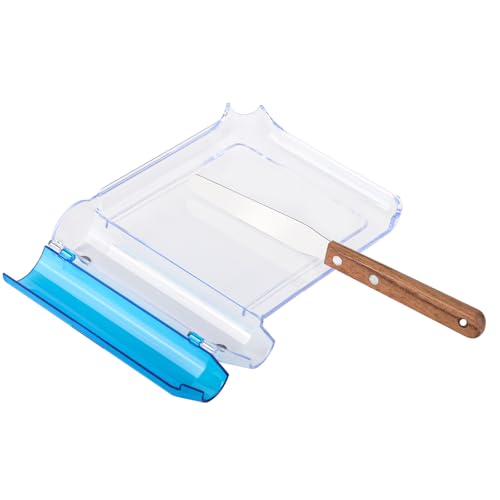
Medarchitect Clear Pill Counting Tray with Wood Handle Spatula
by Medarchitect
$9.98
- Dual channel design separates counting area from pour channel
- Clear tray allows visibility of pills from above and below
- Includes wood handle spatula for comfortable counting
3. Opret 2-Spatula Pill Counting Tray — Best for Versatile Practice
The Opret tray's standout feature is that it includes two spatulas — one straight and one L-shaped — giving pharmacy technician students the opportunity to practice with both styles and develop a preference before starting their externship. Most pharmacy programs teach one spatula style, and most pharmacies stock one type. Having both lets you experience the difference firsthand.
The straight spatula is the traditional pharmacy counting tool. Its flat blade gives you precise control for separating individual pills and sweeping groups of five across the tray surface. The Opret's straight spatula also features a foil hook on the end — a practical pharmacy tool used to puncture and peel the foil seals on stock bottles before pouring tablets onto the counting tray.
The L-shaped spatula has an angled blade that follows the natural sweeping arc of the wrist. For students who find that the straight spatula causes wrist fatigue during long practice sessions, the L-shape is worth trying. The angled blade also makes it easier to scoop pills from the edges of the tray where they sometimes settle.
The ABS plastic tray has a flat surface without a dual channel divider. This design matches many professional pharmacy trays and requires the technician to use spatula technique (rather than a physical barrier) to keep uncounted and counted pills separated — a more realistic simulation of professional pharmacy workflow.
Key advantages for pharmacy technician students:
- Two spatulas — practice with both straight and L-shaped styles
- Foil hook — learn to open stock bottles with proper pharmacy technique
- Flat tray design — mimics professional pharmacy tray layout
- ABS plastic — durable and lightweight for student use
Pros:
- Two spatula types let you find your preferred counting style before externship
- Foil hook on straight spatula adds real pharmacy functionality
- $9.99 — budget-friendly for students
- Flat tray surface mimics professional pharmacy layout
- Lightweight ABS plastic is durable for daily student practice
Cons:
- No dual channel — beginners may accidentally push pills toward the pour spout
- Plastic construction will stain over time with colored medications
- Flat tray surface means pills may roll more freely than on channeled designs
- Neither spatula has a particularly ergonomic handle compared to the Medarchitect models
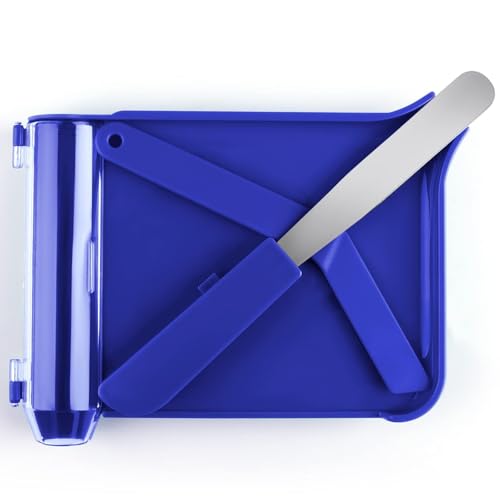
Opret Pill Counting Tray with 2 Spatulas
by Opret
$9.99
- Includes both straight and L-shaped spatulas for versatile counting
- ABS plastic construction with flat tray surface
- Spatula features foil hook for opening stock bottles
4. Medarchitect Blue L-Shape Spatula Pill Counting Tray — Best Budget Ergonomic
At $8.95, the Medarchitect Blue is the most affordable tray on our list — and it is not cutting corners where it counts. The BPA-free, food grade plastic construction is safe for handling medications, the dual channel design provides the physical counting barrier that helps beginners develop proper technique, and the L-shaped spatula reduces wrist strain during extended practice sessions.
The ergonomic L-shape spatula is the defining feature of this tray. For pharmacy technician students who plan to practice counting for 30-60 minutes at a time (and you should — repetition builds speed), the angled blade meaningfully reduces the wrist extension required for each sweep across the tray. Over hundreds of sweeps, that ergonomic advantage adds up. In a professional pharmacy where a technician counts 200+ prescriptions per shift, spatula ergonomics directly affect fatigue and accuracy.
The dual channel design matches the Medarchitect Clear model, providing a raised divider between the counting area and the pour channel. Combined with the L-shaped spatula, this tray creates a workflow that naturally guides pills through the correct counting sequence: pour onto the tray, count by fives on the counting side, sweep verified groups over the divider, pour into the vial.
Metal pin hinges on the pour spout provide smooth, reliable operation compared to plastic-on-plastic hinges that can become stiff or sticky over time. This is a small detail that improves the pouring experience — the spout opens and closes cleanly every time.
Key advantages for pharmacy technician students:
- $8.95 — the most affordable complete tray-and-spatula set on our list
- L-shaped spatula — ergonomic design reduces wrist fatigue during practice
- Dual channel — physical barrier reinforces proper counting technique
- BPA-free — food grade plastic safe for medication contact
- Metal pin hinges — smooth pour spout operation
Pros:
- Lowest price on our list at $8.95 — ideal for budget-conscious students
- Ergonomic L-shape spatula reduces wrist strain during long practice sessions
- Dual channel design prevents accidental premature pouring
- BPA-free, food grade material is safe for medication handling
- Metal pin hinges provide smooth, reliable pour spout action
Cons:
- Blue plastic may show staining from some colored medications
- L-shape spatula only — no straight spatula option for comparison
- Plastic construction is less durable than stainless steel for long-term use
- Smaller counting surface area compared to the SimCoach model
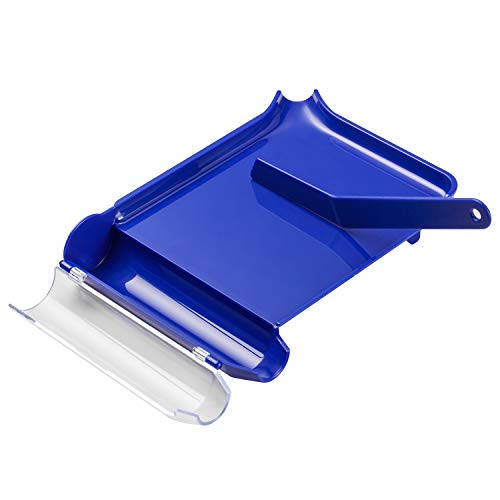
Medarchitect Blue L-Shape Spatula Pill Counting Tray
by Medarchitect
$8.95
- Ergonomic L-shape spatula reduces wrist strain during counting
- BPA-free, food grade plastic with dual channel design
- Metal pin hinges for durable pour spout operation
5. SimCoach Pill Counting Tray with Guide Cap — Best for Spill Prevention
The SimCoach tray addresses the most common frustration for pharmacy technician students: spilling pills during the pour. The defining feature is a guide cap at the dispensing port that directs counted pills into the prescription vial opening without the spills and bouncing tablets that plague beginners. If you have ever poured 30 carefully counted pills toward a vial and watched three of them bounce off the rim and onto the floor, you understand why this matters.
The larger tray surface gives you more room to spread pills out during counting, which is particularly helpful when counting large tablets or when working with high-quantity prescriptions (90-count maintenance medications, for example). More surface area means pills are less likely to stack on top of each other, making visual counting more accurate.
The anti-pouring spout design works in conjunction with the guide cap to prevent pills from sliding toward the dispensing port while you are still counting on the tray surface. This is similar in concept to the dual channel design on the Medarchitect trays but achieved through spout geometry rather than a raised divider.
The included counter spatula has a standard straight design suitable for count-by-five technique. While it does not have the ergonomic L-shape of the Medarchitect spatula or the dual-spatula versatility of the Opret set, it is a functional counting tool that gets the job done during student practice.
Key advantages for pharmacy technician students:
- Guide cap — directs pills into vial openings for spill-free pouring
- Larger tray surface — more room for counting high-quantity prescriptions
- Anti-pouring spout — keeps pills in the counting area during active counting
- Complete set — tray, spatula, and guide cap included
Pros:
- Guide cap eliminates the most common beginner mistake — spilling during the pour
- Larger tray surface provides ample room for high-count prescriptions
- Anti-pouring design keeps pills in the counting area until you are ready
- $9.99 — affordable for students despite the added guide cap feature
- Good for students who are still developing pour technique
Cons:
- Plastic construction — will stain over time and is harder to fully decontaminate
- Straight spatula only — no L-shape option for ergonomic comparison
- Guide cap adds a component that must be cleaned separately between medications
- Larger size is less portable for students carrying the tray to class

SimCoach Pill Counting Tray with Guide Cap
by SimCoach
$9.99
- Larger tray surface for high-volume pill counting
- Guide cap at dispensing port prevents spills during pouring
- Anti-pouring spout design with included counter spatula
Pill Counting Technique: The Count-by-Five Method
Whether you are practicing at home or working in a pharmacy, the count-by-five method is the standard technique tested on the PTCE exam and used in every dispensing pharmacy in the country. Here is the step-by-step process:
Step 1: Prepare the Tray and Verify the Prescription
Before counting a single pill, verify the prescription label against the original prescription or electronic order. Confirm the drug name, strength, quantity, patient name, and directions. Clean the counting tray and spatula if they were used for a previous medication.
Step 2: Pour Tablets onto the Tray
Remove the stock bottle cap, check the NDC number against the prescription to verify you have the correct drug, and pour a portion of the tablets onto the counting tray. Do not pour all the tablets at once if the stock bottle is full — pour enough to work with comfortably.
Step 3: Count by Fives
Using the spatula, separate tablets into groups of five by sliding them from the pile toward the pour spout (or toward the dual channel divider if your tray has one). Count as you go: five, ten, fifteen, twenty. Each group of five should be visually distinct and separated from the remaining uncounted pile.
Step 4: Verify and Pour
Once you reach the prescribed quantity, verify the count by scanning the groups of five. Then open the pour spout and guide the counted pills into the prescription vial. If your tray has a guide cap (like the SimCoach), position the vial under the guide to catch the pills cleanly.
Step 5: Return Excess and Clean
Pour any uncounted tablets back into the stock bottle. Close and reshelve the stock bottle. Clean the tray and spatula with an alcohol wipe before the next medication. This step is critical — it prevents cross-contamination and is a core competency tested on both the PTCE and ExCPT exams.
Cross-Contamination Prevention: An Exam-Critical Topic
Cross-contamination prevention is one of the most frequently tested topics on pharmacy technician certification exams. Here is what you need to know for the PTCE and ExCPT:
Standard Cleaning Procedure
- Wipe the tray surface and spatula blade with a clean, lint-free cloth after every medication
- Use 70% isopropyl alcohol for medications that leave visible residue (colored tablets, powdery capsules)
- Pay attention to the pour spout and hinge area where residue commonly accumulates
- Clean both sides of the spatula blade — drug particles can adhere to either surface
Dedicated Trays for Specific Drug Classes
Some medications require dedicated counting trays that are never used for other drugs:
| Drug Class | Reason for Dedicated Tray | Exam Relevance |
|---|---|---|
| Hazardous drugs (chemo, hormones) | USP 800 requirement — protect staff and patients from exposure | PTCE, CSPT |
| Penicillin antibiotics | Severe allergy risk — trace contamination can trigger anaphylaxis | PTCE, ExCPT |
| Sulfonamide antibiotics | Common drug allergy — cross-contamination risk to sensitized patients | PTCE, ExCPT |
| Controlled substances | DEA documentation requirements — exact counts must be maintained | PTCE, ExCPT |
| Cytotoxic agents | Carcinogenic/mutagenic risk to pharmacy staff from repeated exposure | CSPT, Advanced CPhT |
USP 800: Hazardous Drug Handling
USP 800 sets the standards for handling hazardous drugs in pharmacy settings. For pill counting, the key requirements include:
- Dedicated equipment — hazardous drugs must be counted on a tray used exclusively for hazardous medications
- Personal protective equipment — chemotherapy-rated gloves (double gloving recommended) and a protective gown
- Containment — count hazardous drugs in a designated area, ideally under a containment device
- Decontamination — clean the dedicated tray with appropriate deactivation agents (not just alcohol)
- Waste disposal — cleaning materials are classified as hazardous waste
This is heavily tested on the PTCE exam, the CSPT exam, and the Advanced CPhT exam. OpenExamPrep offers free practice exams for all four pharmacy technician certifications.
PTCE and ExCPT Exam Connection: What You Need to Know
Pill counting may seem like a purely hands-on skill, but the knowledge behind it is tested extensively on pharmacy technician certification exams. Here is how counting tray practice connects to your exam preparation:
PTCE (Pharmacy Technician Certification Exam)
The PTCE, administered by the Pharmacy Technician Certification Board (PTCB), covers four knowledge domains. Under the content outline effective January 6, 2026, these topics fall mainly under Medications (35%), Patient Safety and Quality Assurance (23.75%), and Federal Requirements (18.75%):
- Proper dispensing procedures including counting, labeling, and packaging
- Cross-contamination prevention and tray cleaning protocols
- Hazardous drug handling per USP 800
- Controlled substance counting, documentation, and DEA regulations
- Error prevention during the dispensing process
- Prescription verification and NDC number matching
ExCPT (Exam for the Certification of Pharmacy Technicians)
The ExCPT, administered by the National Healthcareer Association (NHA), tests similar dispensing knowledge:
- Medication dispensing processes including counting and pouring
- Contamination prevention in the dispensing workflow
- Handling procedures for high-alert and hazardous medications
- Prescription processing from receipt through final verification
Advanced CPhT and CSPT
For pharmacy technicians pursuing advanced credentials:
- The Advanced CPhT exam tests deeper knowledge of medication management and quality assurance
- The CSPT exam focuses on sterile compounding but includes knowledge of USP 800 hazardous drug handling that directly relates to counting tray procedures
Practice these exam topics for free with the OpenExamPrep AI tutor — 10 questions per day covering medication dispensing, pharmacology, pharmacy law, and any topic you need to review for your certification exam.
Free Study Resources for Pharmacy Technician Certification
Whether you are preparing for the PTCE, ExCPT, Advanced CPhT, or CSPT, OpenExamPrep offers free study materials designed specifically for pharmacy technician certification success:
- Free PTCE Study Guide — Complete PTCB exam content review including medications, patient safety, order entry, and federal pharmacy law
- Free ExCPT Study Guide — Comprehensive NHA pharmacy technician exam preparation
- Free Advanced CPhT Study Guide — Advanced pharmacy technician certification review
- Free CSPT Study Guide — Sterile compounding pharmacy technician exam preparation
- AI Tutor — 10 free questions per day — ask about dispensing procedures, pharmacology, pharmacy calculations, or any certification topic
The AI tutor excels at scenario-based practice. Ask it "Give me a scenario where a pharmacy technician must decide whether to use a dedicated counting tray and explain the contamination risk" or "Walk me through the count-by-five method and the cleaning steps that follow" — it will guide you through the procedure and test your understanding step by step.
Which Pill Counting Tray Should You Buy?
Here is the simplest way to decide:
If you want the most professional experience: Buy the Dukal TEC 4280 at $17.00. Stainless steel is the professional pharmacy standard, and practicing on metal gives you the most realistic preparation for your externship and career. The non-porous surface also teaches you why contamination prevention matters — you will see how easily this tray cleans compared to plastic.
If you want to see your pills clearly while learning: Buy the Medarchitect Clear at $9.98. The transparent tray and dual channel design are purpose-built for students learning proper counting technique. The wood handle spatula is comfortable for long practice sessions.
If you want to try both spatula types: Buy the Opret 2-Spatula at $9.99. Having both a straight and L-shaped spatula lets you find your preference before your externship, and the foil hook adds real-world pharmacy functionality.
If you want the best value with ergonomic design: Buy the Medarchitect Blue at $8.95. The lowest price on our list, with a dual channel design and ergonomic L-shape spatula that reduces wrist fatigue during practice sessions.
If you struggle with spilling during the pour: Buy the SimCoach at $9.99. The guide cap at the dispensing port solves the most frustrating part of pill counting for beginners, and the larger tray surface gives you more room to work.
No matter which tray you choose, the most important thing is to practice. The count-by-five technique, the cleaning procedure between medications, the verification workflow — these are skills that develop through repetition. Combine your hands-on tray practice with free PTCE and ExCPT practice questions at OpenExamPrep, and you will walk into your certification exam with both the knowledge and the practical confidence to pass.
As an Amazon Associate, OpenExamPrep earns from qualifying purchases. All recommendations are based on editorial review.

 Free CE
 Prep course on Achievable
 Practice exams on ExamEdge
 Flashcards on Mometrix
 Take courses on Udemy
