How to Become a Mortgage Loan Originator with No Experience (2026)
No degree. No experience. No problem. Becoming a mortgage loan originator (MLO) is one of the most accessible paths into a high-paying financial career in 2026. Unlike most finance roles that require a four-year degree or years of experience, the MLO profession is open to anyone willing to complete a short pre-licensing course, pass one exam, and get licensed in their state.
If you have ever helped a friend negotiate a deal, enjoy working with people, or simply want a career where your income is tied to your effort rather than a fixed salary — the mortgage industry might be your perfect fit. Mortgage loan originators help people achieve the American dream of homeownership, and they are compensated generously for doing it.
This guide walks you through every single step from zero experience to your first day originating loans — including exact costs, timelines, exam tips, and salary expectations for 2026.
Start Your NMLS Exam Prep Today
Our free NMLS practice exams cover all test topics with detailed explanations — the same content that costs $100+ on other platforms. Start building your exam confidence now.
Why Become a Mortgage Loan Originator in 2026?
Before diving into the steps, here is why the MLO career is worth your attention:
Exceptional Earning Potential
Mortgage loan originators earn a median salary of $65,000-$80,000 per year, with top performers regularly clearing $150,000-$250,000+. Unlike salaried positions, your compensation is largely commission-based, meaning there is no artificial ceiling on your earnings. Close more loans, earn more money.
No College Degree Required
The SAFE Act — the federal law governing MLO licensing — does not require a college degree. You need to complete a 20-hour pre-licensing course and pass the NMLS SAFE exam. That is it. No bachelor's degree, no MBA, no prior financial services experience.
Fast Licensing Timeline
From day one to licensed MLO, the entire process typically takes 2-4 months. Compare that to becoming a CPA (5+ years), a financial advisor with a CFP (4+ years of education plus experience), or even a real estate agent (3-6 months in most states). The MLO path is one of the fastest professional licensing tracks in financial services.
Growing Industry Demand
The mortgage industry continues to need new loan originators as housing markets remain active, refinance cycles create periodic surges, and a significant portion of the current MLO workforce approaches retirement. Career changers are especially welcomed.
Relationship-Based Career
If you thrive on building relationships and solving problems for people, mortgage origination is deeply rewarding. You guide families through one of the largest financial decisions of their lives, and referrals from satisfied clients can fuel your pipeline for years.
Basic Requirements to Become an MLO
Before starting the licensing process, confirm you meet these baseline requirements:
| Requirement | Details |
|---|---|
| Age | Must be at least 18 years old |
| Residency | Must be a U.S. citizen or legal resident with a valid Social Security number |
| Criminal History | No felony convictions in the past 7 years; no financial-related felonies ever |
| Education | No college degree required |
| Experience | No prior experience required |
| Credit History | No specific score required, but state regulators review your credit report |
If you meet these requirements, you are eligible to begin. Even if your credit is imperfect, it does not automatically disqualify you — states review credit on a case-by-case basis.
7 Steps to Becoming a Licensed Mortgage Loan Originator
Step 1: Complete the 20-Hour NMLS Pre-Licensing Education
The SAFE Act requires all prospective MLOs to complete 20 hours of NMLS-approved pre-licensing education before they can sit for the national exam. This is a non-negotiable federal requirement.
What the 20 hours cover:
| Topic Area | Hours Required |
|---|---|
| Federal mortgage-related laws | 3 hours |
| Ethics (fraud, consumer protection, fair lending) | 3 hours |
| Nontraditional mortgage products | 2 hours |
| Electives (state-specific or general mortgage topics) | 12 hours |
| Total | 20 hours |
Cost: $200-$500 depending on the provider
Format: Most candidates choose online, self-paced courses that can be completed in 1-2 weeks. All providers must be NMLS-approved. You can verify approved providers at NMLS.org.
Pro tips:
- Choose a provider that includes exam prep materials or practice questions
- Some employers reimburse pre-licensing costs — ask before paying out of pocket
- Take notes during the course; the content maps directly to the NMLS exam
- You must complete the full 20 hours — the system tracks your time and there are no shortcuts
Step 2: Register on NMLS and Create Your Account
The Nationwide Multistate Licensing System (NMLS) is the central hub for all MLO licensing in the United States. You will use this account throughout your entire career.
How to register:
- Go to NMLS.org and click "Create New Account"
- Select "Individual" account type
- Provide your personal information, Social Security number, and contact details
- Create your login credentials
- Your NMLS ID number is generated automatically — keep this number forever
Cost: Free to create an account
Your NMLS account is where you will track your education, apply for licenses, schedule your exam, and manage renewals for the rest of your MLO career. Treat your NMLS ID like a professional credential — it follows you across employers and states.
Step 3: Study for the NMLS SAFE Exam
This is the step that separates licensed MLOs from everyone who just thought about it. The NMLS SAFE exam has a first-time pass rate of only 56%, so dedicated study is essential.
Recommended study plan:
| Study Phase | Duration | Focus |
|---|---|---|
| Content review | Week 1-2 | Read through all exam topic areas using the official NMLS content outline |
| Practice questions | Week 2-3 | Complete 500+ practice questions; analyze every wrong answer |
| Weak area focus | Week 3-4 | Revisit topics where you scored below 75% on practice tests |
| Final review | Last 2-3 days | Take full-length timed practice exams under test conditions |
Total recommended study time: 40-80 hours over 2-4 weeks after completing pre-licensing education
What to study:
The NMLS publishes an official test content outline that tells you exactly what percentage of questions come from each topic:
| Content Area | % of Exam | Number of Scored Questions |
|---|---|---|
| Federal Mortgage-Related Laws | 23% | ~23 questions |
| General Mortgage Knowledge | 23% | ~23 questions |
| Mortgage Loan Origination Activities | 25% | ~25 questions |
| Ethics | 16% | ~16 questions |
| Uniform State Content | 13% | ~13 questions |
Our free practice exams mirror the actual NMLS exam format and cover all five content areas. Use them to identify your weak spots and build confidence before test day.
Step 4: Pass the NMLS SAFE Exam
Once you feel prepared, schedule your exam through your NMLS account. The test is administered at Prometric testing centers nationwide.
Exam details at a glance:
| Detail | Information |
|---|---|
| Total questions | 120 (100 scored + 20 unscored pre-test) |
| Passing score | 75% (75 out of 100 scored questions) |
| Time limit | 190 minutes (3 hours, 10 minutes) |
| Format | Multiple choice, computer-based |
| Exam fee | $110 per attempt |
| Results | Available in your NMLS account within 72 hours |
| Retake policy | 30-day wait after 1st and 2nd failures; 180-day wait after 3rd failure |
Test day tips:
- Arrive 30 minutes early with two valid forms of ID
- You cannot bring notes, phones, or calculators into the testing room
- Read every question carefully — the exam is known for tricky wording
- Budget your time: roughly 90 seconds per question
- Flag difficult questions and return to them after completing easier ones
- Focus on federal lending laws and general mortgage knowledge first — they account for 46% of the scored exam
If you do not pass on your first attempt, do not panic. Many successful MLOs needed two tries. Review your score breakdown, focus on weak areas, and retake after 30 days. See our NMLS Retake Recovery Plan for a structured 30-day comeback strategy.
Step 5: Apply for Your State License
After passing the NMLS SAFE exam, you need to apply for a state-specific MLO license through the NMLS system. Every state has its own requirements on top of the federal ones.
Common state requirements include:
- State application fee: $100-$400+ (varies by state)
- FBI background check: $36.25 (fingerprinting through an approved vendor)
- Credit report authorization: $15 (pulled through NMLS)
- Surety bond: $100-$500/year premium (required in most states; bond amounts range from $10,000-$150,000)
- Additional state education: Some states require extra hours beyond the federal 20
- State-specific exam: A few states require a separate state exam component
Application process:
- Log into your NMLS account
- Select "Filing" and then "Individual" (Form MU4)
- Choose your state and complete the application
- Authorize the background check and credit report
- Pay all applicable fees
- Submit and wait for state processing (2-6 weeks)
Important: Your state license must be associated with a sponsoring employer before it can be activated. This means you need to complete Step 6 (finding an employer) either before or concurrently with your state application.
Step 6: Find an Employer or Sponsor
MLOs cannot originate loans independently — you must be employed by or contracted with a licensed mortgage company. This is both a legal requirement and a practical one, since your employer provides the loan products, processing infrastructure, and compliance oversight.
Types of employers to consider:
| Employer Type | Pros | Cons |
|---|---|---|
| Retail bank (Chase, Wells Fargo, etc.) | Salary + bonus, strong training, brand recognition, leads provided | Lower commission rates, rigid corporate structure |
| Retail mortgage lender (Rocket Mortgage, UWM, etc.) | Higher commissions, marketing support, technology tools | More production pressure, less base salary |
| Mortgage brokerage | Access to multiple lenders, higher flexibility, strong commission splits | Less training, must self-source leads, no salary |
| Credit union | Salary + bonus, work-life balance, member referrals | Lower overall earnings potential, limited product range |
How to land your first MLO job with no experience:
- Start with banks or large retail lenders — they have formal training programs for new MLOs
- Highlight transferable skills — sales experience, customer service, real estate knowledge, banking background
- Network at local mortgage/real estate events — many positions are filled through referrals
- Apply broadly — submit applications to 10-15 companies simultaneously
- Consider starting as a loan processor or loan officer assistant — this builds industry knowledge fast and leads to MLO roles within 6-12 months
- Get on LinkedIn and connect with branch managers — many actively recruit new talent
Many employers will sponsor your license and even cover some licensing costs in exchange for a commitment to stay for a minimum period (usually 1-2 years).
Step 7: Activate Your License and Start Originating
Once your employer files a sponsorship request through NMLS and your state approves your application, your license status changes to "Approved - Active." Congratulations — you are officially a licensed mortgage loan originator.
Your first week as an MLO:
- Complete your employer's onboarding and compliance training
- Get set up in the loan origination system (LOS)
- Learn your company's loan products, guidelines, and pricing
- Start building your referral network (real estate agents, financial planners, CPAs)
- Shadow experienced originators if possible
- Set up your professional presence (LinkedIn profile, email signature, business cards)
Total Cost Breakdown: How Much Does It Cost to Become an MLO?
| Expense | Cost Range | Notes |
|---|---|---|
| 20-hour pre-licensing education | $200-$500 | Online courses are typically cheapest |
| NMLS exam fee | $110 | Per attempt; retakes cost another $110 |
| State license application fee | $100-$400+ | Varies by state; some states over $400 |
| FBI background check | $36.25 | One-time fingerprinting fee |
| Credit report | $15 | Pulled through NMLS |
| Surety bond (annual premium) | $100-$500 | Required in most states; depends on bond amount and credit |
| NMLS processing fee | $30 | Annual system fee |
| Total estimated cost | $591-$1,591 | Some employers reimburse part or all |
This makes the MLO license one of the most affordable professional credentials in financial services. Compare it to the CFA ($2,500+ in exam fees alone) or an MBA ($50,000-$150,000+).
Timeline: How Long Does It Take to Become an MLO?
| Step | Estimated Duration |
|---|---|
| Complete 20-hour pre-licensing course | 1-2 weeks |
| Register on NMLS | 1 day |
| Study for NMLS SAFE exam | 2-4 weeks |
| Schedule and pass the exam | 1-2 weeks (including scheduling lead time) |
| Apply for state license | 1 day to submit |
| State processing and background check | 2-6 weeks |
| Find an employer/sponsor | 1-4 weeks (can overlap with above steps) |
| Total timeline | 2-4 months |
Motivated candidates who study full-time and have an employer lined up can complete the entire process in as little as 6-8 weeks.
A Day in the Life of a Mortgage Loan Originator
What does the job actually look like once you are licensed? Here is a typical day for a working MLO:
Morning (8:00 AM - 12:00 PM)
- Review pipeline: Check status of loans in process (typically 10-25 active files)
- Respond to emails from borrowers, processors, underwriters, and real estate agents
- Make follow-up calls to pre-approved borrowers who have not yet found a home
- Review rate sheets and lock rates for borrowers who are ready
Afternoon (12:00 PM - 4:00 PM)
- Meet with new borrower prospects (in-person or video call) to discuss their home purchase or refinance goals
- Collect and review financial documents (pay stubs, tax returns, bank statements)
- Run pre-approval scenarios through your pricing engine
- Coordinate with processors and underwriters on files in progress
- Attend a real estate agent's open house to build referral relationships
Late Afternoon/Evening (4:00 PM - 7:00 PM)
- Follow up with real estate agent partners
- Make prospecting calls or send outreach to potential referral sources
- Review daily rate changes and market news
- Handle any urgent borrower questions (the home-buying process does not stop at 5 PM)
- Update your CRM and plan tomorrow's priorities
The job is a blend of sales, relationship management, financial analysis, and customer service. Most MLOs work 45-55 hours per week, with flexibility in how they structure their days. Some weeks are quieter; others are intense as multiple loans approach closing simultaneously.
MLO Salary and Compensation Structure
Understanding how MLOs get paid is critical to setting realistic expectations:
Compensation Models
| Model | Base Salary | Commission | Total Potential | Typical Employer |
|---|---|---|---|---|
| Salary + Bonus | $40,000-$60,000 | 10-25 bps per loan | $50,000-$90,000 | Banks, credit unions |
| Low Base + Commission | $20,000-$35,000 | 50-100 bps per loan | $60,000-$150,000 | Retail lenders |
| Commission Only | $0 | 75-150 bps per loan | $50,000-$250,000+ | Mortgage brokerages |
"Bps" = basis points. 100 basis points = 1% of the loan amount. On a $400,000 loan, 100 bps = $4,000 commission.
Salary by Experience Level
| Experience | Typical Annual Income | Loans/Month |
|---|---|---|
| Year 1 (new MLO) | $35,000-$55,000 | 1-3 loans |
| Year 2-3 | $60,000-$100,000 | 3-5 loans |
| Year 4-7 | $80,000-$150,000 | 5-8 loans |
| Year 8+ (top producer) | $150,000-$300,000+ | 8-15+ loans |
The first year is typically the hardest. You are building your pipeline, learning the business, and establishing referral relationships. Most new MLOs break even or earn modestly in months 1-6 before seeing meaningful commission income in the second half of their first year.
What Impacts Your Earnings
- Location: MLOs in high-cost markets (California, New York, Colorado) earn more per loan due to larger loan amounts
- Employer type: Brokerages offer higher splits; banks offer more stability
- Lead source: Self-generated leads (referrals, marketing) pay better than company-provided leads
- Product mix: Purchase loans often pay better than refinances
- Volume: The more loans you close, the better your commission tier at most companies
Common Career Paths Into Mortgage Origination
Many successful MLOs come from outside the mortgage industry. Here are the most common backgrounds:
Real Estate Agents — Already understand the home-buying process, have existing referral networks, and know how to work with buyers. Some agents become dual-licensed.
Bank Tellers and Personal Bankers — Familiar with financial products, customer service, and compliance. Many banks promote from within into MLO roles.
Sales Professionals — Any B2C sales background (automotive, insurance, retail) translates well. The core skill is building trust and closing deals.
Career Changers — Teachers, military veterans, restaurant managers, and others make the jump successfully. The mortgage industry values work ethic and people skills over pedigree.
Loan Processors and Assistants — Starting in a support role gives you deep product knowledge and industry contacts before transitioning to origination.
First-Year Tips: How to Succeed as a New MLO
Your first year will define your trajectory. Here is what the top new originators do differently:
Build Your Pipeline from Day One
- Ask every person you know if they plan to buy a home or refinance
- Connect with 5-10 real estate agents in your target market and offer to co-host educational events
- Join your local Board of Realtors or Chamber of Commerce
- Be active on social media — share homebuying tips, market updates, and client success stories
Invest in Education Beyond Licensing
- Learn loan products inside and out — conventional, FHA, VA, USDA, jumbo
- Understand debt-to-income ratios, credit score requirements, and underwriting guidelines
- Stay current on rate movements and housing market trends in your area
Complete Your Continuing Education
- MLOs must complete 8 hours of NMLS-approved continuing education annually:
- 3 hours Federal Law
- 2 hours Ethics
- 2 hours Nontraditional Mortgage Products
- 1 hour Elective
- Your license renewal deadline is December 31 each year — do not wait until the last minute
Set Realistic Expectations
- Most new MLOs close their first loan within 60-90 days
- Expect months 1-3 to be heavy on learning and light on closings
- Your first 12 months are an investment in the next 10+ years of your career
- Find a mentor at your company — experienced MLOs can dramatically shorten your learning curve
Career Growth: Where Can the MLO Career Take You?
The mortgage loan originator role is not just a job — it is a launchpad:
Senior Loan Originator / Top Producer — With 3-5 years of experience, top producers build teams of assistants and junior originators, handling $50M-$100M+ in annual volume.
Branch Manager — Lead a team of MLOs at a retail lender or bank. Earn overrides on your team's production plus your own origination income. Typical earnings: $150,000-$300,000+.
Wholesale Account Executive — Work for a wholesale lender, supporting mortgage brokers. Less client-facing, more B2B. Strong base salary plus bonuses.
Start Your Own Brokerage — After building a track record and client base, some MLOs obtain a company license and open their own mortgage brokerage. This is the highest-risk but highest-reward path.
Transition to Related Roles — MLO experience translates into underwriting management, compliance, mortgage technology companies, real estate investing, and financial planning.
Start Your MLO Journey Today
The mortgage loan originator career offers something rare: a high-income, professional career that does not require a degree, does not require experience, and can be started in under 4 months.
The only thing standing between you and your MLO license is a 20-hour course and one exam. Thousands of people with no mortgage experience pass the NMLS SAFE exam every year — and you can be one of them.
The first step? Start studying.
Our free practice exams cover all five content areas of the NMLS SAFE exam with detailed answer explanations. Build your knowledge, track your progress, and walk into test day confident.
Official Resources
- NMLS (Nationwide Multistate Licensing System) — Create your account, manage your license, find approved education providers
- NMLS SAFE Exam Content Outline — The official exam blueprint with topic percentages
- Bureau of Labor Statistics — Loan Officers — Salary data, job outlook, and occupational information
- Consumer Financial Protection Bureau (CFPB) — Federal mortgage regulations and consumer resources
- Conference of State Bank Supervisors (CSBS) — State-by-state licensing resources and regulatory updates

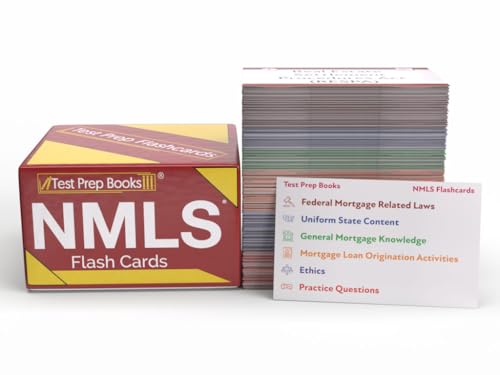
 Buy on Amazon
 Take courses on Udemy
 Online course on Mometrix
 MLO pre-licensing on Aceable Mortgage