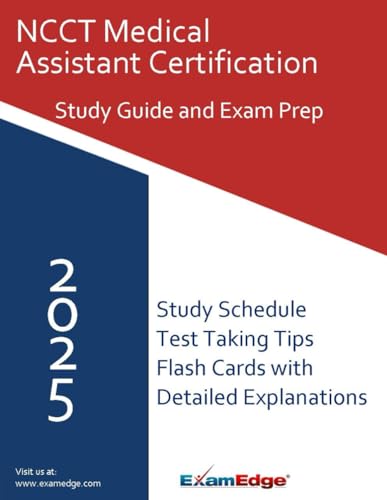
CMA Medical Assistant Exam in 2026: Your Complete Guide
The CMA (Certified Medical Assistant) credential from the AAMA (American Association of Medical Assistants) is the gold standard certification for medical assistants. With 112,300 job openings projected annually and a 12% growth rate (much faster than average), medical assisting is one of the fastest-growing careers in healthcare.
But here's something that causes confusion: "CMA" also stands for "Certified Management Accountant" (a completely different finance exam). This guide is specifically about the CMA (AAMA) medical assistant certification — the clinical healthcare credential.
Start Your FREE CMA Prep Today
Our comprehensive course covers all three CMA exam domains with practice questions and clinical scenarios—100% FREE.
CMA Exam Format & Structure
| Component | Details |
|---|---|
| Questions | 200 multiple-choice (180 scored + 20 pretest) |
| Time Limit | 4 hours (160 minutes testing + breaks) |
| Passing Score | 405 out of 800 (scaled score) |
| Cost | $125 (AAMA members) / $250 (non-members) |
| Testing Vendor | PSI (in-person test centers or live remote proctoring) |
| Offered | Year-round (schedule at your convenience) |
| Eligibility | Graduate (or current student) of a CAAHEP- or ABHES-accredited MA program; separate pathways exist for medical assisting educators and recertifying candidates |
| Recertification | Every 60 months (5 years) |
CMA Exam Domain Breakdown
| Domain | Weight | Content Areas |
|---|---|---|
| Clinical | 59% | Patient care, lab procedures, pharmacology, nutrition |
| General | 21% | Communication, medical law, ethics, psychology |
| Administrative | 20% | Scheduling, billing, coding, records management |
Key insight: The Clinical domain is nearly 60% of the exam. This is where your study time should be concentrated.
CMA vs. RMA vs. CCMA vs. NCMA: Which Certification?
There are four major medical assistant certifications. Here's how they compare:
| Feature | CMA (AAMA) | RMA (AMT) | CCMA (NHA) | NCMA (NCCT) |
|---|---|---|---|---|
| Organization | AAMA | AMT | NHA | NCCT |
| Questions | 200 (180 scored + 20 pretest) | 210 | 180 (150 scored + 30 pretest) | ~165 (150 scored + unscored pretest) |
| Time | 4 hours | 2 hours | 3 hours | 3 hours |
| Cost | $125–$250 | $150 (includes 1st-year AMT dues) | $165 | $119 |
| Employer Recognition | Highest | High | High | Moderate |
| Eligibility | CAAHEP/ABHES grad | Multiple pathways | Multiple pathways | Multiple pathways |
| Recertification | 5 years | 3 years | 2 years | Annual ($77 renewal) |
Which Should You Choose?
Choose CMA (AAMA) if:
- You graduated from a CAAHEP or ABHES accredited program
- You want the most widely recognized credential
- You plan to work in physician offices or large healthcare systems
- You want the longest recertification period (5 years)
Choose RMA (AMT) if:
- You want a shorter, 2-hour exam ($150 application fee, which includes your first year of AMT membership)
- You have work experience but no formal training program
- Your employer specifically recognizes AMT credentials
Choose CCMA (NHA) if:
- You completed a shorter training program
- You want NHA's online testing option
- Your employer partners with NHA
CMA Exam Content: Domain-by-Domain Guide
Domain 1: Clinical (59% of Exam)
This is the bulk of the exam. You need thorough knowledge across these clinical areas:
Patient Care & Clinical Procedures
- Vital signs: Blood pressure, pulse, respirations, temperature, pulse oximetry, pain assessment
- Patient positioning: Sitting, supine, prone, lithotomy, Sims', Trendelenburg, Fowler's
- Wound care: Cleaning, bandaging, suture/staple removal, wound assessment
- Injections: Intradermal (ID), intramuscular (IM), subcutaneous (SubQ) — know sites, angles, volumes
- Specimen collection: Venipuncture, capillary puncture, urine collection (clean-catch, 24-hour)
- Electrocardiography: 12-lead ECG placement, artifact identification, normal vs. abnormal rhythms
Injection Sites and Angles (High-Yield!)
| Type | Angle | Needle Length | Common Sites | Volume |
|---|---|---|---|---|
| Intradermal | 10–15° | 3/8"–5/8" | Inner forearm | 0.01–0.1 mL |
| Subcutaneous | 45° | 1/2"–5/8" | Upper arm, abdomen, thigh | 0.5–1.0 mL |
| Intramuscular | 90° | 1"–1.5" | Deltoid, vastus lateralis, dorsogluteal | 1.0–3.0 mL |
Laboratory Procedures
- CLIA-waived tests: Urine dipstick, rapid strep, glucose monitoring, pregnancy tests, hemoglobin A1C
- Specimen handling: Labeling, processing, transport requirements
- Microscopy basics: Wet mount prep, urinalysis sediment
- Quality control: Internal controls, proficiency testing, CLIA compliance
Pharmacology
- Drug classifications: Know the major classes and their actions (antihypertensives, antibiotics, analgesics, etc.)
- Medication administration routes: Oral, sublingual, topical, injectable, inhalation, rectal, transdermal
- Prescription reading: Patient name, drug, dose, route, frequency, quantity, refills
- Drug calculations: Dosage calculations using desired/have method
- Controlled substance schedules: Schedule I (no medical use) through Schedule V (lowest abuse potential)
- Side effects and allergies: Common adverse reactions, anaphylaxis recognition
Nutrition
- MyPlate guidelines and basic nutritional counseling
- Therapeutic diets: Diabetic, low-sodium, renal, clear liquid, BRAT
- BMI calculation and interpretation
Domain 2: General (21% of Exam)
Communication
- Therapeutic communication techniques: Active listening, empathy, open-ended questions
- Cultural sensitivity and language barriers
- Patient education techniques — teach-back method
- Phone etiquette and triage
Medical Law & Ethics
- HIPAA: Protected health information, patient rights, breach notification
- Informed consent: Elements required, when it's needed, who can give consent
- Advance directives: Living will, healthcare power of attorney, DNR
- Scope of practice: What MAs can and cannot do (varies by state)
- Malpractice vs. negligence: Four D's of negligence (Duty, Dereliction, Direct cause, Damages)
- Mandatory reporting: Child abuse, elder abuse, communicable diseases, gunshot wounds
Psychology & Human Relations
- Maslow's Hierarchy of Needs (commonly tested)
- Stages of grief (Kübler-Ross: denial, anger, bargaining, depression, acceptance)
- Defense mechanisms (denial, projection, rationalization, displacement)
- Patient behavioral responses to illness
Domain 3: Administrative (20% of Exam)
Medical Records & Documentation
- EHR vs. paper records: HITECH Act, meaningful use
- Documentation standards: Accuracy, completeness, timeliness
- Record retention: Varies by state (typically 7–10 years adults, age of majority + years for minors)
- Release of information: Authorization requirements, exceptions
Scheduling & Office Management
- Appointment scheduling methods: Wave, modified wave, double booking, cluster/categorization
- Referral processing and prior authorization
- Office opening/closing procedures
- Supply and inventory management
Billing & Coding Basics
- CPT, ICD-10-CM, HCPCS coding overview
- Insurance types: HMO, PPO, POS, Medicare, Medicaid, workers' comp
- Claims submission process: Encounter form → code → claim → submission → payment
- EOB (Explanation of Benefits) interpretation
- Collection procedures: Aging accounts, collection letters, fair debt practices
Free CMA Practice Questions
Our practice questions cover all three exam domains with detailed explanations and clinical scenario practice.
6-Week CMA Study Schedule
| Week | Focus Area | Daily Study (75 min) | Activities |
|---|---|---|---|
| Week 1 | Clinical: Patient Care & Vital Signs | 75 min | Injection types/angles, vital signs, patient positioning, wound care |
| Week 2 | Clinical: Lab & Pharmacology | 75 min | CLIA-waived tests, specimen collection, drug classifications, dosage calc |
| Week 3 | Clinical: ECG, Nutrition, & Review | 75 min | 12-lead ECG placement, nutrition counseling, clinical practice questions |
| Week 4 | General: Communication, Law, Ethics | 75 min | HIPAA, informed consent, therapeutic communication, Maslow's, grief stages |
| Week 5 | Administrative: Records, Billing, Coding | 75 min | EHR, scheduling methods, insurance types, CPT/ICD-10 basics, claims |
| Week 6 | Full Practice Exams & Review | 90 min | Timed practice tests, review weak areas, exam day logistics |
Total study time: 55–65 hours over 6 weeks
Study Priority by Domain Weight
| Domain | Study Time Allocation | Exam Weight |
|---|---|---|
| Clinical | 55% | 59% |
| General | 22% | 21% |
| Administrative | 18% | 20% |
| Practice Tests | 5% | — |
Exam Day: Step-by-Step Walkthrough
Before the Exam
- Schedule with PSI at test-takers.psiexams.com/aama once AAMA approves your application — choose an in-person test center or live remote proctoring
- Bring two forms of ID (one government-issued photo ID, one with signature)
- Arrive 30 minutes early for check-in
- No personal items in the testing room (locker provided)
- No calculators — basic math is done by hand
During the Exam
- 180 scored + 20 pretest questions (you won't know which are pretest)
- Four 40-minute segments (160 minutes of testing time, plus breaks between segments)
- Pace yourself: 200 questions ÷ 160 minutes = ~48 seconds per question — move quickly
- Mark and skip difficult questions — come back to them later
- Read every option before selecting — "most correct" answer, not just a correct one
After the Exam
- Preliminary pass/fail displayed on screen immediately after completion
- Official score report emailed within approximately 24 hours and available online
- Pass rate: 69% of first-time examinees passed between July 2024 and April 2025 (latest published AAMA data) — preparation is essential
- Retake policy: Up to 6 attempts per year, each requiring a new application and fee
Test-Taking Strategies
- Patient safety is always the priority — when in doubt, choose the safest action
- "All of the above" is often correct when all options seem reasonable
- Eliminate obviously wrong answers first, then compare remaining options
- Look for absolutes ("always," "never") — these are usually incorrect
- When two options are opposite, one of them is typically the correct answer
CMA Recertification
Your CMA credential is valid for 60 months (5 years) from the end of the calendar month you were certified (or last recertified). You have two ways to renew:
| Option | Requirements | Application Fee |
|---|---|---|
| Option A: Continuing Education | 60 CEUs total — at least 30 must be AAMA-approved (split 10 administrative / 10 clinical / 10 general), with the remaining 30 from any combination of AAMA or non-AAMA sources (max 30 non-AAMA) | $80 members / $160 non-members |
| Option B: Reexamination | Retake and pass the CMA (AAMA) Certification Exam | $125 members / $250 non-members |
Continuing education points can be earned through AAMA conferences, webinars, college courses, and approved online programs. Watch the deadline: if your certification lapses more than 3 months past expiration, you lose the CE-points option and must recertify by exam.
Medical Assistant Career Path & Salary (2026)
| Position | Experience | Median Salary | Setting |
|---|---|---|---|
| Entry-Level CMA | 0–1 year | $38,000–$42,000 | Physician offices |
| Experienced CMA | 2–5 years | $42,000–$48,000 | Clinics, hospitals |
| Lead Medical Assistant | 3+ years | $46,000–$54,000 | Supervisory role |
| Practice Manager | 5+ years | $55,000–$70,000 | Office management |
| Specialty CMA | 2+ years + training | $44,000–$52,000 | Dermatology, cardiology, OB/GYN |
Career Advancement Pathways
Medical assisting is an excellent springboard to higher-paying healthcare careers:
| Career Path | Additional Education | Salary Range |
|---|---|---|
| LPN/LVN | 12–18 months | $54,000–$62,000 |
| Registered Nurse (ADN) | 2 years | $77,000–$90,000 |
| Registered Nurse (BSN) | 4 years | $80,000–$95,000 |
| Health Information Tech | Associate degree | $55,000–$65,000 |
| Radiology Technologist | Associate degree | $65,000–$75,000 |
| Physician Assistant | Master's degree | $120,000–$130,000 |
The Bureau of Labor Statistics projects 112,300 annual job openings for medical assistants with a 12% growth rate from 2024 to 2034 — much faster than the average for all occupations. The national median annual wage was $44,200 as of May 2024 (BLS), with the middle 80% of medical assistants earning between $35,020 and $57,830.
Top-Paying States for Medical Assistants
Using BLS May 2024 state wage data (median annual):
| State | Median Annual Salary |
|---|---|
| Washington | ~$55,120 |
| Alaska | ~$51,860 |
| Oregon | ~$49,900 |
| District of Columbia | ~$49,740 |
| Minnesota | ~$49,380 |
Lowest-paying states cluster in the rural South (Mississippi, Alabama, Louisiana, West Virginia), where medians sit near or below $35,000 — a roughly $20,000/year swing for the same role.
Pass the CMA Exam — Start FREE Today
Join thousands of medical assistant candidates using our comprehensive, 100% FREE study materials:
- All 3 exam domains covered (Clinical 59%, General 21%, Administrative 20%)
- Practice questions matching the actual CMA exam format
- AI-powered study help — get instant explanations for any topic
- Updated for 2026 exam content and clinical standards
No credit card required. 112,300 MA jobs open annually — start your career today.
Official Resources
- AAMA (American Association of Medical Assistants) — CMA certification and resources
- AAMA CMA Exam Information — Eligibility, registration, and exam details
- CAAHEP (Commission on Accreditation of Allied Health Education Programs) — Find accredited MA programs
- ABHES (Accrediting Bureau of Health Education Schools) — Alternative accreditation
- BLS Medical Assistants Career Outlook — Salary and job data
- PSI Exams — Schedule Your CMA Exam — Find a test center or set up live remote proctoring


 Buy on Amazon
 Practice exams on ExamEdge
 Study guide on Mometrix

 Prep options on Achievable
 Take courses on Udemy