 View
ViewWhy the David Clark H10-13.4 Is THE Standard Aviation Headset
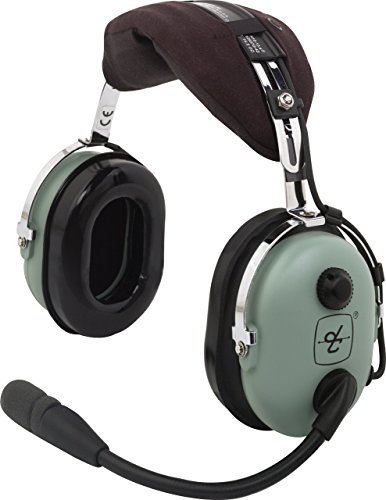
Walk into any flight school in America and look at the headsets hanging on the wall. You will see the same iconic green ear cups over and over again: the David Clark H10-13.4. There is a reason this headset has dominated student pilot training for more than 40 years — it solves the three problems every student pilot faces from day one.
Problem 1: Cockpit noise destroys communication. A Cessna 172 cockpit at cruise power produces 85-95 dB of noise. Without adequate hearing protection and noise reduction, you cannot hear ATC clearly, your instructor's voice gets lost in the drone, and your radio transmissions come through garbled on the other end. The H10-13.4's 23 dB passive noise reduction and M-7A noise-cancelling microphone cut through the noise so both you and ATC can communicate clearly.
Problem 2: Cheap headsets cause fatigue and hot spots. Student pilots fly 2-3 hour training sessions regularly. A poorly fitting headset with hard ear pads creates pressure points that distract you from flying the airplane. The H10-13.4's gel ear seals distribute clamping force evenly, and at 26 oz, the headset is light enough for multi-hour flights without the headband digging into your scalp.
Problem 3: Student pilots need gear that lasts. You are not buying a headset for 40 hours of Private Pilot training — you are buying it for the 250+ hours through PPL, Instrument Rating, Commercial, and CFI. The David Clark H10-13.4 is built to last 10-15 years with basic ear seal replacements. That $279.95 investment amortizes to under $25 per year over its lifespan.
If you are preparing for your Private Pilot written exam, pair your headset investment with serious knowledge preparation. Study for free with our Private Pilot exam study guide.

David Clark H10-13.4 Aviation Headset
by David Clark
$279.95
- Industry standard for student pilots for 40+ years with 23 dB passive noise reduction
- M-7A noise-cancelling microphone for clear radio transmissions — FAA TSO-C139a certified
- Gel ear seals and 26 oz lightweight design — made in USA by David Clark Company
Passive Noise Reduction (PNR) vs Active Noise Reduction (ANR) Explained
This is the most important decision when choosing an aviation headset, and understanding the technology helps you make the right choice for your stage of training.
How PNR Works
Passive Noise Reduction blocks cockpit noise through physical barriers — dense ear cup construction, tight-fitting gel or foam seals, and acoustic insulation material packed inside the ear cups. Think of it like noise-blocking earmuffs. The David Clark H10-13.4 achieves 23 dB of passive noise reduction through decades of ear cup engineering.
PNR is most effective against mid and high-frequency noise — the whine of propeller tips, avionics cooling fans, and wind noise around the canopy. It is less effective against low-frequency engine drone, which has long wavelengths that penetrate physical barriers more easily.
How ANR Works
Active Noise Reduction adds electronic noise cancellation on top of passive insulation. Tiny microphones inside each ear cup continuously sample the ambient noise. A digital signal processor (DSP) generates an inverted sound wave — the exact opposite phase of the noise — and plays it through speakers inside the ear cups. When the noise wave and the anti-noise wave meet, they cancel each other out. This is called destructive interference.
ANR is dramatically more effective against low-frequency noise, precisely where PNR falls short. The constant engine drone that causes cumulative hearing fatigue over long flights is exactly what ANR eliminates best. The Lightspeed Sierra ($649.00) delivers ANR on top of its passive insulation, resulting in a noticeably quieter cockpit environment.
Which Should a Student Pilot Choose?
Budget-conscious or exploring aviation: Start with PNR. The David Clark H10-13.4 ($279.95) provides more than adequate noise reduction for training flights. Thousands of airline captains started their careers with this exact headset.
Career-track and can afford it: The Lightspeed Sierra ($649.00) will reduce fatigue, protect your hearing better, and serve you through every certificate and rating. The Bluetooth connectivity for ForeFlight integration is increasingly useful as cockpit technology evolves.
The hybrid approach: Start with the David Clark H10-13.4 for your first 50-100 hours. Once you confirm this is your career path, upgrade to ANR and keep the David Clark as a backup. Every professional pilot carries a backup headset — if your ANR battery dies mid-flight, you need a reliable PNR fallback.
For the pilot exam: Aviation physiology questions on the Private Pilot written exam cover noise-induced hearing loss and the effects of noise on pilot performance. Understanding how PNR and ANR protect hearing is directly relevant to exam content. Practice with our free pilot exam questions.
Why Clear Communication Matters for Your PPL Checkride
Radio communication is not just a skill — it is a checkride evaluation criterion. The FAA Airman Certification Standards (ACS) explicitly evaluate your ability to communicate effectively with ATC and other aircraft. Your headset is your communication tool.
What the Examiner Is Listening For
- Correct phraseology — Using standard ATC terminology ("Cessna 12345, downwind runway 27" not "Hey tower, I'm on the left side of the runway")
- Accurate readbacks — Repeating clearances correctly, especially runway assignments, altimeter settings, and hold short instructions
- Situational awareness — Monitoring CTAF at non-towered airports and making appropriate position reports
- Confidence and clarity — Speaking at a natural pace, not rushing or mumbling
How Your Headset Affects Radio Performance
A headset with poor noise reduction forces you to concentrate harder just to hear ATC — cognitive load that should be devoted to flying the airplane. A headset with a poor microphone produces garbled transmissions that ATC asks you to repeat — adding stress and disrupting your flow during the checkride.
The David Clark M-7A microphone on the H10-13.4, H10-13S, and H10-30 is specifically designed for aviation communication. It is noise-cancelling, meaning it rejects ambient cockpit noise and only transmits your voice. This is why David Clark headsets produce clear, professional-sounding radio calls even in loud cockpit environments.
Checkride tip: Practice your radio calls wearing the headset you will use on checkride day. The microphone position, the sound of your own voice through the headset, and the noise reduction level all affect how you communicate. Do not switch headsets right before your checkride.
David Clark Headset Lineup: H10-13.4 vs H10-13S vs H10-30
Choosing between David Clark models depends on your training plan, whether you wear glasses, and whether stereo audio matters to you.
David Clark H10-13.4 — The Standard ($279.95)
Best for: Student pilots starting PPL training who want the proven, reliable choice.
The H10-13.4 is the headset that built David Clark's reputation in aviation. Mono audio, 23 dB passive noise reduction, gel ear seals, M-7A noise-cancelling microphone, and the classic over-the-head headband design. At 26 oz, it is comfortable for typical 2-3 hour training flights. FAA TSO-C139a certified. Made in Worcester, Massachusetts, USA.
This is the headset virtually every CFI recommends to new students, and for good reason — it works, it lasts, and it does not cost a fortune. Over 40 years of flight school use have proven its reliability.
David Clark H10-13.4 Aviation Headset
by David Clark
$279.95
- Industry standard for student pilots for 40+ years with 23 dB passive noise reduction
- M-7A noise-cancelling microphone for clear radio transmissions — FAA TSO-C139a certified
- Gel ear seals and 26 oz lightweight design — made in USA by David Clark Company
David Clark H10-13S — Stereo for IFR Training ($329.95)
Best for: Student pilots who plan to pursue an Instrument Rating after PPL.
The H10-13S is identical to the H10-13.4 in every way except one: stereo audio. This means your avionics can route NAV1 audio to your left ear and NAV2 audio to your right ear simultaneously. During IFR training, this capability is genuinely useful — you can monitor a VOR approach frequency in one ear while listening to ATIS or a second navigation frequency in the other.
For $50 more than the mono H10-13.4, the H10-13S future-proofs your headset investment. If you know you will pursue an instrument rating (and most career-track pilots will), the stereo upgrade makes financial sense. Buying a mono headset now and replacing it with a stereo headset later costs more than just buying stereo from the start.
When mono is fine: If you are flying for recreation only and do not plan to pursue an instrument rating, the mono H10-13.4 handles VFR flying perfectly. ATC communications are mono, and VFR navigation does not require monitoring multiple NAV frequencies simultaneously.
David Clark H10-13S Stereo Headset
by David Clark
$329.95
- Stereo version of the H10-13.4 — route NAV1 and NAV2 to separate ears for IFR training
- Same 23 dB passive noise reduction and gel ear seals as the mono version
- Stereo compatible with modern avionics — ideal for instrument rating and beyond
David Clark H10-30 — Lightest Option ($219.95)
Best for: Pilots who wear sunglasses or want the lightest possible David Clark.
The H10-30 takes a completely different design approach — an under-the-chin headband instead of the traditional over-the-head design. At 16.8 oz, it is the lightest David Clark headset by a significant margin (the H10-13.4 weighs 26 oz). The under-the-chin design eliminates the headband entirely from the top of your head, which has two practical benefits: no hot spot on the crown of your head during long flights, and easy compatibility with sunglasses and hats.
The H10-30 uses the same M-7A noise-cancelling microphone as the H10-13.4 series, so communication quality is identical. The trade-off is slightly less noise reduction — the under-the-chin design does not clamp as firmly as the over-the-head design, which can reduce the ear seal contact pressure.
At $219.95, the H10-30 is also the most affordable David Clark option. For student pilots on a tighter budget who still want the David Clark quality and reputation, the H10-30 is a smart entry point.

David Clark H10-30 Aviation Headset
by David Clark
$219.95
- Lightest David Clark at 16.8 oz — under-the-chin headband design
- Same M-7A noise-cancelling microphone as the H10-13.4 series
- Ideal for pilots who wear sunglasses — more affordable entry point at $219.95
The Premium Option: Lightspeed Sierra ANR
For student pilots planning a professional aviation career — airline, corporate, charter, or CFI — the Lightspeed Sierra represents the top end of headset technology for training use.
What Makes the Sierra Different
The Sierra's Active Noise Reduction is a fundamentally different experience from passive headsets. The first time you flip the ANR switch on in a loud cockpit, the low-frequency engine drone drops away dramatically. What remains is a quiet environment where ATC calls, your instructor's voice, and your own thoughts come through clearly without straining.
Key features that matter for training:
- ANR noise cancellation — Reduces cockpit fatigue on long cross-country flights. After a 3-hour flight with ANR, you feel noticeably fresher than with PNR alone.
- Bluetooth audio — Connect your iPad running ForeFlight to receive weather alerts, ATIS audio, and GPS announcements directly in your headset. This integration is increasingly standard in modern training environments.
- Plush ear seals — Protein leather ear seals that are softer and more comfortable than standard gel seals for extended wear.
- 5-year warranty — Lightspeed's warranty covers manufacturing defects and normal wear for five years, providing long-term investment protection.
The Cost Reality
The Sierra at $649.00 is more than double the David Clark H10-13.4 at $279.95. For a student pilot who will accumulate 250+ hours through multiple certificates and ratings, the per-hour cost difference narrows: Sierra costs approximately $2.60 per flight hour over 250 hours, versus $1.12 for the H10-13.4. The question is whether the comfort, fatigue reduction, and Bluetooth integration are worth the $1.48 per hour premium.
For career-track pilots who will eventually log thousands of hours, the Sierra (or a comparable ANR headset) is an inevitable purchase. Buying it at the start of training means you benefit from ANR for your entire career, not just the later portion.

Lightspeed Aviation Sierra ANR Headset
by Lightspeed
$649.00
- Active Noise Reduction (ANR) — highest noise cancellation for cockpit fatigue reduction
- Bluetooth audio input for ForeFlight alerts and GPS announcements
- Premium plush ear seals with 5-year warranty — best for career-track student pilots
Best Budget Option: ASA AirClassics HS-1A
Not every student pilot can invest $280-$650 in a headset on day one of flight training. The ASA AirClassics HS-1A fills the budget gap with a quality headset from one of aviation's most trusted names.
Why the ASA HS-1A Works for New Students
ASA (Aviation Supplies & Academics) publishes the most widely used pilot training textbooks, oral exam guides, and test prep materials in the United States. Their headset carries the same brand reputation for quality and reliability.
The HS-1A delivers the fundamentals well: 23 dB noise reduction (matching David Clark's specification), a noise-cancelling microphone for clear radio transmissions, a stereo/mono switch for flexibility, and standard GA dual plugs that fit every general aviation trainer aircraft.
At $149.95, the HS-1A costs roughly half the price of a David Clark H10-13.4. This makes it accessible for students who are still exploring whether aviation is the right career path, or for those who need to spread their training expenses over time.
The Stepping Stone Strategy
Many flight schools recommend the following approach for budget-conscious students:
- Start with the ASA HS-1A ($149.95) for your first 20-30 hours of training
- Confirm your commitment to aviation — decide if this is a career or a recreational pursuit
- Upgrade to David Clark or Lightspeed once you are committed, and keep the ASA as your backup headset
This approach limits your initial financial exposure while still providing quality communication and noise reduction for early training. The ASA HS-1A will serve perfectly well as a backup headset for years after you upgrade.

ASA AirClassics HS-1A Pilot Headset
by ASA
$149.95
- 23 dB noise reduction with noise-cancelling mic and stereo/mono switch
- GA dual plugs fit any general aviation aircraft — trusted ASA brand
- Most affordable quality headset at $149.95 — solid stepping stone before upgrading
Mono vs Stereo: When Does Stereo Audio Actually Matter?
The mono vs stereo debate confuses many student pilots. Here is the practical reality, tied directly to your training progression.
VFR Training (PPL): Mono Is Fine
During Private Pilot training, your primary audio needs are:
- ATC communications — These are mono. Tower, approach, departure, and CTAF frequencies all transmit mono audio.
- ATIS/AWOS — Weather broadcasts are mono.
- Intercom — Instructor-student communication is mono.
A mono headset like the David Clark H10-13.4 handles all of these perfectly. You are not missing anything by choosing mono for VFR-only flying.
IFR Training (Instrument Rating): Stereo Becomes Valuable
During Instrument Rating training, audio routing changes significantly:
- NAV1 and NAV2 separation — You may need to monitor a VOR approach frequency on NAV1 while identifying a cross-radial station on NAV2. Stereo lets you route each to a separate ear.
- ILS approach monitoring — Listening to the localizer and glideslope audio cues while monitoring ATC on COM1.
- Morse code identification — FAR 91.171 requires pilots to identify VOR stations by their Morse code identifier. With stereo, you can listen to the Morse code on one side without it interfering with ATC audio on the other.
The David Clark H10-13S ($329.95) adds stereo capability for $50 more than the H10-13.4. If your training plan includes an instrument rating, the $50 stereo premium is worth it.
The Practical Decision
| Training Plan | Recommended Audio | Best Headset Choice |
|---|---|---|
| PPL only (recreational) | Mono | David Clark H10-13.4 ($279.95) |
| PPL + Instrument Rating | Stereo | David Clark H10-13S ($329.95) |
| Career track (PPL through CFI) | Stereo or ANR | Lightspeed Sierra ($649.00) |
| Budget / exploring aviation | Either | ASA AirClassics HS-1A ($149.95) |
How to Test Fit an Aviation Headset Before Long Cross-Country Flights
Headset comfort is not something you notice during a 30-minute pattern session. It becomes critical during 2-4 hour cross-country flights when pressure points turn into genuine distractions from flying.
The 30-Minute Ground Test
Before committing to a headset, wear it for at least 30 minutes while studying or watching a video. Check for:
- Headband pressure — Does the top of the headband create a hot spot on the crown of your head? If so, consider the David Clark H10-30 with its under-the-chin design.
- Ear seal clamping — Do the ear cups press too tightly against your head? The clamping force should be firm enough to maintain a seal but not so tight that it causes jaw pain or temple pressure.
- Ear cup coverage — Your entire ear should fit inside the ear cup without folding. If your ears touch the speaker inside the cup, the headset ear cups are too small for your ears.
- Glasses compatibility — If you wear sunglasses or prescription glasses, put them on with the headset. The frames should not break the ear seal significantly. Some foam ear seals accommodate glasses better than gel seals by conforming to the frame shape.
- Microphone position — The boom mic should reach about two finger-widths from the corner of your mouth. Too close and your transmissions will have plosive distortion (popping on P and B sounds). Too far and your transmissions will be quiet and noisy.
The In-Flight Confirmation
After the ground test, fly a 1.5-2 hour training session with the headset. Ground testing cannot replicate the vibration, temperature, and noise environment of actual flight. Pay attention to:
- Noise reduction effectiveness — Can you hear ATC and your instructor clearly at cruise power without straining?
- Microphone clarity — Ask your instructor or ATC if your transmissions are clear and at appropriate volume.
- Comfort after 90 minutes — This is when marginal headsets start causing discomfort. If you are pain-free at 90 minutes, the headset will handle cross-country flights.
Most pilot shops and some flight schools allow headset trials or have demo units. Take advantage of this before committing to a purchase.
Quick Comparison: Which Aviation Headset Should You Buy?
| Feature | H10-13.4 ($280) | H10-13S ($330) | H10-30 ($220) | Sierra ($649) | HS-1A ($150) |
|---|---|---|---|---|---|
| Noise Reduction | 23 dB PNR | 23 dB PNR | PNR | ANR + PNR | 23 dB PNR |
| Audio | Mono | Stereo | Mono | Stereo | Stereo/Mono |
| Weight | 26 oz | 26 oz | 16.8 oz | 16 oz | Standard |
| Microphone | M-7A NC | M-7A NC | M-7A NC | NC Electret | NC |
| Bluetooth | No | No | No | Yes | No |
| Headband | Over-head | Over-head | Under-chin | Over-head | Over-head |
| Warranty | Limited | Limited | Limited | 5-year | Limited |
| Best For | PPL students | IFR students | Glasses wearers | Career pilots | Budget entry |
Decision framework:
- First headset, standard budget? Get the David Clark H10-13.4 ($279.95). Forty years of flight school proven reliability.
- Planning instrument training? Get the David Clark H10-13S ($329.95). Stereo audio for $50 more future-proofs your investment.
- Wear sunglasses constantly? Get the David Clark H10-30 ($219.95). Under-chin design eliminates headband-glasses conflict.
- Career-track and can invest? Get the Lightspeed Sierra ($649.00). ANR and Bluetooth pay dividends over thousands of flight hours.
- Exploring aviation on a budget? Get the ASA AirClassics HS-1A ($149.95). Upgrade later once you are committed.
Your Aviation Headset Is a Career Investment
Think of your headset purchase in terms of your entire aviation career, not just your first few flights:
| Certificate/Rating | Typical Hours | Cumulative Hours |
|---|---|---|
| Private Pilot (PPL) | 40-70 | 40-70 |
| Instrument Rating | 40-60 | 80-130 |
| Commercial Pilot | 120-150 | 200-280 |
| CFI/CFII | 20-30 | 220-310 |
A David Clark H10-13.4 at $279.95 over 250 hours of training costs $1.12 per flight hour. Over a 12-year headset lifespan, it costs $23.33 per year. Compare that to the cost of a single discovery flight ($200-$350) and the headset is clearly the best per-dollar investment in your flight training equipment.
The headset you buy today will be on your head for your first solo, your first cross-country, your PPL checkride, your instrument checkride, and potentially thousands of flight hours beyond. Buy quality once rather than replacing cheap headsets repeatedly.
Free Pilot Exam Prep Resources
Your aviation headset is one piece of your pilot training toolkit. Build your aeronautical knowledge with these free resources:
- Free Private Pilot Study Guide — Complete coverage of aerodynamics, weather, navigation, FAR/AIM regulations, and radio communication
- Free Instrument Rating Exam Prep — IFR procedures, approach plates, navigation systems, and instrument meteorology
- Free CFI Exam Prep — Fundamentals of instruction, teaching techniques, and advanced aeronautical knowledge
- AI Tutor — 10 free questions per day — ask about airspace, weather, regulations, radio phraseology, or any pilot exam topic
- Practice Questions — Test your knowledge with exam-style questions and detailed explanations for every answer
The AI tutor is particularly useful for radio communication practice. Ask it questions like "Walk me through the correct radio calls for a VFR arrival at a Class D airport" or "Explain the difference between a special VFR clearance and a VFR-on-top clearance" and get detailed, exam-level responses instantly.
Final Verdict
Buy the David Clark H10-13.4 ($279.95) if you are starting PPL training and want the most proven, reliable aviation headset on the market. The iconic green headset has earned its reputation through 40+ years of flight school dominance — 23 dB noise reduction, the M-7A noise-cancelling mic, gel ear seals, and USA manufacturing quality.
Buy the David Clark H10-13S ($329.95) if you plan to pursue an Instrument Rating. Stereo audio for $50 more is a smart investment that avoids buying a second headset later.
Buy the David Clark H10-30 ($219.95) if you wear sunglasses or want the lightest, most affordable David Clark with the under-the-chin headband design.
Buy the Lightspeed Sierra ($649.00) if you are committed to an aviation career and want ANR noise cancellation, Bluetooth integration, and premium comfort from day one.
Buy the ASA AirClassics HS-1A ($149.95) if you are exploring aviation on a budget. Upgrade to David Clark or Lightspeed once you confirm your commitment to flying.
Whatever headset you choose, pair it with serious aeronautical knowledge preparation. Start studying today with our free Private Pilot study guide and practice questions.
As an Amazon Associate, OpenExamPrep earns from qualifying purchases. All recommendations are based on editorial review.

 Free CE

