 View
ViewWhy Fuel Testing Is the Most Critical Preflight Step
Every pilot learns it on day one of flight training: before you fly, you sump the fuel. It sounds simple — push a tube against a drain valve, collect a sample, look at it. But this 30-second check at each drain point is the single most important thing you do before starting the engine. Contaminated fuel causes engine failures. Engine failures in flight kill people.
Federal Aviation Regulation FAR 91.103 requires the pilot in command to become familiar with all available information concerning a flight. Fuel quality is about as fundamental as "available information" gets. FAR 91.7 goes further: you cannot operate an aircraft that is not in airworthy condition. An aircraft with water-contaminated fuel is not airworthy. Period.
The fuel tester is your last line of defense between contaminated fuel and a powerplant failure. It costs less than $10. There is no excuse for not carrying one, and there is no excuse for not using it properly on every single flight.
If you are preparing for your private pilot certificate, instrument rating, ATP, or CFI checkride, fuel sampling technique is evaluated during the practical test. Study preflight procedures for free with our ATP pilot exam study guide.

Aviation Fuel Tester with Built-in Cowl Screwdriver, Model 391S
by Sporty's
$8.95
- Classic fuel tester carried by every pilot — built-in cowl screwdriver for opening fuel drain valves
- Clear tube shows fuel color and water contamination instantly during preflight
- The original and most trusted fuel tester design in general aviation
What You Are Checking For: The Four Threats
When you collect a fuel sample, you are screening for four specific contaminants. Understanding what each one looks like and why it matters is essential knowledge for every pilot certificate level.
1. Water Contamination — The Most Common Threat
Water is the number one fuel contaminant in general aviation. It enters fuel tanks through condensation (temperature changes cause moisture in the air space to condense on tank walls), leaking fuel caps, and contaminated fuel supplies.
How to identify water in your sample: Water is denser than avgas. It sinks to the bottom of your fuel tester. If you are sampling 100LL (which is dyed blue), you will see a clear layer at the bottom of the tube with blue fuel sitting on top. The boundary between water and fuel is usually visible as a distinct line. Even a few drops of water at the bottom of your tester means there is more in the tank — keep draining until the sample runs clean.
Why water is dangerous: Water does not combust like avgas. If water reaches the engine, it disrupts combustion and can cause:
- Engine roughness and power loss
- Complete engine stoppage (especially if a slug of water blocks the fuel line)
- Carburetor ice formation at lower altitudes and temperatures
- Internal corrosion of fuel system components over time
2. Wrong Fuel Type — The Catastrophic Mistake
100LL avgas is dyed blue. This color coding exists specifically so you can verify the correct fuel type visually. Jet-A (turbine fuel) is clear to straw-colored. If you expect blue and see clear fluid, something is seriously wrong.
Misfueling — putting Jet-A in a piston engine — causes catastrophic engine damage. The engine may start and run initially, but Jet-A's lower octane rating and different combustion properties lead to detonation that destroys pistons, cylinders, and valves. This has caused fatal accidents.
3. Sediment and Debris
Rust particles, dirt, rubber fragments from deteriorating fuel bladders, and other solid contaminants can clog fuel filters, injectors, and carburetor jets. In your fuel sample, sediment appears as visible particles floating in the fuel or settling at the bottom. Any visible particles warrant continued draining and a maintenance inspection.
4. Discoloration and Degradation
Healthy 100LL is a consistent, clear blue. Fuel that appears brownish, greenish, or unusually pale may indicate contamination from other fuel types, chemical degradation from long storage, or microbial growth (more common in Jet-A but possible in avgas). If the color looks wrong, trust your eyes and investigate.
How Fuel Testers Work: Tube vs Jar
There are two basic designs of aviation fuel testers, and they serve different purposes. Understanding both helps you choose the right tool — or better yet, carry both.
Tube Testers (Classic Design)
The classic tube fuel tester — exemplified by the Sporty's Model 391S — is a clear plastic tube approximately 6 inches long with a push pin on one end and a cowl screwdriver tip on the other. You press the push pin against a quick-drain valve, fuel flows into the tube, and you visually inspect the sample.
Advantages:
- Pocket-sized — fits in a shirt pocket or flight bag side pocket
- Built-in cowl screwdriver opens standard fuel drain valves
- Instant visual check — hold it up to the light and look
- Costs under $10
- The universal standard — every flight school teaches with one
Limitations:
- Small sample size (1-2 oz) — trace contamination harder to detect
- Fuel is discarded after sampling — environmentally wasteful over time
- Tube can stain or cloud with age, reducing visibility
Aviation Fuel Tester with Built-in Cowl Screwdriver, Model 391S
by Sporty's
$8.95
- Classic fuel tester carried by every pilot — built-in cowl screwdriver for opening fuel drain valves
- Clear tube shows fuel color and water contamination instantly during preflight
- The original and most trusted fuel tester design in general aviation
Jar Testers (GATS Jar Design)
The GATS jar and similar jar-style testers take a different approach. Instead of a small tube, you collect 8-12 ounces of fuel in a transparent jar. After inspection, you pour the clean fuel back into the tank through a built-in strainer screen that catches any water droplets or debris.
Advantages:
- Larger sample — easier to detect trace contamination
- Environmentally friendly — clean fuel returns to the tank, not the ramp
- Built-in strainer screen catches contaminants during return
- Better for thorough first-flight-of-the-day inspections
- Collects from multiple drain points for a comprehensive check
Limitations:
- Bulkier — does not fit in a pocket
- More expensive ($13-$17)
- Requires careful pouring to return fuel without spilling
The GATS jar concept is simple but brilliant: instead of draining fuel onto the ramp and wasting it, you collect it in a jar, verify it is clean, and pour it back. The strainer screen on top of the jar catches any water or debris during the return pour. Over hundreds of flights, this saves gallons of fuel and keeps avgas off the tarmac.

GATS Jar Environmentally Friendly Fuel Tester - 12oz
by GATS
$16.95
- 12 oz jar collects fuel for inspection then returns clean fuel to tank through built-in strainer screen
- Eliminates fuel waste — environmentally friendly design reduces ramp contamination
- Industry standard jar tester for thorough preflight fuel quality checks
The Sporty's 391S: The Fuel Tester Every Pilot Carries
The Sporty's Model 391S is to fuel testing what the Cessna 172 is to flight training — it is the default. Walk into any FBO, open any flight bag, check any rental aircraft's seat pocket, and you will find a 391S or something very similar.
At $8.95, this is one of the least expensive pieces of aviation equipment you will ever buy, and one of the most important. The design has barely changed in decades because it does not need to change. Clear tube. Push pin for quick-drain valves. Cowl screwdriver on the other end. Done.
Why the built-in cowl screwdriver matters: Many aircraft fuel drain valves (especially older Cessnas) require a screwdriver-style tool to activate. The 391S puts this tool on the opposite end of the tester, so you always have it when you need it. No fumbling in your flight bag for a separate screwdriver during preflight.
Proper technique with a tube tester:
- Push the pin firmly against the quick-drain valve
- Allow fuel to flow into the tube until approximately three-quarters full
- Release the valve and inspect the sample immediately
- Hold the tube at eye level against a light background (the wing works well)
- Check for water (clear layer at bottom), correct color (blue for 100LL), and sediment
- If contamination is present, drain into a container and continue sampling until clean
- If the sample is clean, discard the fuel in an approved waste container — never on the ramp
Aviation Fuel Tester with Built-in Cowl Screwdriver, Model 391S
by Sporty's
$8.95
- Classic fuel tester carried by every pilot — built-in cowl screwdriver for opening fuel drain valves
- Clear tube shows fuel color and water contamination instantly during preflight
- The original and most trusted fuel tester design in general aviation
GATS Jar: Collect, Test, Return
The GATS jar ($16.95 for the 12 oz model) represents the environmentally conscious approach to fuel testing. Instead of discarding every fuel sample, you collect it in a jar, verify quality, and return the clean fuel to the tank.
How the GATS jar works:
- Remove the strainer screen cap from the jar
- Hold the jar under the fuel drain valve and collect your sample
- Let the sample settle for 30 seconds — water sinks to the bottom
- Inspect through the clear jar walls for water, sediment, and color
- If the sample is clean, replace the strainer screen cap and pour the fuel back into the tank filler opening — the screen catches any missed contaminants
- If the sample is contaminated, do not return it — dispose in an approved waste container and continue draining from the aircraft
Why environmentally friendly matters: A pilot who flies 3 times per week, sumping 10+ drain points each time with a tube tester, discards approximately 30-40 ounces of avgas per week onto the ramp. That is over 10 gallons per year of 100LL (which contains lead) dumped on the ground. The GATS jar eliminates this waste almost entirely.
Budget alternative: The generic 12 oz jar tester ($12.99) provides similar jar-style functionality at a lower price point. It uses the same collect-inspect-return workflow, though the build quality and strainer screen may not match the original GATS jar's longevity.
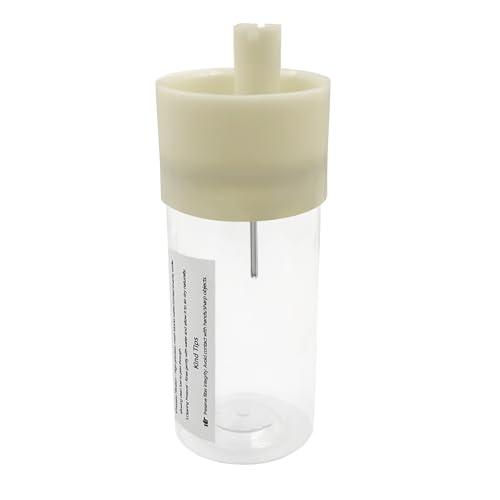
Jar Aviation Fuel Tester 12oz
by Generic
$12.99
- 12 oz fuel testing jar with water and oil separation detection
- Reusable contamination detection design — budget alternative to GATS jar
- Collects and returns clean fuel to reduce waste during preflight checks
Compact Fuel Testers: The Pocket-Friendly Options
Not every fuel tester needs to be the Sporty's 391S. Several compact alternatives offer slightly different form factors while performing the same essential function.
Aircraft Fuel Tester AFT-1 ($8.50)
The AFT-1 is a compact, pocket-sized alternative in a black housing. Its push-to-sample design works with standard quick-drain valves, and the clear collection window provides visibility for color and water checks. Some pilots prefer its form factor over the traditional tube design, especially in smaller flight bags.

Aircraft Fuel Tester - AFT-1 Black
by Aircraft Fuel Tester
$8.50
- Compact pocket-sized fuel tester with simple push-to-sample operation
- Clear collection window for visual fuel color and water inspection
- Black housing — easy to carry in flight bag alongside other preflight tools
Generic Aircraft Fuel Tester ($7.95)
At the lowest price point, this basic fuel tester gets the job done. Clear tube, push-to-drain operation, visual inspection capability. It lacks the cowl screwdriver of the Sporty's 391S, but for pilots who already carry a separate screwdriver or whose aircraft have easy-push drain valves, the savings are real. Every pilot should have a backup fuel tester — even if your primary is the 391S, toss one of these in your backup kit.

Aircraft Fuel Tester
by Generic
$7.95
- Basic push-to-drain fuel tester with clear tube for visual inspection
- Most affordable option — every pilot should have one as a backup
- Simple, reliable design for quick sump checks at every drain point
Fuel Testing During Your Practical Test
If you are preparing for any pilot practical test — private, instrument, commercial, ATP, or CFI — understand that the Designated Pilot Examiner (DPE) evaluates your preflight inspection with scrutiny. Fuel sampling is not a box to check; it is a demonstration of airmanship.
What the DPE Is Watching For
The Airman Certification Standards (ACS) require you to demonstrate proper preflight procedures. During the fuel sampling portion, the DPE evaluates:
-
Do you know where all the drain points are? On a Cessna 172, there are 13 sump points. On a Piper Archer, there are fewer. The DPE may ask you to identify the location and purpose of each drain point. If you only check two of thirteen drains, that is a problem.
-
Do you actually look at the sample? Rushing through fuel sampling — pushing the drain, glancing at the tester for half a second, dumping it — signals poor habits. Hold the tester up to the light. Look at it. Take your time. The DPE notices.
-
Can you explain what you are checking for? During the oral portion, expect questions like "What are you looking for in a fuel sample?" and "How would you identify water in avgas?" Your answers should cover water (clear, sinks to bottom), correct fuel type (blue for 100LL), sediment, and discoloration.
-
Do you check the fuel strainer/gascolator? The gascolator is the lowest point in the fuel system. If there is water anywhere in the system, it collects here. Skipping the gascolator drain is a red flag for the examiner.
-
What is your decision if you find contamination? The correct answer is: continue draining until the sample is clean. If contamination persists after multiple samples, ground the aircraft and notify maintenance. The DPE wants to hear that you will not fly with questionable fuel.
Technique That Impresses Examiners
- Carry a proper fuel tester (the Sporty's 391S or a GATS jar), not a random cup or jar from the FBO
- Check every drain point systematically — do not skip any
- Verify fuel quantity visually (open the caps and look) in addition to gauge readings
- Comment on what you observe: "Sample is blue, no water, no sediment — consistent with 100LL"
- If using a GATS jar, explain the return-clean-fuel concept — it shows aviation knowledge beyond the minimum
Study for your checkride with our free instrument rating study guide and CFI exam prep.
Best Practices for Fuel Sampling
These techniques apply whether you fly a Cessna 152 or a turbocharged Bonanza. Incorporate them into every preflight.
When to Sump
- First flight of the day: Always. Water and contaminants settle overnight. This is your most important sump check.
- After refueling: Wait 10-15 minutes for water to separate from the fuel, then sump all drain points. Fuel delivery can introduce water from the fuel truck's tanks.
- After the aircraft has sat for more than a few hours: Temperature changes during the day cause condensation in partially filled tanks.
- After rain or washing: Any time water may have entered through fuel caps or vents.
Proper Technique
- Start at the fuel strainer/gascolator — the lowest point collects the most contamination
- Work outward to wing drains — check every drain point identified in the POH
- Collect a full sample — a half-filled tester is harder to evaluate
- Hold the sample against the wing (white background) or up to the sky — good lighting reveals contamination
- Let the sample settle for a few seconds — water needs a moment to sink
- If contaminated, keep draining — do not stop until the sample is clean
- Check fuel quantity visually — never rely solely on fuel gauges (FAR 23.1337 only requires gauges to be accurate at "empty")
- Secure all fuel caps and drains — verify caps are properly seated and drain valves are fully closed
Common Mistakes
- Only checking one or two drain points — contamination may be localized in one tank or line
- Rushing the visual inspection — take a full 2-3 seconds to examine each sample
- Sumping into a colored container — use a clear container so you can see the fuel color accurately
- Not waiting after refueling — water takes time to separate from fuel
- Ignoring a questionable sample — when in doubt, drain more or ground the aircraft
Quick Comparison: Which Fuel Tester Should You Buy?
| Feature | Sporty's 391S ($8.95) | GATS Jar 12oz ($16.95) | Generic Jar 12oz ($12.99) | AFT-1 Black ($8.50) | Generic Tester ($7.95) |
|---|---|---|---|---|---|
| Type | Tube | Jar | Jar | Tube | Tube |
| Capacity | ~2 oz | 12 oz | 12 oz | ~2 oz | ~2 oz |
| Return Fuel to Tank | No | Yes | Yes | No | No |
| Cowl Screwdriver | Yes | No | No | No | No |
| Pocket-Sized | Yes | No | No | Yes | Yes |
| Best For | Every pilot (primary tester) | Thorough preflight / eco-conscious | Budget jar alternative | Compact alternative | Backup tester |
Decision framework:
- Every pilot needs at minimum: The Sporty's 391S ($8.95). It is the universal standard. Buy it. Carry it. Use it.
- Flying frequently? Add the GATS Jar ($16.95) for thorough first-flight-of-the-day inspections and to reduce fuel waste.
- On a student pilot budget? The generic jar tester ($12.99) gives you jar-style testing for less.
- Want a compact backup? The AFT-1 ($8.50) or generic tester ($7.95) lives in your secondary flight bag.
- Best combo: 391S for quick sump checks at each drain point + GATS jar for the first flight of the day. Total cost: $25.90 for complete fuel testing capability.
Free Pilot Exam Prep Resources
Your fuel tester protects you in the air. Your knowledge protects you on the checkride. Build both with these free resources:
- Free ATP Pilot Exam Study Guide — Complete coverage of FARs, aircraft systems, weather, navigation, and practical test standards
- Free Instrument Rating Study Guide — IFR procedures, approaches, weather minimums, and instrument flight skills
- Free CFI Exam Prep — Fundamentals of instruction, teaching techniques, and flight instructor responsibilities
- AI Tutor — 10 free questions per day — ask about FARs, aircraft systems, weather theory, navigation, or any aviation exam topic
- Practice Questions — Test your knowledge with checkride-style questions and detailed explanations
The AI tutor is especially useful for scenario-based practice. Try asking "Walk me through the decision-making process when I find water in my fuel sample during a cross-country preflight" or "Explain the differences between 100LL and Jet-A fuel and why misfueling is catastrophic" for detailed, exam-level responses.
Final Verdict
Buy the Sporty's 391S ($8.95). Period. This is the fuel tester every pilot in America carries, and for good reason — it works, it is durable, it has a built-in cowl screwdriver, and it costs less than a sandwich at the airport restaurant. If you do not own one, buy one today.
Add the GATS Jar ($16.95) when you start flying regularly. The ability to return clean fuel to the tank reduces waste, and the larger sample volume makes contamination detection more reliable. Together, the 391S and GATS jar cover every fuel testing scenario you will encounter.
For budget-conscious student pilots, the generic jar tester ($12.99) provides jar-style functionality at a lower cost, and the AFT-1 ($8.50) or generic tester ($7.95) serve as solid backup options.
The most important thing is not which fuel tester you buy — it is that you use one on every flight. A $9 fuel tester has prevented more accidents than any avionics upgrade ever made. Pair it with thorough knowledge of fuel systems and preflight procedures, and start your exam preparation today with our free pilot exam study guides and practice questions.
As an Amazon Associate, OpenExamPrep earns from qualifying purchases. All recommendations are based on editorial review.

 Free CE

