Required Minimum Distribution (RMD)
RMDs are mandatory annual withdrawals from traditional IRAs and employer-sponsored retirement plans beginning at age 73 under SECURE 2.0. Roth IRAs are exempt during the owner's lifetime. A 25% penalty applies for failure to take RMDs.
Exam Tip
RMD begins at 73. Penalty = 25% (10% if corrected). Roth IRA = no RMD for owner. Delaying first RMD to April 1 means two distributions in second year.
What are Required Minimum Distributions?
RMDs ensure tax-deferred retirement funds are eventually subject to income tax. SECURE 2.0 Act raised the beginning age to 73.
RMD Key Rules
| Rule | Detail |
|---|---|
| Beginning age | 73 (SECURE 2.0) |
| First RMD deadline | April 1 of year after turning 73 |
| Subsequent deadlines | December 31 each year |
| Penalty for failure | 25% excise tax (10% if corrected timely) |
| Calculation | Prior year-end balance / life expectancy factor |
Account Types and RMDs
| Account | RMD Required? |
|---|---|
| Traditional IRA | Yes, at 73 |
| 401(k), 403(b) | Yes (still-working exception) |
| Roth IRA | No (during owner's lifetime) |
| Roth 401(k) | No (SECURE 2.0 eliminated) |
| Inherited IRA | Yes (10-year rule for most beneficiaries) |
Exam Alert
RMD age is 73 under SECURE 2.0. Penalty is 25% (reduced to 10% if corrected within 2 years). Roth IRAs have NO RMDs during owner's lifetime. First-year RMD can be delayed to April 1, but that means two RMDs in year two.
Study This Term In
Third-party resources · We may earn a commission from purchases.

CFP EXAM PREP 2025 – 2026: Launch Your Financial Planning Career with This Expert Guide Including In-Depth Review, 500+ Practice Questions and Answers
By F. Berry, James
$32.74 · 
 Exam information on Achievable
 Study guide on Mometrix
 Take courses on Udemy
Third-party resources · We may earn a commission from purchases.
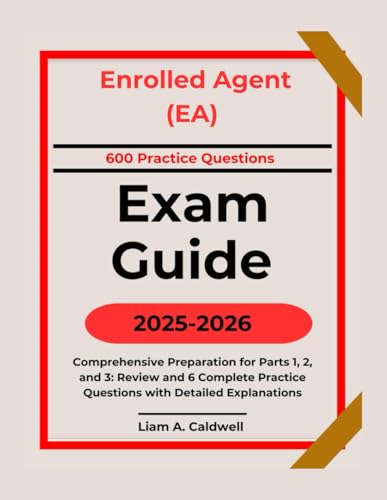
Enrolled Agent (EA) Exam Guide 2025-2026: Comprehensive Preparation for Parts 1, 2, and 3: Review and 6 Complete Practice Questions with Detailed Explanations
By Caldwell, Liam A.
$29.99 ·
Study resources on AchievableTake courses on UdemyRelated Terms
Roth IRA
A Roth IRA is a retirement account funded with after-tax dollars that grows tax-free and allows tax-free withdrawals in retirement, with no required minimum distributions.
RMD (Required Minimum Distribution)
RMDs are mandatory annual withdrawals from traditional retirement accounts (Traditional IRA, 401(k)) that must begin at age 73, calculated based on account balance and life expectancy.

Your AI study companion · 10 free interactions a day
Stay Updated
Get free exam tips and study guides delivered to your inbox.