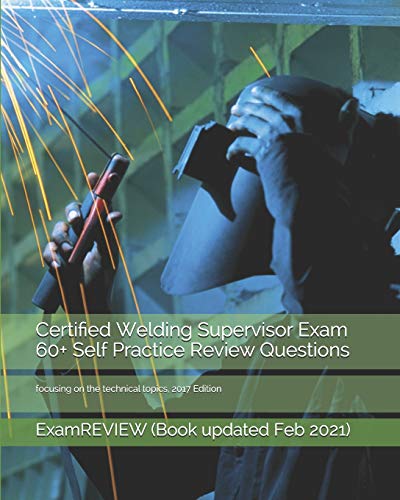
How to Become a Welder in 2026
Welding is a high-demand skilled trade that powers every major industry — from construction and manufacturing to aerospace and energy. The American Welding Society (AWS) estimates the U.S. had about 771,000 welding professionals in 2025, with more than 157,000 approaching retirement age and an average welder age of roughly 55. AWS projects that 320,500 new welding professionals will be needed in the U.S. by 2029 — roughly 80,000 jobs per year between 2025 and 2029 just to close the gap. Here is your complete guide from beginner to certified professional, with verified 2026 certification fees and the most recent BLS wage data.
Start Your FREE Welder Exam Prep Today
Our comprehensive study guide covers welding processes, metallurgy, blueprint reading, and AWS certification exam topics — 100% FREE, with 10 free AI-assisted study sessions per day.
Step-by-Step Path to Becoming a Welder
Step 1: Meet the Basic Requirements
Before starting your welding career, you need:
- High school diploma or GED — the U.S. Bureau of Labor Statistics (BLS) lists this as the typical entry-level education for welders
- Be at least 18 years old (for most certification and apprenticeship programs)
- Good hand-eye coordination and manual dexterity
- Basic math skills — fractions, decimals, geometry, and measurement
- Physical stamina — standing, bending, lifting 50+ lbs, working in heat
- Attention to safety — welding involves high heat, sparks, UV radiation, and fumes
Helpful high school courses: algebra, physics, shop classes, mechanical drawing, and any career and technical education (CTE) courses.
Step 2: Choose Your Training Path
You have three main routes into welding. AWS's workforce data site summarizes the typical program lengths as: technical school 6-18 months for a welding certificate, community college 2 years for an associate degree, and apprenticeship 3-4 years for a journeyman's card.
| Path | Duration | Cost | Earnings While Training |
|---|---|---|---|
| Trade / Technical School | 6-18 months | $5,000-$25,000 | Not paid (fastest to certification) |
| Community College | 2 years | $3,000-$12,000 | Part-time work possible |
| Apprenticeship | 3-5 years | Free (you earn while you learn) | Starts ~$30,000-$45,000/year, scales up |
Trade School is the most popular entry point. Programs cover welding fundamentals, blueprint reading, metallurgy, and hands-on practice with MIG, TIG, and stick welding. Many programs include AWS Certified Welder testing as part of the curriculum.
Apprenticeships are less common in welding than in plumbing or electrical, but they exist through unions like the United Association (UA) of plumbers and pipefitters and the Iron Workers union. UA's pipe welder apprenticeship is a 5-year registered program with about 2,000 hours per year of paid on-the-job training and 216 hours per year of tuition-free classroom instruction, leading to journeyman status and up to 45 transferrable college credits. Iron Workers offer a similar earn-while-you-learn path with welding, rigging, and OSHA certifications built in.
On-the-Job Training: Some employers hire entry-level welders and train them on the job. BLS classifies this as "moderate-term on-the-job training." You start as a helper or tack welder and work your way up. This path is slower for certification but costs nothing.
Step 3: Master the Core Welding Processes
Every welder needs proficiency in the core arc welding processes:
| Process | Full Name | Difficulty | Common Uses | Pay Premium |
|---|---|---|---|---|
| SMAW (Stick) | Shielded Metal Arc Welding | Moderate | Construction, pipelines, outdoor work | Baseline |
| GMAW (MIG) | Gas Metal Arc Welding | Easy-Moderate | Manufacturing, automotive, sheet metal | Baseline |
| GTAW (TIG) | Gas Tungsten Arc Welding | Hard | Aerospace, nuclear, food-grade stainless | +$5-$15/hr |
| FCAW (Flux-Cored) | Flux-Cored Arc Welding | Moderate | Shipbuilding, heavy construction | +$2-$5/hr |
| PAW (Plasma) | Plasma Arc Welding | Hard | Aerospace, precision work | +$5-$10/hr |
TIG welding commands the highest pay because it requires the most skill and precision. If you can TIG weld stainless steel and aluminum to code quality, you will always be in demand.
Step 4: Get AWS Certified
The American Welding Society (AWS) is the primary certification body for welders in the United States. AWS certifications are performance-based for welders — you demonstrate your skill by welding test coupons that are inspected and tested by an AWS Certified Welding Inspector (CWI).
AWS Certified Welder (CW)
The foundational certification for any welding career. It is open to anyone who can pass the performance test — there are no prerequisite courses, certifications, or minimum experience/education requirements.
| Detail | Information |
|---|---|
| Prerequisites | None — no experience or education required to test |
| Test Format | Deposit a sound weld at an AWS Accredited Testing Facility (ATF), inspected by a CWI against the applicable code |
| Common codes | AWS D1.1 (structural steel), D1.2 (aluminum), D9.1 (sheet metal), D15.1 (railroad), ASME Section IX, API 1104 (pipeline) |
| Application fee (2026) | $70 AWS application fee (member and non-member) |
| ATF testing fee | Set by each ATF — contact the facility for pricing and retest fees |
| Maintenance | $105/year subscription for unlimited renewals; submit a maintenance form every 6 months verifying continuity |
| Validity | Indefinite, as long as 6-month continuity forms are submitted on time |
| Retakes | Unlimited — no limit on attempts; reschedule with the ATF |
| Application portal | my.aws.org (as of January 15, 2026, AWS no longer accepts paper applications) |
A $125 non-refundable fee applies to applications not submitted through the online portal. The total out-of-pocket cost to get certified is roughly the ATF test fee plus the $70 AWS application fee, plus $105/year to keep the credential active.
AWS Certified Welding Inspector (CWI)
The gold standard for career advancement in welding inspection:
| Detail | Information |
|---|---|
| Prerequisites | Minimum 5+ years welding-related experience (or combinations of education + experience per AWS QC1) |
| Exam structure | 3 parts — see below |
| Pass mark | 72% on each part |
| Initial exam fee (2026) | $1,255 AWS member / $1,520 non-member (all three parts) |
| With Part B training | $2,000 member / $2,265 non-member |
| First-attempt pass rate | Roughly 25-30%; candidates who complete the AWS seminar first report 55-70% |
| Validity | 9 years — renewals at year 3 and year 6, then full recertification at year 9 |
| Retake policy | Up to 3 retakes within a 3-year period; 2nd/3rd retake requires proof of additional training |
CWI exam parts:
| Part | Format | Questions | Time | Notes |
|---|---|---|---|---|
| Part A — Fundamentals | Closed-book CBT via Prometric | 150 | 2 hours | Destructive testing, math, safety, metallurgy, NDE, welding symbols, WPS/PQR |
| Part B — Practical | Hands-on, in person at AWS seminar sites | 46 | 2 hours | WPS/PQR application, inspection tools, weld replicas; must be taken before Parts A and C |
| Part C — Code Book | Open-book CBT via Prometric | 50-65 | 2 hours | Locate information in a chosen code (AWS D1.1, API 1104, D1.5, ASME Section IX, etc.) |
Prometric charges a separate $60 seat fee per Part A/C ($120 for all parts). CWI renewal at years 3 and 6 costs $630 (member) / $895 (non-member) by work experience, or $1,000 / $1,265 by examination. Nine-year recertification can be done by Part B exam ($1,130/$1,395), 80 Professional Development Hours of continuing education ($770/$1,035), earning CRI certification, adding an endorsement, or a 6-day recertification course ($2,060/$2,325).
Other AWS Certifications
| Certification | Level | Typical Salary Range |
|---|---|---|
| Certified Welder (CW) | Entry | $40,000-$65,000 |
| Certified Associate Welding Inspector (CAWI) | Junior inspector | $50,000-$70,000 |
| Certified Welding Inspector (CWI) | Professional | $70,000-$110,000 |
| Senior Certified Welding Inspector (SCWI) | Senior | $85,000-$125,000 |
| Certified Welding Supervisor (CWS) | Supervisory | $65,000-$95,000 |
| Certified Welding Educator (CWE) | Education | $60,000-$90,000 |
| Certified Welding Engineer (CWEng) | Engineering | $85,000-$130,000+ |
| Certified Robotic Arc Welding (CRAW) | Advanced | $55,000-$80,000 |
| Certified Radiographic Interpreter (CRI) | Specialty | $60,000-$90,000 |
Step 5: Build Experience and Specialize
After getting certified, you can pursue high-paying specializations. Experience plus targeted certifications (pipe endorsements, aerospace D17.1, underwater welding) is the fastest route to the upper salary tiers.
Practice Welder Exam Questions for FREE
Our practice questions cover welding processes, metallurgy, blueprint reading, and AWS code requirements with detailed explanations — 10 free AI-assisted study sessions per day, no credit card required.
Welder Salary in 2026 (BLS May 2024 Data)
The most recent U.S. Bureau of Labor Statistics Occupational Employment and Wage Statistics (OEWS) data is for May 2024, released April 2, 2025. Welders, cutters, solderers, and brazers (SOC 51-4121) held about 457,300 jobs in 2024.
National Salary Overview
| Metric | May 2024 BLS |
|---|---|
| Median annual wage | $51,000 |
| Median hourly wage | $24.52 |
| Mean annual wage | $55,100 |
| Mean hourly wage | $26.49 |
| 10th percentile annual | $38,130 |
| 25th percentile annual | $45,580 |
| 75th percentile annual | $61,610 |
| 90th percentile annual | $75,850 |
| Median annual, all occupations | $49,500 (welders slightly above) |
Top Industries by Median Annual Wage (May 2024 BLS)
| Industry | Median Annual Wage | Share of welder jobs |
|---|---|---|
| Specialty trade contractors | $57,310 | 8% |
| Repair and maintenance | $53,300 | 4% |
| Manufacturing | $49,740 | 61% (largest employer) |
| Self-employed workers | — | 6% |
Salary by Experience Level
| Level | Years | Annual Salary | Hourly Rate |
|---|---|---|---|
| Entry-Level / Helper | 0-1 year | $30,000-$42,000 | $14-$20 |
| Certified Welder | 1-3 years | $42,000-$58,000 | $20-$28 |
| Experienced Welder | 3-5 years | $50,000-$70,000 | $24-$34 |
| Master Welder / Lead | 5-10 years | $60,000-$85,000 | $29-$41 |
| Welding Inspector (CWI) | 5+ years | $70,000-$110,000 | $34-$53 |
| Welding Engineer | 10+ years | $85,000-$130,000 | $41-$63 |
Salary by State (Top 10, BLS OEWS May 2024 Median Annual Wage)
| Rank | State | Median Annual Wage | Typical Top Industries |
|---|---|---|---|
| 1 | Hawaii | $76,970 | Construction, ship repair |
| 2 | Alaska | $75,140 | Oil & gas, pipeline |
| 3 | Wyoming | $66,070 | Energy, mining |
| 4 | Connecticut | $64,520 | Shipbuilding, defense, aerospace |
| 5 | Washington | $61,730 | Aerospace, shipbuilding |
| 6 | Massachusetts | $61,710 | Shipbuilding, defense |
| 7 | North Dakota | $60,270 | Oil & gas, pipeline |
| 8 | Louisiana | $59,860 | Oil & gas, shipbuilding, chemical |
| 9 | New Jersey | $59,630 | Manufacturing, construction |
| 10 | Nevada | $59,370 | Construction, mining |
Wages vary significantly by metro area, industry, and overtime. Pipeline and rig welders who travel can far exceed state medians through per diem and overtime.
Salary by Specialization
| Specialization | Typical Salary Range | Notes |
|---|---|---|
| General Fabrication Welder | $35,000-$55,000 | Most common, entry point |
| Structural Steel Welder | $45,000-$75,000 | Construction, bridges, buildings |
| Pipe Welder | $55,000-$100,000 | Oil & gas, chemical plants |
| Pipeline Welder | $70,000-$150,000+ | Travel, per diem, overtime |
| TIG Welder (Aerospace) | $55,000-$95,000 | Precision work, clean environments |
| Underwater Welder | $80,000-$200,000+ | Commercial diving certification required |
| Nuclear Welder | $70,000-$130,000 | Security clearance, ASME Section IX |
| Welding Inspector (CWI) | $70,000-$110,000 | Office + field, less physical |
| Welding Engineer | $85,000-$130,000+ | Engineering degree + experience |
| Robotic Welding Technician | $55,000-$85,000 | Programming + welding knowledge |
Welder Job Outlook 2026
The welding industry faces a significant talent gap driven by retirements rather than new-job creation:
- 2% projected job growth from 2024 to 2034 (BLS, "slower than average") — slower than the 3% average for all occupations
- About 45,600 openings projected each year through 2034, mostly to replace workers who retire or transfer to other occupations
- AWS projects 320,500 new welding professionals needed by 2029 — about 80,000 per year from 2025 to 2029
- 157,000+ current welders are approaching retirement age (AWS, 2025)
- Manufacturing reshoring and federal infrastructure spending are creating new domestic welding jobs, partially offset by manufacturing automation
Key Trends in 2026
- Manufacturing Reshoring: Companies moving production back to the U.S. are creating thousands of new welding jobs. Manufacturing employs 61% of welders today.
- Automation & Robotics: Robots handle repetitive welds, but skilled welders are needed for complex work, robot programming, and quality inspection — the CRAW certification targets this niche.
- Energy Transition: Both traditional energy (pipelines, LNG terminals) and renewable energy (wind turbine towers, solar structures) need welders.
- Aerospace & Defense: Increased defense spending and commercial aviation growth are boosting demand for high-specification TIG welders qualified to AWS D17.1.
- Infrastructure: Federal spending on bridges, highways, and water systems requires structural and pipe welders qualified to AWS D1.1 and D1.5.
Welding Specializations
Pipeline Welding
The highest-paying welding specialization. Pipeline welders travel to remote locations and weld large-diameter pipe for oil, gas, and water transmission. Requires SMAW and GTAW skills, with X-ray quality welds qualified to API 1104. Per diem and overtime can push earnings above $150,000.
Underwater Welding
Combines welding skills with commercial diving certification. Requires attending a commercial diving school accredited by the Association of Diving Contractors International (ADCI) — typically 7-12 additional months — followed by underwater welding training. Divers start as dive tenders. Extremely hazardous work with correspondingly high pay. Used for ship repair, offshore platforms, and underwater structures.
Aerospace Welding
Precision TIG welding on aircraft, spacecraft, and defense components. Requires certification to AWS D17.1 aerospace code. Clean room environments, exotic metals (titanium, Inconel). High pay, stable work.
Nuclear Welding
Welding on nuclear power plant components. Requires security clearance, qualification to ASME Boiler and Pressure Vessel Code Section IX, and strict quality standards. Very high pay due to the specialized requirements.
Shipbuilding & Marine
Welding on ships, offshore platforms, and marine structures. Primarily FCAW and SMAW in shipyard environments. Steady work at major shipyards, with good union wages.
Essential Safety Equipment
Every welder must invest in proper safety gear. OSHA requires welders to complete training on electrical safety, and employers are responsible for workplace safety procedures:
| Equipment | Cost Range | Purpose |
|---|---|---|
| Auto-Darkening Helmet | $80-$400 | Eye protection from UV/IR radiation |
| Welding Gloves | $20-$80 | Hand protection from heat and sparks |
| Flame-Resistant Jacket | $40-$150 | Body protection from sparks and spatter |
| Safety Glasses | $10-$30 | Eye protection under helmet |
| Steel-Toe Boots | $80-$200 | Foot protection from heavy objects |
| Respirator | $30-$100 | Lung protection from welding fumes |
AWS Foundation Support for New Welders
The AWS Foundation is actively funding the next generation of welders:
- $2.7 million in scholarship funds awarded
- 1,600+ students supported annually
- 25% of scholarships awarded to female welding students (women are only ~5% of the current workforce)
- $3 million in grants and program support
- $2.5 million+ in support for schools and training programs
Prospective welders can apply for AWS Foundation scholarships directly through aws.org/foundation.
Start Your Welding Career Now — 100% FREE Exam Prep
Our comprehensive welder study course includes:
- Welding process fundamentals with MIG, TIG, and stick explanations
- Metallurgy basics with detailed material guides
- Blueprint reading practice for fabrication and pipe welding
- AI-powered study help — get instant explanations for any welding topic (10 free sessions per day)
- Free forever — no credit card, no trial period
AWS projects 320,500 new welding professionals needed by 2029. Your career starts with getting certified.
Official Resources
- American Welding Society (AWS) — Certifications, standards, and education
- AWS Certified Welder Program — CW application, maintenance portal, and ATF directory
- AWS Certification Price List 2026 — Current fees for all AWS certifications
- AWS Welding Workforce Data — Official AWS workforce projections (320,500 by 2029)
- Careers in Welding — AWS career paths and salary explorer
- Bureau of Labor Statistics — Welders, Cutters, Solderers, and Brazers — May 2024 wage data and 2024-34 outlook
- BLS OEWS May 2024 State Estimates — State wage data (SOC 51-4121)
- Apprenticeship.gov — Find registered welding apprenticeships
- United Association (UA) — 5-year pipe welder apprenticeship (earn while you learn)
- Iron Workers Union — Structural and reinforcing welding apprenticeships
- OSHA Welding Safety — Safety standards and regulations
- ASME — Boiler and pressure vessel codes (Section IX)


 Buy on Amazon