 View
ViewWhy Hard Hats Matter — And Why They Are on the OSHA 30 Exam
Head injuries are among the most common and most preventable injuries on construction sites. According to the Bureau of Labor Statistics, struck-by incidents account for approximately 75% of hard hat-related fatalities — and in many of those cases, the worker was either not wearing a hard hat or wearing one that did not meet the job site requirements.
This is why OSHA takes head protection seriously. 29 CFR 1926.100 requires employers to provide head protection for every employee working in an area where there is a possible danger of head injury from impact, falling or flying objects, or electrical shock and burns. On the OSHA 30-Hour Construction certification exam, hard hat requirements, ANSI classifications, and proper PPE selection are directly tested topics.
Whether you are studying for your OSHA 30 certification, preparing for a journeyman electrician license, or simply need a reliable hard hat for the job site, understanding what makes a hard hat OSHA-compliant starts with one standard: ANSI Z89.1.
Study OSHA safety standards for free with our OSHA 30 study guide and practice questions.

AOLAMEGS Construction Safety Hard Hat with Visor
by AOLAMEGS
$23.99
- ANSI Z89.1 OSHA approved with built-in visor for sun and rain protection
- Vented ABS shell with 6-point ratchet suspension for superior impact distribution
- White — the most common and versatile color for construction job sites
Understanding ANSI Z89.1: The Standard Behind Every Compliant Hard Hat
ANSI Z89.1 (American National Standard for Industrial Head Protection) is the benchmark standard that OSHA references for hard hat compliance. Every hard hat used on a construction site must meet this standard — and understanding its classification system is essential for both the OSHA 30 exam and real-world job site safety.
Type I vs Type II: Where the Protection Is
Type I hard hats protect against impacts to the top (crown) of the head only. They are designed for the classic construction hazard: objects falling from above. Type I is the most common hard hat type on construction sites and is adequate when the primary risk is vertical impact.
Type II hard hats protect against impacts to both the top and sides (lateral) of the head. They are designed for environments where workers face risks from swinging loads, horizontal strikes from equipment, low-clearance beams, and side impacts. Type II hard hats have foam liner inserts and a different shell geometry to absorb lateral forces.
When to choose Type II: If your job site hazard assessment identifies lateral impact risks — which is increasingly common on commercial and industrial sites — Type II is the correct choice. Many general contractors and project owners now require Type II hard hats site-wide, regardless of the specific task.
For the OSHA 30 exam: Expect questions about when Type I protection is sufficient versus when Type II is required. The key is hazard assessment — OSHA does not mandate Type II universally, but it does require employers to assess the workplace and provide protection appropriate to the identified hazards.
Class E vs Class G vs Class C: Electrical Protection Ratings
The Class rating determines how much electrical insulation the hard hat provides:
| Class | Electrical Rating | Best For |
|---|---|---|
| Class E (Electrical) | Tested to 20,000V phase-to-ground | Electricians, line workers, anyone near energized conductors |
| Class G (General) | Tested to 2,200V phase-to-ground | General construction where incidental electrical contact is possible |
| Class C (Conductive) | No electrical protection | Environments where electrical hazards have been eliminated |
Class E is mandatory for electricians and anyone working near exposed energized conductors. If you are preparing for a journeyman or master electrician exam, you must understand that Class E head protection is required whenever working on or near energized electrical equipment. This is covered in both the NEC and OSHA standards.
Class G provides limited electrical protection and is the standard choice for general construction workers. It handles incidental contact with low-voltage circuits but is not designed for electrical work.
Class C hard hats offer zero electrical insulation. They are typically vented for maximum airflow and are used only in environments where a thorough hazard assessment has confirmed no electrical exposure risk. Never wear a Class C hard hat near electrical hazards.
For the electrician exam: Understanding hard hat Class ratings is part of the PPE knowledge tested on journeyman and master electrician licensing exams. Class E protection is non-negotiable for electrical work. Practice electrical safety questions with our free journeyman electrician study guide.
OSHA 29 CFR 1926.100: What the Law Actually Requires
OSHA's hard hat regulation for construction is straightforward but has specific requirements that appear on the OSHA 30 exam:
Section 1926.100(a): Employees working in areas where there is a possible danger of head injury from impact, from falling or flying objects, or from electrical shock and burns shall be protected by protective helmets.
Section 1926.100(b): Helmets for the protection of employees against impact and penetration of falling and flying objects shall meet the specifications contained in ANSI Z89.1.
Section 1926.100(c): Helmets for the head protection of employees exposed to high-voltage electrical shock and burns shall meet the specifications contained in ANSI Z89.2 (now incorporated into Z89.1).
What this means in practice:
- The employer must conduct a hazard assessment to determine if head protection is needed
- If head protection is required, the employer must provide hard hats that meet ANSI Z89.1
- The hard hat Type and Class must match the identified hazards
- The employer is responsible for ensuring employees actually wear the provided protection
Common OSHA 30 exam questions test:
- When hard hats are required (hazard assessment triggers)
- What standard hard hats must meet (ANSI Z89.1)
- Which Class is required for electrical work (Class E)
- Employer vs employee responsibilities for PPE
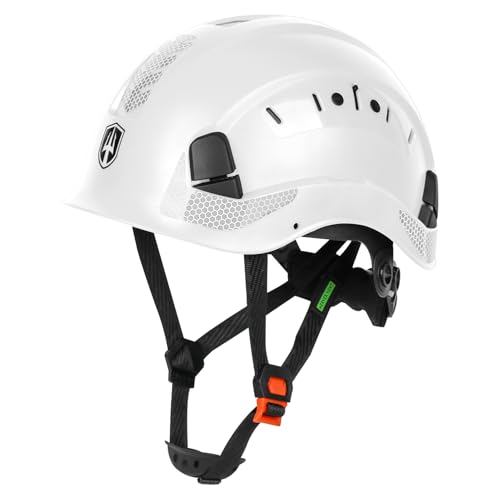
GREEN DEVIL Safety Helmet Construction Hard Hat ANSI Z89.1
by GREEN DEVIL
$15.99
- ANSI Z89.1 certified — the most affordable OSHA-compliant hard hat available
- Lightweight vented ABS construction reduces fatigue during long shifts
- Available in multiple colors to match your job site role and company requirements
Choosing the Right Hard Hat: A Practical Decision Framework
Selecting a hard hat is not about picking the cheapest option — it is about matching the protection level to your job site hazards. Here is a systematic approach:
Step 1: Identify Your Hazards
- Falling objects from above only → Type I is sufficient
- Falling objects plus lateral impact risks → Type II required
- Any electrical exposure → Class E required (unvented)
- No electrical exposure, confirmed by hazard assessment → Class G or C acceptable
- Hot environment, no electrical hazards → Vented Class C for comfort
Step 2: Check the Markings
Every ANSI Z89.1 compliant hard hat has markings inside the shell:
- Manufacturer name
- ANSI Z89.1 standard designation
- Type (I or II)
- Class (E, G, or C)
- Date of manufacture (clock-style month/year indicator)
- Size range
If these markings are missing, faded, or illegible, the hard hat should be replaced.
Step 3: Fit and Suspension
A hard hat is only as good as its fit. The suspension system — the internal harness that holds the shell away from your head — is the critical component:
- 6-point suspension distributes impact force across six attachment points, reducing peak force by approximately 40% compared to 4-point systems
- Ratchet adjustment allows precise fit without removing the hard hat — essential for workers who wear different head coverings seasonally
- 1 to 1.25 inch clearance between the shell and your head is required for the suspension to work properly — this air gap is what absorbs impact energy
- Suspension straps should be inspected regularly for fraying, stretching, or loss of elasticity
For the OSHA 30 exam: Questions about proper hard hat fit focus on the suspension system clearance and the importance of not modifying the hard hat (no drilling holes, no removing suspension components, no painting with non-approved coatings that could degrade the shell).

SAFEBUILDER Safety Hard Hat for Engineers, Vented ABS
by SAFEBUILDER
$17.99
- Lightweight vented ABS shell designed for engineers and construction workers
- Comfortable suspension system reduces pressure points during all-day wear
- ANSI compliant head protection at a budget-friendly price point
The 5 Best ANSI Z89.1 Hard Hats for Construction Workers in 2026
We evaluated hard hats based on ANSI Z89.1 compliance, suspension quality, comfort features, durability, and value. Here are the five best options for construction workers and trade certification candidates.
1. AOLAMEGS Construction Safety Hard Hat with Visor — Best Overall ($23.99)
Best for: Construction workers who need OSHA-compliant protection with a built-in visor for outdoor work.
The AOLAMEGS hard hat combines everything a construction worker needs: ANSI Z89.1 OSHA approval, a vented ABS shell for breathability, a built-in visor for sun and rain protection, and a 6-point ratchet suspension system. The 6-point suspension is the standout feature at this price — most sub-$25 hard hats use 4-point systems that provide less impact distribution.
The white color is the most versatile option for construction sites. While hard hat color conventions vary by company, white is universally accepted and is the default color for supervisors, engineers, and visitors on most sites.
Why we recommend it: The 6-point ratchet suspension at $23.99 is exceptional value. The built-in visor eliminates the need for a separate sun shield, and the vented ABS shell keeps your head cooler in hot weather. For OSHA 30 candidates and construction workers who need reliable, compliant head protection without overspending, this is the best overall choice.
AOLAMEGS Construction Safety Hard Hat with Visor
by AOLAMEGS
$23.99
- ANSI Z89.1 OSHA approved with built-in visor for sun and rain protection
- Vented ABS shell with 6-point ratchet suspension for superior impact distribution
- White — the most common and versatile color for construction job sites
2. GREEN DEVIL Safety Helmet — Best Budget Option ($15.99)
Best for: Workers who need the most affordable ANSI Z89.1 certified hard hat.
At $15.99, the GREEN DEVIL is the least expensive OSHA-compliant hard hat we found. It features a vented ABS shell, ratchet suspension, and ANSI Z89.1 certification. It is available in multiple colors, which is useful for companies that enforce color-coded role identification on site.
The lightweight design reduces neck fatigue during long shifts — an important consideration for workers who wear a hard hat for 8 to 10 hours daily. The vented construction provides good airflow, though remember that vented hard hats should not be used around electrical hazards.
Why we recommend it: If budget is the primary concern and you need basic OSHA-compliant head protection, the GREEN DEVIL delivers at the lowest price point. ANSI Z89.1 certification means it meets the same impact and penetration standards as hard hats costing three times as much.
GREEN DEVIL Safety Helmet Construction Hard Hat ANSI Z89.1
by GREEN DEVIL
$15.99
- ANSI Z89.1 certified — the most affordable OSHA-compliant hard hat available
- Lightweight vented ABS construction reduces fatigue during long shifts
- Available in multiple colors to match your job site role and company requirements
3. SAFEBUILDER Safety Hard Hat for Engineers — Best Lightweight Option ($17.99)
Best for: Engineers, inspectors, and workers who prioritize lightweight comfort for extended wear.
The SAFEBUILDER engineering hard hat is designed for comfort during extended wear. The vented ABS shell and well-designed suspension system minimize pressure points — a common complaint with cheaper hard hats that causes headaches and neck strain over the course of a full shift.
ANSI compliant and built for the kind of mixed-environment work that engineers, project managers, and quality inspectors perform — moving between indoor and outdoor areas, climbing scaffolding for inspections, and spending full days on site.
Why we recommend it: The comfort-focused suspension design sets this apart from other sub-$20 hard hats. If you are on site all day and comfort directly affects your productivity, the $2 premium over the GREEN DEVIL is worth it.
SAFEBUILDER Safety Hard Hat for Engineers, Vented ABS
by SAFEBUILDER
$17.99
- Lightweight vented ABS shell designed for engineers and construction workers
- Comfortable suspension system reduces pressure points during all-day wear
- ANSI compliant head protection at a budget-friendly price point
4. AOLAMEGS Construction Safety Hard Hat with Visor — Premium Build ($22.99)
Best for: Workers who want AOLAMEGS quality with visor protection at a slightly lower price point.
This is the 4-point suspension variant of the AOLAMEGS hard hat. It shares the same ANSI Z89.1 OSHA approved ABS shell and built-in visor as the 6-point model but uses a 4-point suspension system. The 4-point suspension is adequate for most construction applications and still provides reliable impact absorption.
The built-in visor is the key feature — it provides meaningful sun and rain protection without adding a separate accessory. For outdoor construction workers, this eliminates glare and keeps rain off your face without needing to look down.
Why we recommend it: If you prefer the AOLAMEGS build quality and visor design but want to save a dollar compared to the 6-point model, this is a solid choice. The 4-point suspension is the industry standard and meets all ANSI Z89.1 impact requirements.

AOLAMEGS Construction Safety Hard Hat with Visor
by AOLAMEGS
$22.99
- ANSI Z89.1 OSHA approved with built-in visor for weather protection
- Vented ABS shell with 4-point suspension for reliable impact absorption
- Premium construction quality at a competitive price point
5. SAFEBUILDER Safety Helmet with Visor Adjustable — Best Mid-Range ($19.99)
Best for: Workers who want visor protection and adjustable fit at a mid-range price.
The SAFEBUILDER visor model combines adjustable lightweight design with built-in sun protection. The vented ABS shell meets ANSI Z89.1 requirements, and the adjustable fit system accommodates different head sizes and seasonal headwear (skull caps in winter, cooling rags in summer).
At $19.99, it sits in the sweet spot between the budget GREEN DEVIL and the premium AOLAMEGS models. The visor adds practical value for outdoor workers without pushing the price above $20.
Why we recommend it: Good balance of features, comfort, and price. The adjustable fit system is more versatile than fixed-size alternatives, and the built-in visor adds genuine utility for outdoor construction work.

SAFEBUILDER Safety Helmet Hard Hat with Visor Adjustable
by SAFEBUILDER
$19.99
- Adjustable lightweight design with built-in visor for versatile protection
- Vented ABS shell with ANSI Z89.1 approval meets OSHA requirements
- Good mid-range option balancing comfort, protection, and price
Quick Comparison: Which Hard Hat Should You Buy?
| Feature | AOLAMEGS 6-pt ($24) | GREEN DEVIL ($16) | SAFEBUILDER Eng ($18) | AOLAMEGS 4-pt ($23) | SAFEBUILDER Visor ($20) |
|---|---|---|---|---|---|
| ANSI Z89.1 | Yes | Yes | Yes | Yes | Yes |
| Built-in Visor | Yes | No | No | Yes | Yes |
| Suspension Points | 6-point | Ratchet | Comfort | 4-point | Adjustable |
| Vented | Yes | Yes | Yes | Yes | Yes |
| Shell Material | ABS | ABS | ABS | ABS | ABS |
| Best For | Best overall | Budget pick | All-day comfort | Visor + quality | Mid-range value |
Decision framework:
- Need the best protection at a low price? Get the AOLAMEGS 6-point ($23.99). The 6-point suspension provides the best impact distribution in this price range.
- Absolute lowest cost? Get the GREEN DEVIL ($15.99). ANSI Z89.1 certified at the lowest price available.
- Wearing it all day? Get the SAFEBUILDER Engineer ($17.99). Comfort-focused suspension reduces headaches and neck fatigue.
- Need a visor for outdoor work? Choose between the AOLAMEGS 4-point ($22.99) or SAFEBUILDER Visor ($19.99) based on your budget.
When to Replace Your Hard Hat
Hard hat replacement is a frequently tested topic on the OSHA 30 exam. Here are the rules:
Mandatory Replacement Triggers
- After any impact — even if there is no visible damage. ABS and polyethylene shells can develop micro-fractures that are invisible to the naked eye but compromise impact protection.
- Visible damage — cracks, dents, deformation, penetration marks, or any change in shell shape.
- UV degradation — the shell surface becomes chalky, faded, or feels brittle. ABS and HDPE plastics degrade under prolonged UV exposure, losing impact resistance over time.
- Chemical exposure — contact with solvents, paints, adhesives, or other chemicals that may weaken the shell material.
- Heat damage — exposure to temperatures above the manufacturer's rated maximum (typically 140°F for standard hard hats).
Scheduled Replacement
- Shell: Replace every 5 years from the manufacture date, regardless of visible condition
- Suspension: Replace every 12 months, or sooner if straps show wear, fraying, or loss of elasticity
- Sweatband: Replace when soiled or degraded — a worn sweatband causes the hat to shift, compromising protection
How to Find the Manufacture Date
Look inside the shell for a clock-style date indicator: a circle with numbers 1-12 around the perimeter (representing months) and a year printed in the center. An arrow or mark on the outer ring indicates the month of manufacture. For example, an arrow at 3 with "2024" in the center means March 2024 — replace by March 2029.
Hard Hat Colors: What They Mean on Construction Sites
While OSHA does not regulate hard hat colors, most construction companies follow an informal industry standard that helps identify workers' roles from a distance:
| Color | Typical Role |
|---|---|
| White | Site supervisors, foremen, engineers, architects, visitors |
| Yellow | General laborers, earth-moving operators |
| Blue | Electricians, technical workers, carpenters |
| Green | Safety officers, safety inspectors, new workers (on some sites) |
| Orange | Road crews, flaggers, signaling personnel, new workers |
| Red | Fire protection, emergency response personnel |
| Brown | Welders, high-heat workers |
| Gray/Silver | Site visitors (on some sites) |
Important: Color conventions are company-specific and vary by region and contractor. Always confirm the color code during your job site orientation. Some companies require specific colors for specific trades; others use a single color with different sticker systems for role identification.
For the OSHA 30 exam: You may see questions about PPE identification and job site communication. While memorizing every color code is not required, understanding that color coding serves a safety communication function — allowing workers to quickly identify who is authorized for specific areas or tasks — is relevant.
Proper Hard Hat Care and Inspection
Daily inspection and proper care extend the life of your hard hat and ensure it provides the protection you need:
Daily Inspection Checklist
- Shell exterior — check for cracks, dents, gouges, or penetration marks
- Shell interior — check for cracks or stress marks visible from inside
- UV degradation — check for chalking, fading, or surface brittleness
- Suspension straps — check for fraying, tears, or loss of elasticity
- Ratchet mechanism — verify the adjustment knob turns smoothly and holds position
- Clearance — verify 1 to 1.25 inch gap between suspension and shell crown
Care Guidelines
- Clean with mild soap and water — never use solvents, gasoline, or harsh chemicals
- Do not paint — paint solvents can degrade ABS and HDPE shells. Use stickers instead
- Do not drill holes — any modification to the shell voids the ANSI certification
- Store out of direct sunlight — UV exposure accelerates shell degradation even when not in use
- Do not store in rear window of vehicle — the heat and UV combination rapidly degrades the shell
- Do not wear backward — unless the hard hat is specifically designed and ANSI tested for reverse wear
Free OSHA 30 and Electrician Exam Prep Resources
Your hard hat protects your head — your knowledge protects your career. Build your certification knowledge with these free resources:
- Free OSHA 30 Study Guide — Complete coverage of OSHA construction safety standards including PPE, fall protection, electrical safety, scaffolding, excavation, and hazard communication
- Free Journeyman Electrician Exam Prep — NEC code, electrical theory, safety requirements, and practical skills for electrician licensing
- Free Master Electrician Exam Prep — Advanced NEC code, design calculations, and supervision topics
- AI Tutor — 10 free questions per day — ask about OSHA standards, hard hat classifications, electrical safety, or any construction trades exam topic
- Practice Questions — Test your knowledge with exam-style questions and detailed explanations
The AI tutor is particularly useful for PPE and safety questions. Ask it "What type and class of hard hat do I need for electrical work near 480V panels?" or "Explain the employer's PPE obligations under OSHA 29 CFR 1926.100" and get detailed, exam-level responses instantly.
Final Verdict
For most construction workers, the AOLAMEGS Construction Safety Hard Hat with Visor ($23.99) is the best choice. The ANSI Z89.1 OSHA approval, 6-point ratchet suspension, built-in visor, and vented ABS construction deliver professional-grade protection at an accessible price.
If budget is the top priority, the GREEN DEVIL Safety Helmet ($15.99) is the most affordable ANSI Z89.1 certified option — legitimate OSHA compliance for the price of a fast-food lunch.
For workers who wear a hard hat all day, the SAFEBUILDER Engineering Hard Hat ($17.99) prioritizes comfort with a well-designed suspension system that reduces fatigue during extended shifts.
Remember: A $16 hard hat that meets ANSI Z89.1 provides the same certified impact protection as a $50 hard hat. The standard is the standard. Pay more for comfort features (better suspension, visor, ventilation) if they matter to you, but do not pay more for safety — it is built into the certification.
Whatever hard hat you choose, pair it with the knowledge to use it properly. Start studying today with our free OSHA 30 study guide and practice questions.
As an Amazon Associate, OpenExamPrep earns from qualifying purchases. All recommendations are based on editorial review.

 Free CE
 Take courses on Udemy
 Flashcards on Mometrix