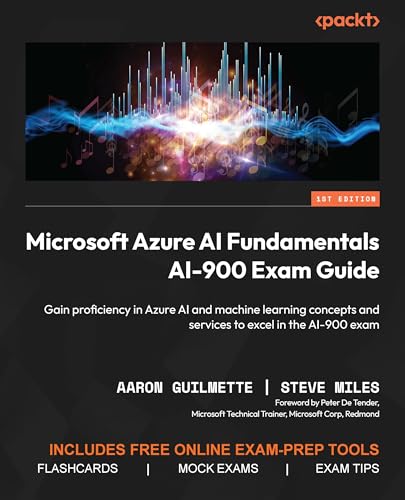
SC-900 in 2026: The Fastest Entry Into Microsoft Security
Microsoft SC-900 (Security, Compliance, and Identity Fundamentals) is the single best $99 you can spend to enter the Microsoft security ecosystem in 2026. It is a beginner-level credential Microsoft explicitly designed for business stakeholders, IT newcomers, and students — one that takes most candidates 20-40 hours of study and a 45-minute exam to earn, and that never expires because Microsoft Fundamentals certifications are lifetime credentials.
This guide is the most comprehensive free SC-900 resource on the web. Every detail is cross-referenced against learn.microsoft.com/credentials/certifications/exams/sc-900/ and the official SC-900 study guide — current version effective 7 November 2025, with the next refresh confirmed for 28 July 2026 (details below).
Start with FREE practice now: Jump into free SC-900 practice questions across all four skills measured — Zero Trust concepts, Microsoft Entra, Microsoft Defender, and Microsoft Purview. Every answer includes the Microsoft Learn module that explains it. No signup required.
SC-900 Exam At-a-Glance (2026)
| Detail | Information |
|---|---|
| Certification | Microsoft Certified: Security, Compliance, and Identity Fundamentals |
| Level | Beginner (Fundamentals) |
| Delivery | Pearson VUE — online proctored OR test center |
| Questions | 40-60 (varies by form) |
| Duration | 45 minutes |
| Question Formats | Multiple-choice, multiple-response, true/false, drag-and-drop, matching, build-list, case studies |
| Passing Score | 700 on a 1-1000 scaled scale |
| Cost | $99 USD (varies by country) |
| Languages | English, Japanese, Simplified Chinese, Korean, French, Spanish, Brazilian Portuguese, Russian, Arabic (KSA), Indonesian, German, Traditional Chinese, Italian |
| Prerequisites | None (familiarity with Azure and Microsoft 365 recommended) |
| Validity | Lifetime — Microsoft Fundamentals do NOT expire |
| Renewal | Not required |
| Retake Policy | 24 hours after first fail; 14 days for subsequent retakes; 5 attempts per 12 months |
| Skills Measured Effective Date | 7 November 2025; next refresh 28 July 2026 (weights unchanged, adds "agent ID" to Entra identity types) |
| Scheduling | learn.microsoft.com → Pearson VUE OR Certiport (students/educators) |
Why SC-900 Is the Best $99 in Microsoft Certs
In 2026, three forces make SC-900 one of the highest-leverage certifications you can earn:
1. The security skills shortage is acute. ISC2's 2024 Cybersecurity Workforce Study (the last edition to publish a gap estimate) put the global cybersecurity workforce gap at 4.8 million professionals, and ISACA's 2025 State of Cybersecurity survey found 55% of organizations worldwide say their cybersecurity team is understaffed. Entry credentials that prove Microsoft-ecosystem fluency are in heavy demand.
2. Microsoft owns the enterprise. Over 90% of Fortune 500 companies run on Microsoft Cloud services, and as of Microsoft's fiscal Q3 2026 earnings (reported April 2026), Microsoft Entra has surpassed 1 billion monthly active users while Microsoft's security business serves roughly 1.5 million customers and exceeds $20 billion in annual revenue. Every Microsoft-shop hiring manager values fluency in Entra, Defender, and Purview.
3. SC-900 never expires. Unlike role-based Microsoft certs (SC-200, SC-300, AZ-500) which require annual renewal, SC-900 is a Fundamentals credential. Pass it once; put it on your resume forever; never pay a renewal fee.
At $99, with 20-40 hours of study, and an average 2026 SC-900-adjacent salary band of $72,000-$92,000 for entry-level security roles, SC-900 returns its investment roughly 700x in the first year.
Claim your free practice: Start SC-900 practice questions now. Every question maps to one of the 4 skills measured and includes the Microsoft Learn module reference.
Who Should Take SC-900
Microsoft designed SC-900 as a foundational credential for three distinct audiences:
| Audience | Why SC-900 Fits |
|---|---|
| Business stakeholders (sales, marketing, project managers, compliance officers) | Gain fluency in Microsoft security terminology to support customer conversations, sales calls, and cross-functional projects |
| New or existing IT professionals | Build foundational security, compliance, and identity knowledge before moving into role-based security, identity, or compliance administrator roles |
| Students | Establish a first Microsoft credential for internships and entry-level roles; often bundled free with student vouchers or Microsoft Learn Student Ambassador programs |
SC-900 Is a Fit If You Are
- Entering cybersecurity as a career changer with no prior security credentials
- An IT generalist (helpdesk, sysadmin, junior cloud engineer) who wants to specialize in security
- A Microsoft 365 or Azure administrator who needs to understand the security product portfolio
- A compliance / legal / risk professional at a Microsoft-shop company
- A consulting / presales / solution engineer at a Microsoft partner firm
- A student finishing a CS, IS, or cybersecurity degree
SC-900 Is NOT a Fit If You Are
- An experienced security engineer with 3+ years hands-on — go directly to SC-200, SC-300, SC-400, or AZ-500
- Someone with no interest in the Microsoft ecosystem — consider CompTIA Security+, AWS Cloud Practitioner, or Google Cybersecurity Certificate instead
- Looking for a technically deep or hands-on cert — SC-900 is concept-only; it does not validate configuration skills
The 4 SC-900 Skills Measured (Effective November 2025, Refreshing July 2026)
Microsoft refreshed the SC-900 skills measured on 7 November 2025, and this version is what you are tested on if you sit the exam before 28 July 2026. The current exam weights:
2026 heads-up: Microsoft's own credentials page confirms the English-language SC-900 will be refreshed again on 28 July 2026. Per Microsoft's published change log, the 4 domain weights below do not change — only sub-objective wording gets minor updates. The one substantive addition: under "Describe function and identity types of Microsoft Entra ID," the objective now explicitly reads "Describe types of identities, including agent ID" — reflecting Microsoft Entra Agent ID, the new identity framework for AI agents that shipped with Microsoft Agent 365 (GA 1 May 2026). If your exam date falls on or after 28 July 2026, add a quick read of Microsoft Entra Agent ID to your Week 2 study session.
| # | Skill | Weight | Approx. Question Count (at 50 items) |
|---|---|---|---|
| 1 | Describe the concepts of security, compliance, and identity | 10-15% | 5-8 |
| 2 | Describe the capabilities of Microsoft Entra | 25-30% | 13-15 |
| 3 | Describe the capabilities of Microsoft security solutions | 35-40% | 18-20 |
| 4 | Describe the capabilities of Microsoft compliance solutions | 20-25% | 10-13 |
| Total | 100% | ~50 |
Skill 3 (security solutions) at 35-40% is the single most important area. Together Skills 2 and 3 are 60-70% of the entire exam — if your study plan does not allocate most of your time to Entra + security solutions, you will come up short.
Skill 1 — Concepts of Security, Compliance, and Identity (10-15%)
This is the shortest domain, but it is the conceptual backbone. Every other domain builds on the vocabulary and mental models here.
What You Must Know
| Topic | Key Concepts |
|---|---|
| Shared Responsibility Model | Who owns security in IaaS vs PaaS vs SaaS vs on-prem; customer always owns data, accounts, access management, and endpoints |
| Defense in Depth | Layered security: physical → identity/access → perimeter → network → compute → application → data |
| Zero Trust Model | Verify Explicitly, Use Least-Privilege Access, Assume Breach (Microsoft's 3 guiding principles) |
| Encryption | Symmetric (AES) vs asymmetric (RSA); encryption at rest vs in transit vs in use (confidential computing) |
| Hashing | One-way functions; used for passwords and integrity (SHA-256); NOT the same as encryption |
| GRC Concepts | Governance (policy, oversight), Risk (identification, assessment, treatment), Compliance (regulatory adherence) |
| Identity as Primary Security Perimeter | Cloud-era shift from network perimeter to identity perimeter |
| Authentication vs Authorization | AuthN = who you are; AuthZ = what you can do |
| Identity Providers (IdP) | Centralized service that creates, maintains, and verifies identities |
| Directory Services & Active Directory | On-prem AD for Windows domain identity |
| Federation | Trust relationship between IdPs enabling SSO across domains (SAML, OIDC, WS-Fed) |
The Zero Trust Principles (Memorize Exactly)
Microsoft's Zero Trust framework has three guiding principles — expect at least one question on these:
- Verify Explicitly — Always authenticate and authorize based on all available data points (user identity, location, device health, service or workload, data classification, anomalies)
- Use Least-Privilege Access — Limit user access with Just-In-Time (JIT) and Just-Enough-Access (JEA), risk-based adaptive policies, and data protection
- Assume Breach — Minimize blast radius and segment access; verify end-to-end encryption; use analytics to get visibility, drive threat detection, and improve defenses
And six foundational pillars Zero Trust applies to: Identities, Endpoints, Applications, Data, Infrastructure, Network.
Encryption vs Hashing (Tested Directly)
| Feature | Encryption | Hashing |
|---|---|---|
| Reversibility | Reversible with key | One-way (irreversible) |
| Purpose | Confidentiality | Integrity / authentication |
| Example Use | Protecting credit card data in transit | Storing passwords, verifying file integrity |
| Algorithms | AES-256, RSA, ECC | SHA-256, SHA-3, bcrypt |
Skill 2 — Microsoft Entra Capabilities (25-30%)
This is where the rebrand traps candidates. Microsoft Entra is the 2023+ umbrella brand for Microsoft identity and network access products. Microsoft Entra ID is the renamed Azure AD. Every reference to "Azure AD" in older content should now read "Microsoft Entra ID" — and SC-900 uses only the new names.
The Entra Family (What Falls Under the Brand)
| Product | What It Does |
|---|---|
| Microsoft Entra ID | Core identity directory (formerly Azure AD) |
| Microsoft Entra ID Governance | Identity lifecycle, entitlement management, access reviews |
| Microsoft Entra ID Protection | Risk-based identity threat detection |
| Microsoft Entra Privileged Identity Management (PIM) | Just-in-time privileged role activation |
| Microsoft Entra External ID | B2B and B2C external identity |
| Microsoft Entra Verified ID | Decentralized / verifiable credentials |
| Microsoft Entra Permissions Management | Cloud infrastructure entitlement management (CIEM) |
| Microsoft Entra Internet Access / Private Access | Identity-centric secure access (formerly Global Secure Access) |
Identity Types in Entra ID
SC-900 expects you to distinguish:
| Identity Type | Examples |
|---|---|
| Users | Humans (employees, guests) |
| Devices | Registered, joined, hybrid-joined devices |
| Groups | Security groups, M365 groups, dynamic groups |
| Service Principals / Managed Identities | Non-human identities for apps and Azure resources |
| Workload Identities | Apps, services, automation scripts authenticating to resources |
| Agent IDs (named explicitly starting 28 July 2026) | Unique Entra identities for AI agents — issued via Microsoft Entra Agent ID, part of Microsoft Agent 365 (GA 1 May 2026); governed with the same Conditional Access and lifecycle tools as user identities |
Hybrid Identity
Hybrid identity is identity that spans on-prem Active Directory and cloud Entra ID. Key technologies:
- Entra Connect Sync — synchronizes identities from on-prem AD to Entra ID
- Entra Connect Cloud Sync — lighter-weight, cloud-managed sync
- Password Hash Sync (PHS) — hash-of-hash synced to cloud; simplest
- Pass-Through Authentication (PTA) — validates passwords against on-prem AD
- Federation — delegates authentication to AD FS or third-party IdP
Authentication Capabilities
| Capability | What It Is |
|---|---|
| Authentication Methods | Password, MFA, passwordless (Windows Hello, FIDO2 security keys, Authenticator app), certificate-based |
| Multi-Factor Authentication (MFA) | Two or more of: something you know, something you have, something you are |
| Self-Service Password Reset (SSPR) | Users reset their own passwords with verification |
| Password Protection | Banned password lists, on-prem password protection agent |
| Smart Lockout | Locks attackers out after failed attempts while allowing legitimate users |
Access Management Capabilities
| Capability | What It Is |
|---|---|
| Conditional Access | Policy engine: if [signals] then [access controls] — e.g., if sign-in risk high AND device non-compliant, require MFA + block download |
| Entra Roles & RBAC | Role-based access control at Azure resource level (Owner, Contributor, Reader, custom) |
| Entra Built-In Roles | Global Administrator, User Administrator, Security Administrator, etc. |
Identity Protection and Governance
| Capability | What It Is |
|---|---|
| Entra ID Protection | Detects sign-in risk (impossible travel, anonymous IP, leaked credentials) and user risk |
| Entra ID Governance | Lifecycle workflows, entitlement management, access reviews, PIM |
| Access Reviews | Periodic review of who has access to what (groups, apps, roles) |
| Privileged Identity Management (PIM) | Just-in-time activation of privileged roles with approval and MFA requirements |
The Conditional Access Mental Model (Tested Often)
Conditional Access = IF [signals] THEN [access controls]
Signals include:
- User / group membership
- Location (IP ranges, named locations, countries)
- Device (compliant, hybrid-joined, platform)
- Application (which app being accessed)
- Sign-in risk level (from Entra ID Protection)
- User risk level (from Entra ID Protection)
Access controls include:
- Block access
- Grant access with requirements: require MFA, require compliant device, require approved client app, require terms of use, require password change
Conditional Access is the tool to know for SC-900. Any scenario involving "require MFA under these conditions" or "only allow this app from corporate devices" is Conditional Access.
Skill 3 — Microsoft Security Solutions (35-40%)
The biggest domain on SC-900. If you only have time to deeply master one skill area, make it this one. It splits into four sub-areas: Azure infrastructure security, Azure security management (Defender for Cloud), Microsoft Sentinel, and Microsoft Defender XDR.
Azure Core Infrastructure Security
| Service | What It Does |
|---|---|
| Azure DDoS Protection | Always-on Basic tier (free) + Standard / IP Protection / Network Protection tiers for adaptive DDoS mitigation |
| Azure Firewall | Managed, cloud-native stateful firewall; application and network rules; FQDN filtering; threat intel filtering |
| Web Application Firewall (WAF) | Protects web apps from OWASP Top 10 (SQL injection, XSS, etc.); deployed with Azure Front Door, Application Gateway, or CDN |
| Azure Virtual Networks & Segmentation | VNets, subnets, peering — create private network boundaries |
| Network Security Groups (NSGs) | Layer-3/4 stateful access control lists on subnets and NICs |
| Azure Bastion | Jumpbox-as-a-service for secure RDP/SSH to VMs without public IPs |
| Azure Key Vault | Managed secret, key, and certificate store with HSM-backed options |
Microsoft Defender for Cloud
Defender for Cloud is Microsoft's Cloud-Native Application Protection Platform (CNAPP) — combining:
- CSPM (Cloud Security Posture Management) — continuous assessment, secure score, regulatory compliance dashboard
- CWPP (Cloud Workload Protection) — threat protection for servers, containers, databases, storage, key vault, APIs, DNS
- Multi-cloud — supports Azure, AWS, and GCP
Key concepts:
- Secure Score — gamified posture metric (higher = more secure)
- Security Policies, Standards, Recommendations — built on Azure Policy; includes built-ins (Azure Security Benchmark, NIST, ISO 27001, PCI DSS)
- Enhanced Security Features — the paid "Defender for [workload]" plans (Defender for Servers, Containers, SQL, Storage, Key Vault, App Service, Resource Manager, DNS, APIs)
Microsoft Sentinel
Microsoft Sentinel is the cloud-native SIEM + SOAR:
| Term | What It Is |
|---|---|
| SIEM | Security Information and Event Management — collects logs and security events, correlates them, and generates alerts |
| SOAR | Security Orchestration, Automated Response — automated playbooks that run in response to alerts |
Sentinel capabilities:
- Data connectors (100+ built-in, including Microsoft 365, Azure, AWS, GCP, third-party security tools)
- Analytics rules — scheduled queries that generate incidents
- Workbooks — dashboards
- Hunting queries — proactive threat hunting (KQL-based)
- Notebooks — Jupyter-based advanced investigation
- Playbooks — Logic Apps-based automated response
Microsoft Defender XDR (Formerly Microsoft 365 Defender)
This is where rebranding traps candidates. Microsoft Defender XDR is the unified XDR platform. It includes several "Defender for [X]" products, each protecting a different workload. Memorize which Defender does what — this is the single most-confused topic on SC-900.
| Product | What It Protects |
|---|---|
| Microsoft Defender for Office 365 | Email, SharePoint, OneDrive, Teams — phishing, malware, impersonation, safe links, safe attachments |
| Microsoft Defender for Endpoint | Windows, macOS, Linux, Android, iOS endpoints — EDR, vulnerability management, attack surface reduction |
| Microsoft Defender for Cloud Apps | SaaS apps (Microsoft 365, Salesforce, Google Workspace, Box, etc.) — CASB, app discovery, policies, threat detection |
| Microsoft Defender for Identity | On-prem Active Directory — detects identity-based attacks (Kerberoasting, golden ticket, pass-the-hash) |
| Microsoft Defender Vulnerability Management | Discovers, prioritizes, and remediates vulnerabilities across endpoints |
| Microsoft Defender Threat Intelligence (Defender TI) | External threat intelligence and attack surface management |
| Microsoft Defender Portal | Unified portal at security.microsoft.com that stitches alerts into cross-domain incidents |
The "Defender for X" Memorization Table
| Attack Surface | Which Defender? |
|---|---|
| Phishing email | Defender for Office 365 |
| Ransomware on laptop | Defender for Endpoint |
| Shadow IT / unsanctioned SaaS | Defender for Cloud Apps |
| Attacker lateral movement in AD | Defender for Identity |
| Exposed Azure storage account | Defender for Cloud (Defender for Storage plan) |
| Unknown vulnerabilities on servers | Defender Vulnerability Management |
| Unknown external assets | Defender EASM / Defender TI |
A great heuristic: "For Cloud" = Azure resources. "For Cloud Apps" = SaaS apps. "For Endpoint" = devices. "For Identity" = on-prem AD. "For Office 365" = email/Teams/SharePoint/OneDrive.
Skill 4 — Microsoft Compliance Solutions (20-25%)
This is the Microsoft Purview domain. Microsoft consolidated its compliance and data governance tools under the Microsoft Purview brand in 2022 (merging the old Microsoft 365 Compliance Center and Azure Purview). Every compliance product you see on SC-900 now lives under Purview.
Microsoft Service Trust Portal and Privacy
| Topic | What You Must Know |
|---|---|
| Service Trust Portal | servicetrust.microsoft.com — hosts Microsoft's audit reports (SOC 1/2/3, ISO 27001/27017/27018/27701, FedRAMP, HIPAA BAA) |
| Microsoft Privacy Principles | Control, Transparency, Security, Strong Legal Protections, No Content-Based Targeting, Benefits to You |
| Microsoft Priva | Privacy risk management and subject rights requests (DSR) |
Microsoft Purview Portal and Compliance Manager
- Microsoft Purview Portal — the unified admin portal at purview.microsoft.com
- Compliance Manager — measures regulatory compliance posture; provides assessments against standards (GDPR, HIPAA, ISO 27001, NIST 800-53, etc.)
- Compliance Score — gamified posture score based on completed improvement actions
Information Protection, Data Lifecycle, and Data Governance
| Capability | What It Does |
|---|---|
| Data Classification | Built-in and custom sensitive info types (credit cards, SSNs, passports, PHI); trainable classifiers |
| Content Explorer | Shows what sensitive data exists across M365 |
| Activity Explorer | Shows actions taken on labeled / DLP-matched content |
| Sensitivity Labels | Classify + protect (encrypt, watermark, restrict) documents and emails |
| Sensitivity Label Policies | Publish labels to users, enforce defaults, enable auto-labeling |
| Data Loss Prevention (DLP) | Prevents sensitive data from leaving via email, Teams, endpoints, or Defender for Cloud Apps |
| Records Management | Declaring content as a record with retention enforcement |
| Retention Policies, Labels, Label Policies | Retain content for X years; delete after Y; event-based triggers |
Insider Risk, eDiscovery, and Audit
| Capability | What It Does |
|---|---|
| Insider Risk Management | Detects risky internal user activity (data exfiltration, policy violations, departing employee risk) |
| eDiscovery | Find, preserve, collect, and export content for legal / investigation matters; Standard and Premium tiers |
| Audit | Unified audit log across Microsoft 365; Standard (90-day retention) and Premium (1-year or more) |
The Purview Capability Mental Model
When a SC-900 question describes a scenario, match the business need to the Purview capability:
| Business Need | Purview Capability |
|---|---|
| "Classify & encrypt sensitive docs" | Sensitivity labels |
| "Prevent credit cards leaving via email" | Data Loss Prevention (DLP) |
| "Retain or delete content on a schedule" | Retention policies / labels |
| "Measure our GDPR posture" | Compliance Manager |
| "Detect a departing employee exfiltrating data" | Insider Risk Management |
| "Preserve content for a lawsuit" | eDiscovery |
| "Investigate what a user did 6 months ago" | Audit (Premium) |
| "Respond to a GDPR subject rights request" | Microsoft Priva (subject rights requests) |
Cost, Registration, and Retake Policy
SC-900 Cost (2026)
- United States: $99 USD
- United Kingdom: ~GBP 69-75
- European Union (most): ~EUR 85-90
- India: ~INR 4,000-4,800
- Australia: ~AUD 165
- Canada: ~CAD 125
Taxes may apply. Exact pricing is shown at checkout during Pearson VUE scheduling.
How to Register
- Create (or sign in to) a personal Microsoft Account (MSA) — Microsoft strongly recommends NOT using a work/school account, because exam records are lost if you leave that organization
- Go to learn.microsoft.com/credentials/certifications/exams/sc-900/ and click "Schedule exam"
- Choose Pearson VUE (most candidates) or Certiport (if you are a student/educator)
- Select online-proctored or test center, pick date/time, pay
Discounts and Free Vouchers
- Exam Replay — bundle of one exam + one retake at reduced total cost
- Microsoft Learn Cloud Skills Challenges — periodic free voucher opportunities
- Microsoft Student Ambassadors / Imagine Academy — free exams for qualifying students
- Military / VA / nonprofit discounts — available in select regions
- Employer sponsorship — many Microsoft-shop employers reimburse passed exams
Retake Policy
- After first failure: wait 24 hours
- After second+ failure: wait 14 days
- Maximum: 5 attempts per 12-month period
- Full exam fee applies to every retake
Renewal Policy (There Is None)
SC-900 does not expire. Per Microsoft's credential expiration policy, Fundamentals certifications are lifetime credentials. Once you pass SC-900, it remains on your Microsoft transcript indefinitely with:
- No annual renewal assessment
- No Continuing Education hours
- No maintenance fees
- No re-testing
This is different from role-based and specialty Microsoft certifications (SC-200, SC-300, SC-400, AZ-500, etc.), which are valid for 1 year and require a free annual online renewal assessment on Microsoft Learn.
4-Week SC-900 Study Plan
This plan assumes 8-10 hours per week (40 total hours). Compress to 2 weeks at 15-20 hours/week if you are an IT professional with Microsoft 365 / Azure familiarity. Extend to 6-8 weeks at 5-6 hours/week if you are a complete beginner.
Week 1 — Concepts + Microsoft Learn Path 1
- Read: Official SC-900 study guide in full (30 min)
- Microsoft Learn: Complete the learning path "Describe the concepts of security, compliance, and identity" (~3 hours)
- Memorize:
- 3 Zero Trust principles (Verify Explicitly, Least Privilege, Assume Breach)
- 6 Zero Trust pillars (Identities, Endpoints, Apps, Data, Infrastructure, Network)
- Shared responsibility split (IaaS / PaaS / SaaS / on-prem)
- Encryption vs hashing distinction
- AuthN vs AuthZ
- Practice: 25 SC-900 questions on Skill 1 concepts
- Watch: John Savill's SC-900 Zero Trust episode (free on YouTube)
Week 2 — Microsoft Entra (Skill 2)
- Microsoft Learn: Complete the learning path "Describe the capabilities of Microsoft Entra" (~5 hours)
- Focus on:
- Entra ID vs on-prem AD differences
- Hybrid identity options (PHS, PTA, federation)
- MFA and passwordless methods
- Conditional Access policy components (signals → controls)
- PIM workflow (eligible → active with approval)
- Entra ID Protection sign-in risk vs user risk
- Build: A free Microsoft 365 Developer tenant; click through the Entra admin center to see features live (free, high ROI)
- Practice: 40 SC-900 questions on Skill 2
- Watch: Andy Malone's Microsoft Entra breakdown (YouTube)
Week 3 — Microsoft Security Solutions (Skill 3, Biggest)
- Microsoft Learn: Complete the learning path "Describe the capabilities of Microsoft security solutions" (~6 hours)
- Build the Defender table: Make a 1-page cheat sheet of which Defender protects which workload (Office 365 / Endpoint / Cloud Apps / Identity / Cloud) — this is the single most-tested area
- Memorize:
- Azure Firewall vs WAF vs NSGs (which operates at which layer, for which purpose)
- Defender for Cloud: CSPM vs CWPP; Secure Score
- Microsoft Sentinel: SIEM + SOAR; data connectors, analytics rules, playbooks
- Defender XDR unified portal
- Practice: 60 SC-900 questions on Skill 3 — this is the biggest domain
- Watch: Microsoft Mechanics videos on Defender for Cloud and Sentinel
Week 4 — Compliance + Full Mocks + Weak Spots
- Microsoft Learn: Complete the learning path "Describe the capabilities of Microsoft compliance solutions" (~4 hours)
- Memorize the Purview capability matching table (sensitivity labels → protect docs; DLP → prevent leakage; retention → delete on schedule; Compliance Manager → posture; Insider Risk → departing employee; eDiscovery → legal hold; Audit → user activity history)
- Take the official Microsoft Practice Assessment — this is the #1 most predictive of exam score; take it twice, aim for 85%+
- Take 2 full-length timed mocks (45 minutes, 50 questions) — use our free SC-900 practice for timed runs
- Review weak areas: For every missed question, click the linked Microsoft Learn module and re-read the section
- Day before exam: Flashcards only. Defender product differentiation, Purview capability differentiation, Zero Trust principles, Conditional Access signals. Sleep 8 hours.
Recommended Resources (Free-First)
Free (The Full Pass Stack)
| Resource | Why |
|---|---|
| Microsoft Learn SC-900 Learning Paths | The primary source. Microsoft writes the exam from these modules. ~18 hours total across the 4 skills. |
| Microsoft Official Practice Assessment (learn.microsoft.com) | 50 questions with per-objective scoring and direct Microsoft Learn module linkbacks. Highest single-resource ROI on the entire web. |
| Microsoft Exam Sandbox | Free interactive demo of the exam interface — eliminates test-day UI surprises. |
| John Savill's SC-900 Exam Cram (YouTube) | The gold standard of free SC-900 video content. ~3-4 hour comprehensive walkthrough. |
| Andy Malone MVP (YouTube) | Excellent Microsoft Entra and Defender deep dives. |
| Microsoft Mechanics (YouTube) | First-party product demos for Defender for Cloud, Sentinel, Purview. |
| OpenExamPrep free SC-900 practice | Start here — free practice questions with AI tutor explanations. |
| r/AzureCertification and r/Microsoft365 subreddits | Trip reports, study tips, current-week updates. |
| GitHub SC-900 study repos (e.g., RickKotlarz/SC-900) | Community-maintained study notes and flashcards. |
Paid (Only If You Want Structure)
| Resource | What It Is | Who Should Buy |
|---|---|---|
| Tutorials Dojo SC-900 Practice Exams | High-quality timed practice exams (~$15) | Candidates who want extra practice beyond the free Microsoft assessment |
| MeasureUp Official Practice Test | Microsoft-endorsed practice test | Candidates who want the most official-feel practice |
| Pluralsight / LinkedIn Learning SC-900 Paths | Video courses (often via employer subscription or free trial) | Candidates who learn best via video |
| Udemy SC-900 Courses (Scott Duffy, Alan Rodrigues, John Christopher) | Comprehensive video + practice, often $15-25 on sale | Candidates who want structured video pacing |
| Exam Ref SC-900 (Microsoft Press) | Official textbook | Candidates who prefer reading over video |
The lean budget stack: Microsoft Learn (free) + Microsoft Official Practice Assessment (free) + John Savill YouTube (free) + Tutorials Dojo practice tests ($15) + $99 exam. Total: $114.
Exam-Day Strategy: The SC-900 Sprint
SC-900 is a fast exam — 40-60 questions in 45 minutes. That is 45-65 seconds per question. You do not have time to reread long passages.
Pacing
- Minute 0-30: Answer every question as you encounter it. If a question takes more than 60 seconds, flag it and move on.
- Minute 30-40: Revisit flagged questions.
- Minute 40-45: Final review. Change answers only with concrete reason.
Microsoft Question Archetypes
| Archetype | Signal | Strategy |
|---|---|---|
| Definition check | "Which of the following is..." | Pick the definition. Move fast. |
| Match capability to scenario | "A company wants to [do X]. Which service should they use?" | Eliminate implausible products first. |
| Drag-and-drop / matching | Drag items onto correct categories | Work from your most-confident matches outward. |
| Build list | Order steps in a process | Know the standard Microsoft workflow (Conditional Access flow, PIM flow, Sentinel flow). |
| Hot area / case study | Short scenario + multiple questions | Read the scenario twice, then answer each question without reopening the scenario. |
The Elimination Engine
For scenario questions:
- Eliminate wrong-workload answers. If the scenario is about email, eliminate Defender for Endpoint. If it is about laptops, eliminate Defender for Office 365.
- Eliminate deprecated/renamed options. Microsoft loves to put old product names as distractors. If you see "Azure AD Conditional Access" and "Microsoft Entra Conditional Access" on the same question, Entra is correct.
- Eliminate "on-prem only" answers when the scenario is cloud, and vice versa.
- When genuinely unsure, pick the broader Microsoft recommendation — the "Microsoft wants you to use Zero Trust + managed services" answer is almost always correct.
Online-Proctored Setup
- Quiet room, door closable
- Clear desk — no papers, phones, books, extra monitors
- Government ID ready
- Close every other app (Teams, Slack, browser tabs)
- Test your webcam and mic before start
- Log in 30 minutes before start to run Pearson VUE system checks
Common Mistakes That Tank First-Time Candidates
Mistake #1: Ignoring the Microsoft Rebrand
Azure AD → Microsoft Entra ID. Microsoft 365 Defender → Microsoft Defender XDR. Compliance Center → Microsoft Purview. Azure Security Center → Microsoft Defender for Cloud. Exam questions use the new names. If your study material is older than late 2022, replace it.
Mistake #2: Confusing the Defender Family
Defender for Cloud (Azure resources) ≠ Defender for Cloud Apps (SaaS apps). Defender for Endpoint (laptops/servers) ≠ Defender for Identity (on-prem AD). Build a 1-page Defender differentiation cheat sheet in Week 3 and drill it daily.
Mistake #3: Over-Studying Skill 1 Concepts
Skill 1 is only 10-15% of the exam. Candidates love the conceptual readings (Zero Trust, defense in depth) and spend too long here. Give it 1 week max and move on.
Mistake #4: Under-Practicing Skills 2 and 3
Skills 2 (25-30%) and 3 (35-40%) are 60-70% of the exam. Most failed candidates spent the majority of their time on Skills 1 and 4 and "ran out of time" for proper Entra + Defender depth.
Mistake #5: Skipping the Official Microsoft Practice Assessment
The Microsoft Official Practice Assessment on Microsoft Learn is free, includes 50 exam-style questions, and has per-objective scoring with direct Microsoft Learn module linkbacks. Candidates who pass the practice assessment at 85%+ have a ~95% pass rate on the real exam. This is the single best free resource.
Mistake #6: Treating SC-900 Like a Hands-On Exam
SC-900 is conceptual only. You do not need to know PowerShell syntax, Kusto Query Language (KQL), or how to configure Conditional Access in the admin portal. You need to know what each service does and when to use it. Do not waste time memorizing CLI commands.
Mistake #7: Misreading "NOT" Questions
Microsoft frequently writes questions as "Which of the following is NOT a capability of Microsoft Entra ID?" Missing the NOT is a guaranteed wrong answer. Slow down on question stems that contain NOT, EXCEPT, ONLY, BEST, or FIRST.
Mistake #8: Not Using the Free Microsoft 365 Developer Tenant
Microsoft gives you a free M365 E5 dev tenant with 25 user licenses. Logging in and clicking through Entra ID, Defender, and Purview portals lets you see the products live — and that 3-hour tour is worth 10 hours of reading.
SC-900 vs AZ-900 vs AI-900 — The Microsoft Fundamentals Trio
All three are beginner-level Microsoft Fundamentals certs. Many candidates take all three back-to-back.
| Dimension | SC-900 | AZ-900 | AI-900 |
|---|---|---|---|
| Focus | Security, Compliance, Identity | Azure cloud fundamentals | Azure AI fundamentals |
| Cost | $99 | $99 | $99 |
| Duration | 45 min | 45 min | 45 min |
| Questions | 40-60 | 40-60 | 40-60 |
| Passing Score | 700/1000 | 700/1000 | 700/1000 |
| Expires | No | No | No |
| Hours to prep | 20-40 | 20-40 | 15-30 |
| Best for | Security career path | Cloud career path | AI/ML career path |
Recommended order for a Microsoft beginner with zero Microsoft experience:
- AZ-900 first (cloud basics)
- SC-900 second (security specialization)
- AI-900 third (AI fluency)
Combined cost: $297. Combined prep time: 55-110 hours. Combined resume weight: enormous for career changers.
Career Paths After SC-900
SC-900 alone is a beginner credential. To unlock $100k+ security salaries, stack SC-900 with a role-based Microsoft security cert within 12-18 months.
The Microsoft Security Certification Ladder
| Cert | Role | Typical Salary Range (US, 2026) |
|---|---|---|
| SC-900 (this exam) | Foundational knowledge | n/a — resume credential only |
| SC-200: Security Operations Analyst | SOC analyst, threat hunter | $85,000 - $125,000 |
| SC-300: Identity and Access Administrator | Entra ID admin, identity engineer | $90,000 - $135,000 |
| SC-400: Information Protection Administrator | Purview / DLP admin | $85,000 - $125,000 |
| AZ-500: Azure Security Engineer Associate | Azure-focused security engineer | $105,000 - $150,000 |
| SC-100: Cybersecurity Architect Expert | Senior architect / principal | $140,000 - $210,000 |
| CISSP / CISM | Manager / CISO | $140,000 - $250,000 |
Entry-Level Roles SC-900 Helps Land
| Role | Typical Salary (US, 2026) |
|---|---|
| IT Support / Help Desk | $55,000 - $75,000 |
| Junior Security Analyst | $65,000 - $85,000 |
| Security Administrator | $72,000 - $90,000 |
| Compliance Coordinator | $60,000 - $80,000 |
| SOC Tier 1 Analyst | $55,000 - $75,000 |
| Junior IT Auditor (small-mid firm) | $65,000 - $85,000 |
Realistic 2-year path: SC-900 now → entry-level security job within 3-6 months → SC-200 or SC-300 within 12 months → senior analyst or identity engineer role at $100,000+ within 18-24 months.
Final CTA: Start Practicing Today
SC-900 is the cheapest, fastest, highest-ROI credential in the Microsoft ecosystem. The candidates who fail almost always share one trait: they studied passively with only Microsoft Learn reading. You can fix that right now.
Free SC-900 practice: Start practicing now. Answer 25 questions, see where you score by domain, then build your 4-week plan around your weakest skill area. Every correct answer includes a reference to the Microsoft Learn module that covers the concept — which is how you learn efficiently.
The 2026 Microsoft ecosystem has more security openings than qualified candidates. SC-900 is the fastest credential path into those openings, and the cert itself lasts the rest of your career — no renewal, no fees, no re-testing.
Good luck. You can pass this in a month.
Official Sources
- Microsoft SC-900 certification page: https://learn.microsoft.com/en-us/credentials/certifications/exams/sc-900/
- Official SC-900 study guide (current version effective 7 Nov 2025; next refresh 28 Jul 2026): https://learn.microsoft.com/en-us/credentials/certifications/resources/study-guides/sc-900
- Microsoft credential expiration policy: https://learn.microsoft.com/en-us/credentials/support/credential-expiration-policy
- Microsoft exam retake policy: https://learn.microsoft.com/en-us/credentials/support/retake-policy
- Microsoft Zero Trust guidance: https://learn.microsoft.com/en-us/security/zero-trust/
- Microsoft Entra documentation: https://learn.microsoft.com/en-us/entra/
- Microsoft Entra Agent ID overview: https://learn.microsoft.com/en-us/entra/agent-id/what-is-microsoft-entra-agent-id
- Microsoft Defender XDR documentation: https://learn.microsoft.com/en-us/defender-xdr/
- Microsoft Purview documentation: https://learn.microsoft.com/en-us/purview/
- Microsoft Service Trust Portal: https://servicetrust.microsoft.com
Information current as of 30 June 2026. Always verify specific fees, dates, and skills-measured details at learn.microsoft.com before scheduling.

 Free CE
 Buy on Amazon
 Learning path on Pluralsight
 Take courses on Udemy